Traeger Woodridge Review
Traeger's current mainstream pellet grill, examined on the numbers. Genuinely good WiFIRE app control and an RTD sensor, the deepest ecosystem in pellet, and a brand premium you pay for polish more than raw specs. Here's who it's for — and who should buy something else.
Quick answer
The Traeger Woodridge is the safe default in pellet grilling: genuinely good WiFIRE app control with a reliable RTD probe, 860 sq in of grate, a 20 lb hopper, and the biggest accessory and support ecosystem in the category. You pay a Traeger premium for polish and resale value more than raw cooking area, and it tops out at 500°F, so searing is limited. For a set-and-forget cook who values the ecosystem, it’s an easy recommendation.
How this is funded: we earn a commission if you buy through our links, at no extra cost to you. It never changes which product we recommend, and we’ll tell you when we’d skip one, or point you to a cheaper option when it’s the better buy. Full disclosure.
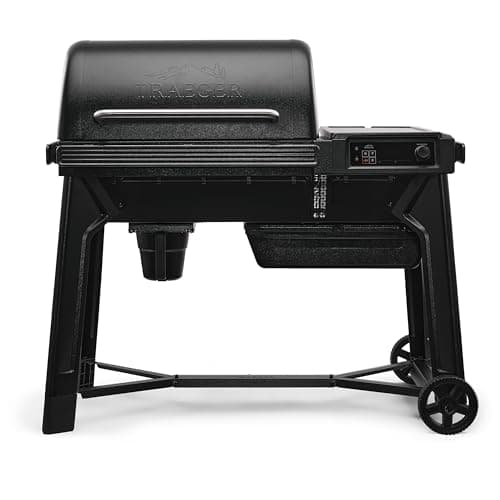
Traeger Woodridge Wood Pellet Grill
Price as of September 21, 2026. #ad How we’re funded
What it is
The Woodridge is Traeger’s current mainstream wood-pellet grill — the model most people mean when they say “a Traeger.” It works like every pellet grill: an auger feeds compressed hardwood pellets from a 20 lb hopper into a firepot, a hot rod lights them, and a controller meters fuel to hold whatever temperature you set, across 860 sq in of cooking area. What separates it from the budget field is the control system and the ecosystem around it, not the cooking geometry. This is a grill you buy for the experience of owning a Traeger as much as for its spec sheet.
Control and the RTD sensor
This is where Traeger earns its reputation. The Woodridge runs WiFIRE app control— set and monitor the grill from your phone, get alerts, run guided cooks — and, importantly, it uses an RTD temperature sensorrather than the cheaper thermocouple some rivals use. An RTD reads chamber temperature more accurately and steadily, which translates to a tighter hold at low-and-slow smoking temperatures where a 30°F swing changes the cook. Traeger’s app is also the most mature and polished in the category by a wide margin, and it genuinely works — not an afterthought bolted onto the hardware. If reliable, app-managed set-and-forget cooking is the whole reason you want a pellet grill, the Woodridge delivers it as well as anything.
The ecosystem
Traeger’s real moat isn’t any single spec — it’s the ecosystem. It has the largest accessory range in pellet grilling, the widest parts availability, the most-supported app, and the strongest resale value, because it’s the brand everyone knows. In practice that means when something wears out or you want to add a shelf, a probe, a cover or a hopper accessory, it exists and it’s easy to find. For a lot of buyers that peace of mind — that the grill will be supported and serviceable for years — is worth paying for, and it’s the honest core of the Traeger premium.
Where it falls short
Two things. First, price: you pay a brand premium over equal-spec rivals. A grill like the Z Grills 700Ddelivers similar cooking area with a capable PID controller for hundreds less — you give up the app and the ecosystem, but the low-and-slow cooking is honest. Second, searing: the Woodridge tops out at 500°F, which puts a fine roast on a steak but not a hard crust. If searing matters to you, a grill with a direct-flame hatch — the Pit Boss Flame Broiler or Camp Chef slide-and-grill— does something the Traeger can’t. The Woodridge is a smoker-first grill; it roasts and bakes beautifully, but it doesn’t replace a hot grill for steakhouse sears.
Build, pellets and everyday use
Day to day, the Woodridge is an easy grill to live with, and that’s a real part of what you’re buying. Assembly is straightforward, the hopper is easy to fill and empty, and the WiFIRE app handles the fussy parts — preheat, temperature changes, probe alerts — from inside the house. Two things every pellet-grill owner should know apply here too. First, pellets matter: the food-grade hardwood pellets the grill is built for burn cleaner and hold a steadier fire than cheap filler-heavy bags, and running the wrong pellet is a common reason a new owner blames the grill for a bad cook. Budget for good fuel. Second, cleanup and moisture decide longevity: empty the firepot ash regularly, keep the hopper dry between cooks, and cover the grill, and the controller, auger motor and igniter — the parts that eventually wear — are all replaceable rather than fatal, which is exactly where Traeger’s parts network pays off. None of this is unique to the Woodridge, but the ecosystem makes staying on top of it easier than on an off-brand grill. For the fire- management basics behind any smoke, our how to smoke a brisket guide applies just as well to a pellet cook as to an offset.
Who should buy it
Buy the Woodridge if you want the most trusted, best-supported set-and-forget pellet grill and you value the ecosystem, the polished app and the resale value enough to pay the premium. It’s the low-risk choice — the grill you buy when you want it to just work and to be supported for years. It’s our ecosystem pick in the best pellet grills roundup. Skip it if you’re price-driven (a PID budget grill cooks nearly as well for far less), or if searing is a priority (buy a direct-flame model instead). And if you’re cross-shopping the obvious rival, our Traeger vs Pit Boss comparison lays the two philosophies out side by side. Still unsure a pellet grill fits how you cook? Read is a pellet grill worth it.
Frequently asked questions
Is the Traeger Woodridge worth the money?
It's worth it if you value what the premium actually buys: a genuinely good WiFIRE app, a reliable RTD temperature sensor, and the deepest accessory, parts and support ecosystem in pellet grilling, plus strong resale value. You're paying for polish and peace of mind more than raw cooking area — a cheaper PID grill delivers similar low-and-slow results for less. If reliable, well-supported set-and-forget cooking matters most, the Traeger is worth it; if you're price-driven, it may not be.
Can you sear on a Traeger Woodridge?
Only sort of. The Woodridge tops out at 500°F, which roasts a steak nicely but won't build a hard, crusty sear. It's a smoker-first grill — excellent for low-and-slow barbecue, roasting and baking, but not a steakhouse sear machine. If searing matters to you, a pellet grill with a direct-flame hatch, like the Pit Boss Flame Broiler or Camp Chef slide-and-grill, does something the Traeger can't.
How big is the Traeger Woodridge?
It offers 860 square inches of cooking area and a 20 lb pellet hopper, with a temperature range of 180 to 500°F. That's a mainstream mid-size pellet grill — enough grate for a family and then some, and enough hopper for a long cook, though not the largest in the category. The Pit Boss Navigator 850, for comparison, offers more grate and a bigger 30 lb hopper for the money.
What sensor does the Traeger Woodridge use?
An RTD (resistance temperature detector) sensor rather than a cheaper thermocouple. An RTD reads chamber temperature more accurately and steadily, which helps the grill hold a tight line at low smoking temperatures where a 30°F swing changes the cook. Combined with Traeger's mature WiFIRE app, it's a big part of why the brand's set-and-forget temperature control is so well regarded.
Traeger Woodridge or a cheaper pellet grill?
If you want the ecosystem, the polished app and the resale value, the Traeger is worth the premium. If you mainly want steady low-and-slow cooking for the least money, a PID grill like the Z Grills 700D delivers similar results for hundreds less — you give up the app and the support network, but the cooking is honest. Our best pellet grills roundup ranks both approaches so you can weigh polish against price.
Keep reading
Traeger vs Pit Boss
Polish and ecosystem versus features and price — the two names every pellet shopper compares.
Read the comparison →Best Pellet Grills
All five pellet grills we rank, on cooking area, hopper, controller and searing.
See the roundup →Pellet Grill vs Gas Grill
Wood-fired smoke and set-and-forget temps versus the speed and searing heat of propane — which to buy.
Compare them →