Offset Smoker vs Traeger
Two of the most cross-shopped smokers in barbecue sit within a few dollars of each other: a reverse-flow stick-burner and Traeger's mainstream pellet grill. Here's what each one actually buys you at that price, on the published numbers.
Quick answer
Buy the offset if smoke flavor and fire craft are the point— burning charcoal and real wood splits produces a depth of smoke and a bark that a pellet grill does not reach, and the Highland Reverse Flow gives you 1,093 sq in to do it on. Buy the Traeger if the cook has to happen while you do something else— app-controlled temperatures, a 20 lb hopper, a 10-year warranty and no fire to tend. At roughly the same price you are choosing between a hobby and an appliance, not between better and worse.
How this is funded: we earn a commission if you buy through our links, at no extra cost to you. It never changes which product we recommend, and we’ll tell you when we’d skip one, or point you to a cheaper option when it’s the better buy. Full disclosure.
| Spec | 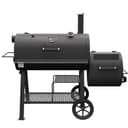 | 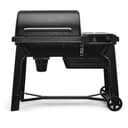 |
|---|---|---|
| Fuel | Charcoal + wood splits | Hardwood pellets |
| Configuration | Reverse-flow (convertible) | Pellet hopper + auger |
| Control | Manual vents + firebox | WiFIRE app + RTD probe |
| Warranty | 2 years, parts | 10 years, limited |
| Price | $729.00 · View on Amazon Price as of September 21, 2026. #ad How we’re funded | $899.99 · View on Amazon Price as of September 21, 2026. #ad How we’re funded |
The short version
This is the single most common upgrade question in barbecue, and it usually gets answered badly — either by a purist insisting that pellet grills are not real barbecue, or by a convenience argument that pretends the flavor gap doesn’t exist. Both positions are wrong. What makes this comparison worth running properly is that the two obvious candidates land at almost identical money: the Oklahoma Joe’s Highland Reverse Flow, our overall offset pick, and the Traeger Woodridge, Traeger’s current mainstream grill. Within a rounding error of the same budget you can buy a machine that demands six hours of your attention or one that asks for none.
That price parity is the whole reason to think carefully. If the offset were half the money the decision would mostly be about budget, and if the Traeger were half the money it would mostly be about convenience. Because they cost the same, the question is stripped down to something more honest: how do you want to spend a Saturday?If you want the category-level version of this question — offsets against pellet grills as a class, without naming products — read offset smoker vs pellet grill instead. This page is the product-level version: two specific machines, on their published specs, at their live prices.
Where the smoke actually differs
The flavor gap is real, it is not snobbery, and it comes down to what is burning. An offset burns charcoal and whole wood splits at a temperature where the wood is still producing the full range of combustion products — that is where deep smoke flavor and a thick, dark bark come from. A pellet grill burns compressed hardwood sawdust in small, efficient bursts, fed by an auger and fanned to keep a set temperature. That combustion is cleaner and much more consistent, and the trade for that consistency is a lighter smoke profile. Pellet owners are not imagining the smoke, but side by side with a well-run stick-burner, most people can tell which is which.
The important qualifier is that a badly runoffset is worse than a competently run pellet grill, every time. A dirty, smoldering fire in a leaky chamber produces acrid, bitter smoke — the thing people mean when they say barbecue tastes like an ashtray. The offset’s flavor ceiling is higher, but you have to climb to it, and the climb takes several cooks and a probe thermometeryou trust. The Traeger’s ceiling is lower and you arrive at it on the first cook. Which of those matters more to you is genuinely a matter of temperament, not of expertise.
Effort: six hours of attention, or none
This is the difference that decides the purchase for most people, and it is larger than the specs suggest. Running the Highland means lighting a charcoal base, bringing the chamber to temperature, then feeding a split roughly every forty-five minutes for the length of the cook while working the vents to hold a line. A brisket is a ten-to-fourteen-hour commitment in which you cannot leave for more than an hour. It is genuinely enjoyable if you like the process — a lot of people find fire tending is the part of barbecue they actually love — and it is a miserable way to spend a day if you don’t.
The Woodridge asks you to fill a 20 lb hopper, set a temperature in the app, and come back. Traeger publishes a 180–500°F range with app monitoring, which means an overnight pork butt is a genuinely unattended cook. That is not a small convenience; it is the difference between barbecue being a hobby you schedule and a dinner you can cook on a Wednesday. If your realistic cooking window is “evenings and the odd weekend, with kids,” the offset will sit unused and the pellet grill will not. An unused smoker makes no smoke flavor at all, which is the argument that should decide more of these purchases than it does.
The numbers, side by side
Both are large cookers, and neither will feel cramped for a household. Where they differ is in what the area is for and how the machine is warranted.
| Spec | Oklahoma Joe’s Highland RF | Traeger Woodridge |
|---|---|---|
| Total cooking area | 1,093 sq in | 860 sq in |
| Primary grate | 619 sq in | Not published separately |
| Fuel | Charcoal + wood splits | Hardwood pellets |
| Temperature control | Manual vents + firebox | App, 180–500°F |
| Fuel capacity | Firebox, refilled by hand | 20 lb hopper |
| Warranty | 2 years, parts | 10 years, limited |
| Mains power needed | No | Yes |
Two of those rows deserve more than a glance. The warranty gapis the widest in this comparison — ten years against two — and it is not marketing noise. A pellet grill has an auger, a fan, an igniter and a controller that can all fail, so a long warranty is the manufacturer absorbing that risk. An offset has no moving parts to fail; what it has instead is steel that will eventually rust through, which no warranty covers well. Read the numbers as two different kinds of promise rather than as one machine being twice as good.
The other row people skip is mains power. The Traeger needs an outlet within reach of wherever the grill lives, for the entire cook. The offset needs nothing. If your cooking spot is at the far end of a yard, or you want to take the cooker to a tailgate or a cabin, that single line decides the purchase before any flavor argument starts.
Capacity: what each one actually holds
On paper the offset wins the area contest, 1,093 square inches to 860. That headline is worth deflating slightly, because total-area figures on offsets include warming racks that run meaningfully cooler than the main grate. The Highland’s honest working number is its 619 sq in primary grate— the surface actually at your target temperature — with the rest available for holding, resting, or anything that tolerates a cooler spot. Judge any offset on the primary figure and treat the total as a bonus.
Traeger publishes its capacity in food rather than inches, which is more useful: 860 square inches is stated to fit up to six chickens, eight rib racks, or six pork butts. That is a lot of barbecue by any household standard, and it means the practical gap between these two is smaller than 1,093-versus-860 implies. Unless you are cooking for a large group regularly, both are more cooker than you need, and capacity should not be the reason you pick one. Where the offset’s shape genuinely helps is long flat cuts— a horizontal chamber takes a full packer brisket laid out without folding it, which a smaller rectangular pellet grate can make awkward.
Versatility beyond low-and-slow
The two machines are versatile in opposite directions, and this is the section most comparisons skip. The Traeger’s range is method breadth: Traeger publishes it as a 6-in-1 cooker — grill, smoke, bake, roast, braise and barbecue — and because a controller holds any temperature in the 180–500°F band, baking bread or roasting vegetables on it genuinely works. It also has an accessory system behind it: P.A.L. Pop-And-Lock rails for shelves and storage, and ModiFIRE cooking surfaces that swap the grate for something else. You are buying a platform, not just a smoker.
The offset’s range is heat intensity. Its main chamber only does smoking temperatures, so it will not bake and it will not roast in any convenient way. But you can grill directly over the firebox coals at temperatures no pellet grill reaches, which makes it two cookers in one: a smoker at one end and a hot charcoal grill at the other. The Traeger’s 500°F ceiling is the honest limit here — it roasts beautifully and it will mark a steak, but it does not sear the way live coals do. If a hard sear matters to you, the offset covers it and the Woodridge does not.
Running cost over a year
Sticker price is nearly identical here, so the honest cost comparison is fuel, and it does not favor the offset as much as its lower shelf price implies. A long cook on an offset burns through a meaningful quantity of both charcoal and split wood, because you are heating a large steel chamber against the outdoors for the whole session and feeding it continuously. Pellets are consumed more efficiently, since the auger only delivers what the controller asks for. Neither is expensive enough to change the decision on its own, but the offset is the one that keeps costing you — in fuel, and in the gear a new offset owner discovers they need: a gasket kit, a chimney starter, a decent probe set.
Set against that, the Traeger has a running cost the offset doesn’t: pellets must be kept dry. Pellets that absorb moisture swell, jam the auger and turn a controller into a service call, so you need somewhere sealed to store them. It is a small tax, but it is real, and it catches out people who buy in bulk and leave the bag in a damp shed over winter. Charcoal and wood are far more forgiving of bad storage.
Living with each one: placement, weather and cleanup
Ownership costs show up in the boring details, and they differ more than the spec sheets suggest. Both machines are large and want a permanent spot, but for different reasons: the offset because it is heavy steel you will not enjoy moving, the Traeger because it is tethered to an outlet. Both should live under a cover. The offset needs one more urgently — bare steel that spends a winter uncovered will rust, and rust-through is what eventually retires an offset. The Traeger’s vulnerability is different and less obvious: it is the electronics and the pellets, not the body, that dislike weather.
Cleanup is the one round the pellet grill wins outright. Traeger fits the Woodridge with an EZ-Clean grease and ash keg that collects both in one place for disposal, which turns a chore into a thirty-second job. An offset asks you to shovel ash out of the firebox, clean the chamber, and manage grease that drains wherever the design sends it. None of it is difficult, but it is a job after every cook rather than occasionally, and it is worth knowing before you buy rather than after.
The last practical difference is how each one fails. When a pellet grill goes wrong it usually stops working — a jammed auger, a failed igniter, a controller that will not connect — and you are not cooking that day. When an offset goes wrong, it is because the fire is wrong, and you can always fix that with more attention. Neither failure mode is worse in the abstract, but one is a service call and one is a skill problem, and people are usually more tolerant of one than the other. Know which you are.
What the Traeger name is actually buying
It is worth being direct about the brand premium, because “offset vs Traeger” is really a question about one company. Traeger defined the pellet category, and what that buys you is not better cooking than an equivalently specified rival — it is scale. Every accessory maker fits Traeger, every failure mode has been publicly documented and solved by somebody, parts are easy to get, and resale value holds better than any other name in pellet. On the Woodridge specifically, the published spec that matters most is the 500°F ceiling: it roasts and it smokes, but it does not really sear, which is a genuine limitation if you want one cooker to do everything.
If you have already decided that pellet is the right category and you are only weighing brands, this is not the page for that — compare Traeger against Pit Boss or read the pellet grill roundup, where the same money buys more grate and, in some cases, real sear heat. The Traeger’s case in this comparison rests on reliability and the ecosystem, not on being the highest-specified pellet grill you can buy.
What the offset gives up
Honesty cuts both ways, so here is the offset’s bill. It is heavy and it gets placed once. It needs seasoning before its first cook and a cover after every one, because thin-to-medium steel left in the weather rusts. Out of the box it leaks a little at the lid and firebox door, and most owners fit a gasket kit early. Its dome thermometer reads the wrong place, so you will buy a probe set. And the learning curve is real: the first two or three cooks are usually worse than anything the Traeger would have produced on day one.
The Highland Reverse Flow softens the steepest part of that curve, which is why it is our overall pick rather than a traditional offset. Its baffle plates route heat down the length of the chamber and back, evening out the hot spot near the firebox that ruins most cheap offsets, and it converts to a traditional smokestack layout when you want to run it the old way. If the reverse-flow question is new to you, reverse-flow vs traditional explains what the plates actually do.
Which should you buy?
Buy the Oklahoma Joe’s Highland Reverse Flow if the fire is part of the appeal, you have whole days you are happy to spend at home, and you want the deepest smoke and heaviest bark available at this price. It is the better cooker in the hands of someone who wants to learn it, it needs no electricity, and it will still work in fifteen years if you keep it covered.
Buy the Traeger Woodridgeif you want barbecue on a schedule that includes a job. It cooks unattended, it is repeatable from the first weekend, the ecosystem and the 10-year warranty mean ownership is low-drama, and 860 square inches is plenty for a household. Accept the lighter smoke and the 500°F ceiling as the price of that.
If you are torn, the tie-breaker is not flavor — it is your calendar. Count the days in the last three months when you could have committed ten uninterrupted hours to a cook. If the answer is fewer than four or five, buy the pellet grill; the offset’s advantage is theoretical if you never get to use it. If the answer is comfortably more, the offset will reward every one of those days. Either way, see where both land against the rest of the field in our offset smoker roundup and our best offsets under $1,000 guide.
Frequently asked questions
Is a Traeger a real smoker?
Yes. A Traeger burns hardwood pellets and produces genuine wood smoke, and it will make good barbecue with a bark and a smoke ring. What it will not do is match a well-run stick-burner for depth of smoke flavor, because pellets combust more cleanly and efficiently than whole wood splits. The honest framing is that a pellet grill has a lower flavor ceiling and a much lower effort floor — it is a real smoker, just a different one.
Which is better for brisket, an offset or a Traeger?
An offset produces the better brisket if you can run it well — deeper smoke, heavier bark, and the fire craft that makes barbecue a hobby. A Traeger produces the more reliable brisket, because it holds temperature for the full twelve-plus hours without you, and a brisket ruined by a temperature swing at hour nine is worse than one with slightly lighter smoke. Beginners generally get a better first brisket off a pellet grill; experienced cooks generally get a better one off an offset.
Is an offset smoker cheaper to run than a Traeger?
Not necessarily, and the gap is smaller than people expect. An offset burns charcoal plus wood splits continuously for the whole cook because it is heating a large steel chamber against the outdoor air, while a pellet grill's auger only feeds what the controller asks for. Offsets also tend to pull you into buying a gasket kit, a chimney starter and a probe thermometer. Pellets carry their own cost, though: they must be stored somewhere dry or they swell and jam the auger.
Do you need electricity for a Traeger?
Yes — a pellet grill needs mains power for the whole cook, because the auger, fan, igniter and controller all run on it. An offset smoker needs no power at all. If your cooking spot is far from an outlet, or you want to take the cooker camping or to a tailgate, that requirement decides the purchase on its own before any flavor comparison matters.
Can you get a smoke ring on a pellet grill?
Yes. The smoke ring is a chemical reaction between nitric oxide in the combustion gases and the myoglobin in the meat, and pellet combustion produces enough of it to form a ring. Pellet grills sometimes give a thinner ring than a stick-burner running a hot, clean fire, and a heavier one at lower cooking temperatures. Either way the ring is a visual marker, not a flavor one — judge the cook on bark and taste rather than on the depth of the pink band.
Should a first-time smoker buy an offset or a pellet grill?
For most first-time buyers, a pellet grill. Fire management on an offset is a genuine skill that takes several cooks to learn, and the early attempts are usually worse than anything a pellet grill would produce on day one. Buy the offset first only if the fire tending is the part you actively want — plenty of people do, and for them it is the whole point. If you want the offset but want the gentlest start, our beginners' roundup ranks them on forgiveness rather than price.
Keep reading
Offset Smoker vs Pellet Grill
The same decision at category level, without naming products — smoke, effort, temperature control and running cost.
Read the comparison →Best Offset Smokers for Beginners
If you want the offset but want the gentlest possible start, these are ranked on forgiveness rather than on price.
See the picks →Traeger vs Pit Boss
Decided on pellet? The two names every pellet shopper compares — polish and ecosystem against features and price.
Compare them →