How to Smoke a Whole Chicken
Chicken is the cook that teaches you a smoker in an afternoon — and the one most people get wrong, because they treat it like brisket. It is not a low-and-slow cut. Here is the temperature, the wood, the trim and the two numbers that matter.
Quick answer
Smoke a whole chicken at 325°F, not 225°F. Spatchcock it (cut out the backbone and press it flat), dry the skin, season it, and run it over a mild fruit wood for roughly 75 to 105 minutes until the thickest part of the thigh reads 175°Fand the breast about 165°F. The USDA safe minimum for all poultry is 165°F throughout, and thigh meat is simply better at 175°F. The higher chamber temperature is the whole trick: chicken skin needs heat to render and crisp, and at 225°F you get a perfectly safe bird with skin like a wetsuit.
Why 325°F, and why this is the one cook that breaks the rules
Almost everything else you will smoke — brisket, pork shoulder, ribs— is a tough cut full of collagen that needs hours in the 225 to 275°F band to break down into gelatin. Low and slow exists for that chemistry.
Chicken has almost no collagen to break down.It is already tender. There is nothing to render but the fat in the skin, and skin needs real heat to do it. At 225°F the fat under the skin never fully renders and the skin dehydrates without crisping, which produces the single most common complaint about smoked chicken: pale, flabby, rubbery skin on an otherwise well-cooked bird.
Run the chamber at 325°Fand three things improve at once. The skin renders and browns. The bird spends less total time in smoke, which matters because chicken takes on smoke flavor fast and goes bitter if you overdo it. And the whole cook fits inside an afternoon, which is why this is the right second or third cook on a new smoker — it teaches you fire management with a cheap bird and a short feedback loop.
If your cooker cannot comfortably hold 325°F, that is worth knowing before you start. An offset will do it easily with a small hot fire; how to use an offset smokercovers getting there. Most pellet grills will do 325°F but produce less smoke the hotter they run — see more smoke flavor from a pellet grill. A kettle will do it beautifully with the coals banked to one side.
Spatchcock, halve, or leave it whole?
Spatchcock is the right default.A whole chicken is an awkward shape to cook: the thighs want 175°F, the breast is done at 165°F, and in an intact bird the thighs are shielded while the breast is exposed. Flattening it puts everything at roughly the same thickness, so the two finish close together and you stop choosing between dry breast and undercooked thigh. It also cuts the cook time by about a third and gives you far more skin facing the heat.
Halving does much the same thing and fits a small chamber better. Leaving it wholelooks better on the table and is the harder cook — expect 2.5 to 3 hours at 325°F, and expect the breast to be closer to done than you would like by the time the thighs arrive. Beer-can chicken is whole-bird cooking with a steam gimmick attached; the can does almost nothing that the bird’s own moisture was not already doing.
The two numbers, and why they differ
165°F is the safety number.The USDA’s safe minimum internal temperature for all poultry — whole, pieces, ground — is 165°F, measured in the thickest part and not touching bone. That is a food safety threshold, and it is not negotiable or a matter of taste.
175°F is the eating number for dark meat.Thighs and legs carry connective tissue and more fat than breast meat, and at 165°F they are safe but slightly chewy. Carried to 175°F or even a little past, that tissue softens and the dark meat gets noticeably better. You cannot do the same to the breast — white meat dries out above about 165°F — which is the entire argument for spatchcocking, because it narrows the gap between when the two arrive.
Both numbers are useless without a thermometer you trust. The lid dial on a smoker is reading the air near the lid, not the meat and often not even the grate. The full cut-by-cut reference is in our meat smoking temperature chart.
Which wood, and how much
A mild fruit wood, and less of it than you think. Chicken is a light-flavored meat with a lot of surface area relative to its mass, so it absorbs smoke quickly and will turn acrid and bitter if you treat it like beef. Apple and cherry are the standard answers; both are mild and both brown the skin attractively. Pecan and a small amount of hickory work. Mesquite is too aggressive for poultry and is the usual culprit when smoked chicken tastes harsh.
Two fist-sized chunks is a whole chicken’s worth, with maybe a third added partway if the fire has gone clear. More is not better here, and the species matters far less than the quantity. Our smoking wood guidecompares species and formats, and the one rule that outranks all of them is to burn dry, seasoned wood on a clean fire — billowing white smoke from a smoldering fire is what makes food bitter, not the kind of tree it came from.
How this is funded: we earn a commission if you buy through our links, at no extra cost to you. It never changes which product we recommend, and we’ll tell you when we’d skip one, or point you to a cheaper option when it’s the better buy. Full disclosure.
A thermometer, the right wood, and a glove
Live prices, fetched and date-stamped. This cook needs almost no equipment, and these three address the specific things above: knowing the two temperatures, using a mild enough wood, and handling a hot flattened bird that has nothing to grip.
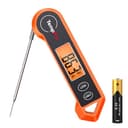
ThermoPro Digital Instant-Read Meat Thermometer
Reads in three to four seconds through a foldaway probe, which is what you need to check a thigh and a breast separately without standing with the lid open. The two numbers on this page — 165°F and 175°F — mean nothing without it.
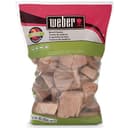
Weber Apple Wood Chunks (350 cu in, 4 lb)
Mild apple in chunk form, 350 cu in. Chicken takes on smoke fast and goes bitter with an aggressive wood, so a fruit wood is the safe choice — and chunks last a short cook where chips burn out in minutes.
Price as of October 16, 2026. #ad How we’re funded
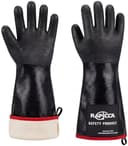
RAPICCA 932°F Neoprene BBQ Gloves (14 in)
Neoprene-coated, 14 in, maker-rated to 932°F. A spatchcocked chicken has no handle and comes off the grate as a floppy hot sheet; gloves let you lift it with two hands instead of fighting it with tongs and tearing the skin.
Getting the skin right
Skin is where smoked chicken is won or lost, and it comes down to three things that are all free.
Dry it. Water on the surface has to boil off before the skin can brown, and while it is boiling it is steaming the skin soft. Pat it dry with paper towel at minimum. Better: salt the bird and leave it uncovered on a rack in the refrigerator for anywhere from four to twenty-four hours, which dehydrates the surface and gets you visibly better skin for no effort.
Do not spritz, wrap or sauce it early.Spritzing and wrapping are brisket tools, used to manage bark and push through the stall. On chicken they do exactly one thing: soften the skin you are trying to crisp. If you want a barbecue sauce glaze, brush it on in the last ten minutes only — sugar burns at 325°F.
Go hotter at the end if you need to. If the bird has hit temperature and the skin is still pale, open the vents and let the chamber climb for the last five to ten minutes, or move the bird closer to the firebox. This is an easier fix than it sounds, and it is why a smoker that can also run hot is more useful than one that only runs low.
Brine or no brine?
Optional, and dry brining is the better version. A wet brine — salt and water for a few hours — does make a bird juicier and more forgiving if you overcook it, which is genuinely useful for a beginner. It also waterlogs the skin, which fights everything above, so you have to dry it thoroughly afterwards.
Dry brining gets you most of the benefit and none of the downside. Salt the bird, leave it uncovered in the refrigerator overnight, and cook it as is. The salt draws moisture out, dissolves into it and is reabsorbed, seasoning the meat all the way through while drying the skin rather than wetting it. For a smoked chicken specifically, it is the better technique for the same effort.
Where to go next
Chicken is the right cook to learn on, and the natural order from here is pork shoulder next, then ribs, then brisket— in that order, because each one is less forgiving than the last. If a whole turkey is what you are actually working toward, how to smoke a turkey uses the same high-heat logic on a much bigger bird. And if you are still choosing a cooker, the beginner offsets are the ones that hold a line with the least fighting.
Frequently asked questions
What temperature do you smoke a whole chicken at?
325°F, which is considerably hotter than most smoking advice suggests. Chicken has almost no collagen to break down, so the low-and-slow band that brisket and pork shoulder need does nothing for it — all it does is dehydrate the skin without rendering the fat underneath, which is what produces pale rubbery skin. At 325°F the skin browns and crisps, the bird spends less time absorbing smoke, and the whole cook finishes in under two hours.
How long does it take to smoke a whole chicken?
About 75 to 105 minutes at 325°F if you spatchcock it, and roughly 2.5 to 3 hours left whole. Weight matters less than you would expect; thickness is what sets the time, which is exactly why flattening the bird cuts about a third off it. Start checking the thigh temperature at the 60-minute mark on a spatchcocked bird, because the gap between underdone and overdone on chicken is much narrower than on a large cut.
What internal temperature should smoked chicken be?
There are two numbers. The USDA safe minimum for all poultry is 165°F in the thickest part, not touching bone, and that is a food safety threshold rather than a preference. But dark meat eats much better carried to about 175°F, because thighs and legs have connective tissue that softens above the safety minimum. Aim for 175°F in the thigh and roughly 165°F in the breast — which is the main argument for spatchcocking, since it narrows the gap between them.
Should you spatchcock a chicken before smoking it?
For most cooks, yes. Cutting out the backbone and pressing the bird flat makes its thickness roughly even, so the thighs and the breast finish close together instead of forcing you to choose between dry breast and chewy thigh. It also cuts the cook time by about a third and exposes far more skin to the heat, which is where crisping happens. Leaving it whole looks better on the table and is the harder cook.
What wood is best for smoking chicken?
A mild fruit wood — apple or cherry — and less of it than you would use on beef. Chicken is light-flavored with a lot of surface area relative to its mass, so it absorbs smoke fast and turns acrid if you overdo it. Pecan and a small amount of hickory also work. Mesquite is too aggressive for poultry and is usually the reason smoked chicken tastes harsh. Two fist-sized chunks is a whole chicken's worth.
Why is my smoked chicken skin rubbery?
Almost always because the chamber was too cool. Skin needs real heat to render its fat and crisp, and at 225°F it dehydrates into something leathery instead. Run 325°F. The other three causes are all moisture: wet skin going on the grate, spritzing during the cook, and tenting the bird with foil to rest. Pat the skin dry, leave it alone while it cooks, and rest it uncovered.
Do you need to brine a chicken before smoking?
No, but dry brining is worth the effort and beats a wet brine for this cook. Salt the bird, leave it uncovered on a rack in the refrigerator overnight, and cook it as is: the salt seasons the meat all the way through while drying the surface, which is exactly what crisp skin needs. A wet brine makes the meat juicier and more forgiving but waterlogs the skin, so you then have to dry it thoroughly anyway.
Can you smoke a chicken on a pellet grill or a kettle?
Yes to both, with one caveat each. A kettle does this cook beautifully — bank the coals to one side, put the bird on the cool side, and it will hold 325°F happily with the vents open. Most pellet grills will reach 325°F but produce less smoke the hotter they run, so add a smoke tube or accept a lighter flavor. The method, the wood quantity and both temperature numbers are identical on any cooker.
Sources
- USDA FSIS — Safe Minimum Internal Temperature Chart — The USDA's official safe minimum internal cooking temperatures for beef, poultry, pork and more (accessed July 22, 2026)
- USDA FSIS — Doneness Versus Safety — USDA on why color is not a reliable doneness test and a thermometer is (accessed July 22, 2026)
Keep reading
Meat Smoking Temperature Chart
Both numbers on this page in context — the USDA safe minimum and the higher eating temperature, for every cut.
Read the guide →How to Smoke a Pork Shoulder on an Offset
The natural next cook: the most forgiving large cut in barbecue, and the one that teaches you the stall.
Read the guide →How to Smoke a Turkey
The same high-heat, crisp-skin logic applied to a much bigger bird — plus the brining question at scale.
Read the guide →Best Wood for Smoking
Species, chunks against chips, and why a clean dry fire matters more than which tree the wood came from.
See the picks →