Natural Gas vs Propane Grill
One of these fuels is cheaper to burn and never runs out halfway through dinner. The other one can be wheeled to the far end of the yard. Here is the decision on the numbers — energy content, cost per cook, output and what conversion really involves.
Quick answer
Buy natural gas if you already have a gas line at the patio, or can get one put in. It is markedly cheaper per unit of heat, it never runs out mid-cook, and you never carry a cylinder again. Buy propane in every other case— if you rent, if the grill has to move, if you have no line, or if a plumber’s quote for running one costs more than the grill. The cooking is the same either way: both fuels burn at the same grate temperature on a correctly configured grill. What differs is convenience, running cost, and the fact that the two versions of a grill are different appliances, not a setting you switch.
How this is funded: we earn a commission if you buy through our links, at no extra cost to you. It never changes which product we recommend, and we’ll tell you when we’d skip one, or point you to a cheaper option when it’s the better buy. Full disclosure.
| Spec | 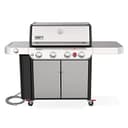 | 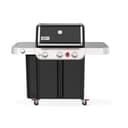 |
|---|---|---|
| Main burners | 4 | 3 |
| Main burner BTU | 48,000 | 39,000 |
| Sear Zone burner | 12,000 BTU | 13,000 BTU |
| Side burner | 12,000 BTU | 12,000 BTU |
| Primary cooking area | 646 sq in | 513 sq in |
| Grates | 7 mm stainless steel | Porcelain-enameled cast iron |
| Warranty | 12-yr cookbox, 10-yr burners | 12 years, limited |
| Price | $1,199.00 · View on Amazon Price as of October 16, 2026. #ad How we’re funded |
The one thing most people get wrong
A natural gas grill and a propane grill are not the same grill with a different hose. They are built with different orifices— the tiny drilled jets that meter gas into each burner — and different regulators, because the two fuels arrive at very different pressures and carry very different amounts of energy per cubic foot.
Propane is dense: roughly 2,500 BTU per cubic foot. Natural gas is roughly 1,000 BTU per cubic foot. To get the same heat out of a burner, a natural gas grill therefore has to flow about two and a half times the volume of gas, which means visibly bigger orifices and a regulator set for low line pressure rather than cylinder pressure. Run propane through natural gas jets and you get a dangerous, sooty over-fuelled flame. Run natural gas through propane jets and you get a grill that will not reach temperature.
That is why the comparison table above sets Weber’s Genesis S-435, which the current lineup lists as natural gas, against the propane Genesis E-335. Same family, same engineering, and the fuel decision comes bundled with the model you choose. It is not a dial.
Running cost: natural gas wins, and not narrowly
This is the strongest argument for natural gas and it is arithmetic rather than opinion. Compare the two fuels on a like-for-like basis.
A standard 20 lb propane cylinder holds about 430,000 BTU— 20 pounds of propane at roughly 21,500 BTU per pound. Natural gas is billed by the therm, and one therm is 100,000 BTU by definition. So a full propane cylinder is equivalent to about 4.3 therms of natural gas.
Put your own numbers in: take what an exchange cylinder costs you, divide by 4.3, and compare that figure against the per-therm rate on your gas bill. In most of the US the natural gas number is a fraction of the propane one, because a cylinder price includes the cylinder, the distribution and the convenience of picking it up at a gas station. The exact ratio depends on your utility and whether you refill or exchange — refilling by the gallon is always cheaper per BTU than swapping a cage cylinder, as covered in how long a propane tank lasts.
Against that, natural gas has one cost propane does not: installation. A plumbed gas line to the patio, with a shutoff and a quick-disconnect, is a licensed-trade job. If a line already runs to the house wall it may be modest; if it has to be trenched across a yard, the quote can exceed the price of the grill. That single number decides this for most people, and it is the one figure we cannot look up for you.
Side by side on everything else
| Natural gas | Propane | |
|---|---|---|
| Energy content | ~1,000 BTU per cu ft | ~2,500 BTU per cu ft |
| Supply | Continuous — a plumbed line | Finite — a 20 lb cylinder |
| Runs out mid-cook | No | Yes, and usually at the worst moment |
| Cost per unit of heat | Lower, often substantially | Higher; exchange is the dearest route |
| Up-front extra | Line installation by a licensed trade | None — a cylinder and a hose |
| Portability | Tethered to the line’s reach | Anywhere, including away from home |
| Suits renters | Rarely — it is a building alteration | Yes |
| Cold weather | Unaffected | Vapor pressure falls; output can sag |
| Model choice | Narrower — fewer NG variants sold | Nearly every gas grill made |
| Grate temperature | The same. Both fuels reach the same cooking heat on a correctly configured grill. | |
Two rows there deserve emphasis. Cold weatheris a real and under-discussed propane weakness: propane’s vapor pressure drops as the cylinder gets cold, so a winter grill can struggle to hold full output just when the air is stealing heat off the firebox. Natural gas arrives at line pressure regardless of the weather. And model choicematters more than people expect — manufacturers build far fewer natural gas variants, so choosing natural gas can mean choosing from a shorter list, or waiting.
Does one taste better?
No. Both are clean-burning gases that produce heat and water vapor, and neither contributes flavor. What creates flavor on a gas grill is the same on either fuel: fat dripping onto hot metal, vaporizing and rising back through the food. That is a function of the grill’s flavorizer bars or heat tents and of how hot you run it, not of what is in the pipe.
If flavor is the thing you are chasing, the fuel question is the wrong one. The real gap is between gas and solid fuel, which is the subject of charcoal vs gas and pellet vs gas. Either of those changes how food tastes. Swapping propane for natural gas does not.
Converting a grill you already own
Sometimes possible, often not, and the rule is simple: only convert with the manufacturer’s own kit for your exact model, and only if the manufacturer publishes one. A proper kit supplies the correct orifices, the correct regulator and a hose, and it keeps the appliance’s certification intact.
Two warnings worth taking seriously. First, many modern grills are not convertible at all— Weber, for one, does not offer conversion kits for current grills, and says so plainly. Second, universal conversion kits sold by third parties are a genuinely bad idea: drilling orifices to a guessed size in a fuel appliance has an obvious failure mode, it voids the warranty, and in many jurisdictions it also voids your home insurance for anything that follows. If the grill you want is not sold in the fuel you have, buy the variant that is.
Which to buy
Natural gas, if you have the line or the line is cheap to get. You will pay less per cook for as long as you own the grill, you will never load a cylinder into a car again, and you will never have a cook interrupted. It is the better answer for a settled patio where the grill has a permanent home.
Propane, in every other situation, and without feeling like you compromised. It cooks identically, the model range is far wider, it works on a balcony, a deck, a driveway or a campsite, and the running-cost gap on a grill used twenty times a year is smaller in dollars than it looks in percentages. Keep a second cylinder filled and the one real propane annoyance disappears.
How this is funded: we earn a commission if you buy through our links, at no extra cost to you. It never changes which product we recommend, and we’ll tell you when we’d skip one, or point you to a cheaper option when it’s the better buy. Full disclosure.
A natural gas grill, its propane twin, and the cover either one needs
Live prices, fetched and date-stamped. These are the two grills in the table above plus the accessory that matters most once a grill has a permanent outdoor home — which, on natural gas, it always does.
Weber Genesis S-435 Gas Grill (Natural Gas)
Four burners, 48,000 BTU and 646 sq in of primary grate in a stainless body, with a Sear Zone and side burner included. Weber lists this one in natural gas, so it needs a plumbed line — which is exactly the situation this page says to buy natural gas in.
Weber Genesis E-335 Gas Grill
The same family on a tank: a 39,000 BTU three-burner with a 13,000 BTU Sear Zone, a side burner and a 12-year limited warranty. The one to buy if there is no gas line, if you rent, or if the grill has to move.
Price as of October 16, 2026. #ad How we’re funded
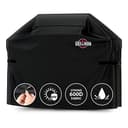
Grillman Premium 60-inch Grill Cover
Fits grills up to 60 in wide, which covers most three and four-burner carts. A natural gas grill lives permanently outdoors by definition, so weather protection stops being optional the day the line goes in.
Where to go next
Fuel is one of four decisions on a gas grill, and it is not the one that most affects the cooking. Burner count, grate material and build quality matter more day to day — our gas grill buying guide works through all of them, and how many BTUs a gas grill needs explains why the number both fuels are measured in is the most misleading figure on the box. If you have already settled on propane, the gas grill roundup ranks the field with a live price on every pick.
Frequently asked questions
Is a natural gas grill better than propane?
It is better if you have a gas line, and worse if you do not. Natural gas costs less per unit of heat, never runs out mid-cook and means you never handle a cylinder, so for a grill with a permanent spot on a plumbed patio it is the clear winner. Propane wins on everything else: no installation cost, a far wider choice of models, and the freedom to move the grill or take it with you. Neither cooks better — grate temperature is the same on both.
Is natural gas cheaper than propane for grilling?
Per unit of heat, almost always yes. A 20 lb propane cylinder holds about 430,000 BTU, and a therm of natural gas is 100,000 BTU by definition, so one cylinder equals roughly 4.3 therms. Divide what you pay for a cylinder by 4.3 and compare it to your per-therm utility rate — the natural gas figure is usually a fraction of the propane one. The offsetting cost is installing the line, which is a licensed-trade job and is what decides this for most households.
Can you convert a propane grill to natural gas?
Only with the manufacturer's own conversion kit for your exact model, and many modern grills do not have one. The two fuels need different burner orifices and different regulators because propane carries about 2,500 BTU per cubic foot against natural gas at about 1,000, so the natural gas version has to flow roughly two and a half times the volume. Universal third-party kits that involve drilling orifices void the warranty, can void home insurance, and create a real safety risk. If your grill has no official kit, buy the correct variant instead.
Does natural gas or propane taste different on a grill?
No. Both are clean-burning gases that produce heat and water vapor and contribute no flavor of their own. What creates the grilled taste on any gas grill is fat dripping onto hot metal, vaporizing and rising back through the food — a function of the flavorizer bars and how hot you run the grill, not of the fuel in the pipe. If flavor is what you are after, the comparison that matters is gas against charcoal or pellets, not one gas against the other.
Do natural gas grills put out less heat than propane?
Not when they are built for the fuel. A natural gas grill is manufactured with larger orifices and a low-pressure regulator precisely so it delivers its rated BTU on line pressure, and a Weber Genesis S-435 is rated at the same 48,000 BTU main burner output whichever way you look at it. Heat loss only appears when a grill is run on the wrong fuel for its jets — natural gas through propane orifices starves the burners and the grill never reaches temperature.
Can you use a natural gas grill with a propane tank?
No, and it is genuinely unsafe to try. Propane arrives at far higher pressure and carries two and a half times the energy per cubic foot, so pushing it through the oversized orifices of a natural gas grill produces a large, sooty, over-fuelled flame with no regulator sized to control it. The hose fittings differ as well. Use the fuel the appliance is certified for, or fit the manufacturer's conversion kit if one exists for that model.
Does propane work in cold weather?
It works, but output can sag. Propane's vapor pressure falls as the cylinder cools, so in genuinely cold weather a tank delivers gas more slowly and the grill may not hold full output — at the same time as cold air and wind are pulling heat off the firebox. Natural gas arrives at line pressure regardless of temperature, which is a real winter advantage. If you grill through winter on propane, keep the cylinder as full as you can, since a nearly empty tank struggles soonest.
Is it worth running a gas line for a grill?
It comes down to one quote against your grilling frequency. If a line already reaches the house wall near the patio, the job is often modest and pays for itself over years of lower fuel cost plus the end of cylinder trips. If the line has to be trenched across a yard, the quote can exceed the price of the grill, and a propane grill with a spare cylinder is the better value. Renters should not consider it at all — it is a building alteration, not an appliance purchase.
Keep reading
How Long Does a Propane Tank Last on a Grill?
The 430,000 BTU figure this page uses, divided across every gas cooker we track — plus how to tell what is left in the tank.
Read the guide →Gas Grill Buying Guide
Burners, grate material, build and warranty — the decisions that affect the cooking more than the fuel does.
Read the guide →How Many BTUs Does a Gas Grill Need?
The unit both fuels are measured in, and why the number on the box is the most misleading figure in the category.
Read the guide →Best High-End Gas Grills
Where the natural gas variants mostly live — infrared sear burners, rotisserie kits and lifetime warranties.
See the picks →