Pellet Grill vs Electric Smoker
Both plug into the wall and hold a temperature you set, which is why they get cross-shopped — and then the similarity ends. One burns real hardwood and can grill. The other smolders chips, stops at 275°F, and costs about half as much. Here is the decision on the numbers.
Quick answer
Buy a pellet grill if you want real wood smoke and one cooker that also grills.It burns compressed hardwood in a live firepot, so it tastes stronger, and most models reach 450–500°F — enough to roast and brown, with some models going far higher. Buy an electric smoker if the lowest price and the simplest machine matter most.An electric cabinet has an element and a chip tray, costs roughly half as much, and will hold 225°F all day in any weather — but it stops at about 275°F, so it cannot grill, sear or crisp skin, and its smoke comes from smoldering chips rather than burning wood. Both are set-and-hold appliances. Only one of them is a grill.
How this is funded: we earn a commission if you buy through our links, at no extra cost to you. It never changes which product we recommend, and we’ll tell you when we’d skip one, or point you to a cheaper option when it’s the better buy. Full disclosure.
| Spec | 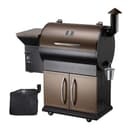 | 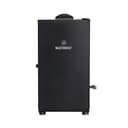 |
|---|---|---|
| Cooking area | 697 sq in | 710 sq in |
| Temp range | 180-450°F | 100-275°F |
| Control | PID controller | Digital panel + side chip loader |
| Price | $579.00 · View on Amazon Price as of October 27, 2026. #ad How we’re funded | $237.44 · View on Amazon Price as of October 27, 2026. #ad How we’re funded |
They make smoke in completely different ways
A pellet grill feeds compressed hardwood sawdust from a hopper, through an auger, into a small firepot with an induction fan behind it. A controller reads the chamber temperature and decides the feed rate. That is a real fire, burning real wood, and the whole mechanism is in how a pellet grill works.
An electric smoker has no fire at all. A resistive heating element — typically 800 to 1,650 watts — warms the cabinet, and a second, much smaller heat source smolders a small tray of wood chips to make smoke. The heat and the smoke are produced by two separate things, which is why on some cabinets you can run one without much of the other.
Everything below follows from that single difference. Burning wood makes more smoke than smoldering wood, and an element has a far lower ceiling than a fire.
Side by side
| Pellet grill | Electric smoker | |
|---|---|---|
| Fuel | Compressed hardwood pellets, burned | Mains electricity + wood chips, smoldered |
| Typical temperature range | About 180–500°F, model dependent | About 100–275°F |
| Can it grill or sear? | Browns well; some models sear with direct flame | No |
| Smoke flavor | Moderate — real wood, but a clean fire | Mild — smoldering chips only |
| Attention during a long cook | Refill the hopper; otherwise none | Refill chips roughly hourly for continuous smoke |
| Moving parts | Auger motor, fan, igniter, controller | Element and a thermostat or controller |
| Needs mains power | Yes, for the whole cook | Yes, for the whole cook |
| Weather sensitivity | Cold and wind raise pellet consumption noticeably | Low — an insulated box with a thermostat |
| Entry price | Mid tier | Budget tier — roughly half |
The two picks in the spec table above are the honest representatives of each side: a mid-range pellet grill with a PID controller against the electric cabinet that defines its category. The figures are each maker’s own published numbers, named in the source line on every product card.
Flavor: the pellet grill wins, and not by as much as you would think
A pellet grill burns wood, so it makes more smoke than a cabinet smoldering chips. That is the whole of the flavor argument and it is a real one.
It is also a smaller gap than the price difference suggests, because a pellet grill’s fire is small, fan-forced and efficient — and efficient fires are clean fires that produce relatively little smoke. Pellet owners spend a surprising amount of effort chasing more smoke out of their cookers; we wrote a whole page on it in how to get more smoke flavor from a pellet grill, and the honest conclusion there is that technique narrows the gap to charcoal without closing it.
So the flavor ladder, from mildest to strongest, runs roughly: electric cabinet, then pellet grill, then charcoal with wood chunks, then a wood-burning offset. Both cookers on this page sit at the mild end of it. If deep smoke flavor is the thing you actually want, the real answer is neither of them — see pellet grill vs charcoal and offset smoker vs pellet grill.
Temperature ceiling: this is the decision, not flavor
Almost every electric cabinet stops at 275°F. That number is enough for every low-and-slow cook there is — brisket, pork shoulder, ribs, fish, cheese, jerky, all of it happens between 180 and 275°F. What it cannot do is anything that needs heat:
- Poultry skin does not render below about 325°F. Smoked chicken and turkey out of an electric cabinet come out with rubbery skin unless you finish them somewhere hotter. Our how to smoke a whole chicken guide runs at 325°F for exactly this reason, and an electric smoker cannot get there.
- Glazes do not set and bark does not firm up. The last thirty minutes of a rack of ribs wants real heat. On an electric cabinet, that step happens in your oven.
- Nothing gets grilled.No steaks, no burgers, no chicken thighs, no pizza. A pellet grill at 450–500°F will brown all of those competently, and a pellet grill with a direct-flame mechanism will genuinely sear — see best pellet grills for searing.
If you already own a gas grill or a kettle, that ceiling costs you very little: you smoke in the cabinet and finish on the grill you already have, and you have spent half as much. If the smoker is going to be your only outdoor cooker, the ceiling is the single strongest argument for paying more for pellets.
Running cost: the electric smoker wins, clearly
A pellet grill burns fuel continuously to hold temperature — roughly one to three pounds of pellets an hour depending on the set temperature and the weather, which we work through in how long a bag of pellets lasts. A twelve-hour cook therefore goes through a meaningful share of a bag, every time, and cold or windy weather makes it worse.
An electric smoker burns electricity, and far less of it than its wattage suggests, because once the cabinet is up to temperature the element cycles rather than running flat out. Its wood chips are cheap and you use small amounts. The exception worth naming: Bradley’s cabinets use proprietary compressed pucks instead of chips, which buys nine hours of unattended smoke and ties you to one supplier permanently — a real running cost rather than a footnote.
Add the purchase price and the gap widens. An electric cabinet is a budget-tier buy; a pellet grill is a mid-tier one. The difference between them is years of pellets.
Reliability: fewer parts beats more parts
A pellet grill has an auger motor, an induction fan, a hot-rod igniter and a controller, and all four are failure points. They are also all replaceable, and the mainstream brands stock them — we go into how long these cookers actually last in how long does a pellet grill last.
An electric smoker has an element, a thermostat or a small controller, and a door seal. There is less to go wrong, and on the analog models there is no circuit board at all, which is exactly why the analog Masterbuilts have a reputation for outliving the digital ones. The flip side is that nobody buys a cooker for its simplicity if it will not cook what they want.
Both are appliances, not fires: neither works without mains power for the entire cook, so neither is a camping, tailgating or power-cut cooker. If that matters, a charcoal cooker is the only answer on this site.
How this is funded: we earn a commission if you buy through our links, at no extra cost to you. It never changes which product we recommend, and we’ll tell you when we’d skip one, or point you to a cheaper option when it’s the better buy. Full disclosure.
The honest representative of each side
Live prices, fetched and date-stamped. The pellet pick is the price-per-square-inch choice with a PID controller; the electric pick is the cabinet that defines its category; the third is the thermometer that makes either of them repeatable, because the built-in readout on both is measuring the wall rather than your food.
Z Grills 700D4E Wood Pellet Grill
697 sq in, a 20 lb hopper and a PID controller that holds a tight line, at a price well under the name brands. The cheapest honest way to find out whether you want real wood smoke and a cooker that also roasts.
Price as of October 27, 2026. #ad How we’re funded
Masterbuilt 30-inch Digital Electric Smoker (MB20071117)
710 sq in across four racks, a digital set-point, and a side wood chip loader so you refill the smoke without opening the door. The default electric cabinet, and the one with parts available everywhere.
Price as of October 27, 2026. #ad How we’re funded
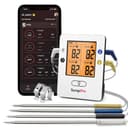
ThermoPro TP25 4-Probe Bluetooth Thermometer
Four probes and Bluetooth. On both of these cookers the built-in sensor sits in the wall rather than at grate level, and the gap is routinely twenty to thirty degrees — this is how you find out what the food is actually experiencing.
Who should buy which
Buy the electric smoker ifyou already own a grill, your main ambition is pulled pork and ribs, you want the lowest possible entry price, or you want a machine with almost nothing in it to break. It is also the better choice for fish, cheese and jerky, because a low, stable, controllable temperature is exactly what those need — and a pellet grill’s minimum is usually higher than an electric cabinet’s.
Buy the pellet grill if this will be your only outdoor cooker, you want more smoke flavor than a chip tray produces, you want to roast and brown as well as smoke, or you want to leave a twelve-hour cook genuinely unattended rather than coming back hourly with chips. Best pellet grills for beginners ranks that side on how little there is to learn.
Buy neither if what you actually want is bark, a pronounced smoke ring and the strongest flavor available. Both of these cookers run clean fires or no fire at all, and neither produces what a wood-burning pit does. Best offset smokers for beginners is the honest page for that, including what it costs you in time.
The common mistake in both directions
People buy a pellet grill expecting offset-level smoke, and people buy an electric smoker expecting a pellet grill that costs less. Both end up disappointed for the same reason: convenience and smoke flavor trade against each other, and every cooker on this site sits somewhere on that line. An electric cabinet is the convenience end. An offset is the flavor end. A pellet grill is genuinely in the middle, which is why it is the most popular smoker in America and also the one people argue about most.
Know which of the two things you are buying, and either of these is a good purchase.
Frequently asked questions
Is a pellet grill better than an electric smoker?
It is more capable, which is not quite the same thing. A pellet grill burns real hardwood so it tastes stronger, and most models reach 450 to 500°F, which means they roast and brown as well as smoke. An electric smoker costs about half as much, has far less in it to fail, and holds a low temperature beautifully — it just stops at around 275°F and gets its smoke from smoldering chips. If the smoker is your only outdoor cooker, buy pellet. If you already own a grill, electric is excellent value.
Does a pellet grill taste better than an electric smoker?
Yes, but the gap is smaller than the price difference implies. A pellet grill burns wood and an electric smoker smolders it, and burning makes more smoke than smoldering. Both still sit at the mild end of the flavor range, because a pellet grill's fan-forced fire is efficient and efficient fires are clean. Charcoal with wood chunks out-flavors both of them, and a wood-burning offset out-flavors all three.
How hot does an electric smoker get compared to a pellet grill?
About 275°F against about 500°F, and that is the most important difference on this page. The electric ceiling covers every low-and-slow cook — brisket, pork shoulder, ribs, fish, jerky — and covers nothing that needs heat. Poultry skin will not render below roughly 325°F, glazes will not set, and nothing can be grilled or seared. Some pellet grills add a direct-flame mechanism and go far higher still.
Which is cheaper to run, a pellet grill or an electric smoker?
The electric smoker, by a clear margin. A pellet grill burns roughly one to three pounds of pellets an hour to hold temperature, so every long cook consumes a meaningful share of a bag, and cold or windy weather increases it. An electric cabinet's element cycles once it is up to temperature, so average draw is a fraction of its rated wattage, and wood chips are cheap. Add the purchase price and the difference between the two buys years of pellets.
Can you grill on an electric smoker?
No. An electric smoker is a low-temperature cabinet, not a grill: there is no direct heat under the food and the ceiling is around 275°F, which is roughly half what browning a steak needs. This is the main reason to spend more on a pellet grill if the cooker will be your only one. If you already own a gas grill or a kettle, the limitation costs you very little — you smoke in the cabinet and finish on the grill.
Do electric smokers and pellet grills both need electricity?
Both need mains power for the entire cook, which rules both out for camping, tailgating and anywhere without an outlet. A pellet grill runs an auger motor, a fan, an igniter and a controller; an electric smoker runs an 800 to 1,650 watt heating element. If you use an extension cord, use a heavy outdoor-rated one — an element drawing that much across a wet patio for twelve hours is the one genuine safety consideration here.
Which is easier for a beginner?
The electric smoker is slightly simpler and the pellet grill is slightly more forgiving, and the two roughly cancel out. On an electric cabinet you set a dial or a panel and the only ongoing job is feeding chips about once an hour for continuous smoke. On a pellet grill you fill a hopper, set a temperature and genuinely walk away, but there are more systems that can misbehave. Both remove the fire management that makes charcoal and offsets a skill.
Is an electric smoker worth it if I already have a gas grill?
That is the case where it makes the most sense. The gas grill covers everything the electric cabinet cannot — searing, grilling, crisping skin, setting a glaze — so the cabinet only has to do the thing it is genuinely good at, which is holding 225°F for twelve hours without supervision. You get low-and-slow capability for a budget-tier price, and you spend about half what a pellet grill costs to cover the same ground on its own.
Sources
- USDA FSIS — Safe Minimum Internal Temperature Chart — The USDA's official safe minimum internal cooking temperatures for beef, poultry, pork and more (accessed July 22, 2026)
Keep reading
Best Electric Smokers
Seven cabinets ranked on cooking area, temperature ceiling and how long each makes smoke unattended.
See the picks →Pellet Grill vs Charcoal Grill
The other half of the pellet decision — stronger flavor and real searing heat against set-and-forget convenience.
Compare them →How to Get More Smoke Flavor From a Pellet Grill
Six changes that genuinely work, three that do nothing, and an honest ceiling on how far technique gets you.
Read the guide →Are Pellet Grills Worth It?
The page to read before spending pellet-grill money — what the premium actually buys and who regrets it.
Read the guide →