Z Grills 700D Review
The price-per-square-inch champion of pellet grilling. A PID controller holds temperature tightly, 697 square inches and a 20 lb hopper handle real cooks, and it costs hundreds less than a name-brand equivalent. Here's what the Z Grills 700D does well, and exactly what you give up.
Quick answer
The Z Grills 700D is the pellet grill to buy when you want the most cooking for the least money. A PID controller holds a tight temperature, 697 sq in and a 20 lb hopper run long cooks, and it does the core pellet-grill job — steady low-and-slow smoke — for hundreds less than a Traeger. What you give up is app control and a big national dealer network. The cooking is honest; the extras aren’t there.
How this is funded: we earn a commission if you buy through our links, at no extra cost to you. It never changes which product we recommend, and we’ll tell you when we’d skip one, or point you to a cheaper option when it’s the better buy. Full disclosure.
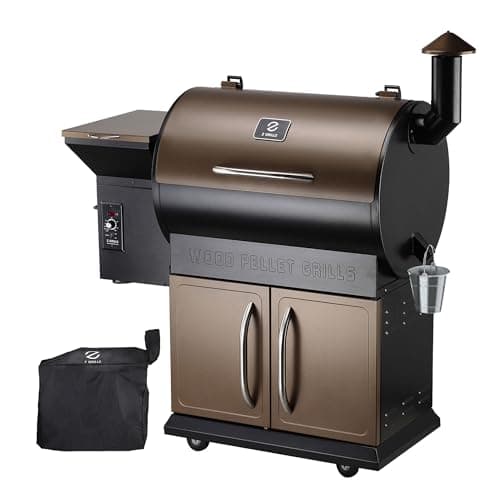
Z Grills 700D4E Wood Pellet Grill
Price as of October 21, 2026. #ad How we’re funded
What it is
The Z Grills 700D is a mid-size wood-pellet grill built around one idea: deliver the fundamentals of pellet cooking for the lowest sensible price. It works like every pellet grill — an auger feeds hardwood pellets from a 20 lb hopper into a firepot, a hot rod lights them, and a controller meters fuel to hold your setpoint — across 697 square inches of porcelain-coated grate. Z Grills isn’t a flashy brand; it’s a value one, widely owned precisely because it does the job without the price premium of the name brands. If your goal is to smoke a brisket or a rack of ribs without spending Traeger money, this is the archetype.
The controller and temperature
The reason the 700D is worth recommending rather than just cheap is its PID controller. A PID reads the chamber temperature continuously and trims the auger in small corrections, so the grill settles into a tight band and holds it — the difference between a clean 225°F smoke and the wide sawtooth swing of the cheap on/off controllers that used to define the budget end. In practice the 700D holds a low-and-slow line about as steadily as grills costing far more; the fire management, which is the part that actually determines your barbecue, is genuinely good. For most cooks, that’s the spec that matters most, and the 700D nails it for the money.
Capacity and everyday use
697 square inches is real capacity — enough for several racks of ribs, a couple of pork butts, or a brisket with room to spare — and the 20 lb hopper runs a long cook without constant refilling. The grill is simple, sturdy and widely owned, which means it’s well understood and easy to find help and parts for from the community even if the official network is smaller. Assembly is straightforward, and there’s nothing fussy about running it: fill the hopper, set the dial, and cook. It’s an honest, functional grill that does what it says.
Where it falls short
Two things, both about what’s not there. First, no app control at this trim — you set the temperature on the controller, not your phone. WiFi is convenience, not accuracy (a cheap WiFi meat thermometergets you phone alerts on any grill), but if watching the cook from the couch matters to you, know it’s missing here. Second, the support and parts network is smallerthan Traeger’s — fine for most owners, but a consideration if you want a big-brand dealer behind the grill. The 700D also tops out around 450°F, so it’s a smoker first and no searing champion. None of these undermine the cooking; they’re the corners cut to hit the price.
Value in context
It’s worth being clear-eyed about what “budget” means here, because the 700D isn’t cheap in the sense of flimsy — it’s cheap in the sense of not paying for a brand. The steel, the PID controller and the auger do the same fundamental work as the hardware in a grill costing hundreds more; what you’re not paying for is the app, the marketing, the dealer network and the resale premium that come with a name like Traeger. For a cook whose goal is to put good barbecue on the table — a steady 225°F for ribs, a long hold for a pork butt — that’s money not spent rather than corners cut. The honest counterpoint is that the intangibles a premium brand sells are real to some buyers: resale value if you upgrade, a big support organization if something breaks, and the convenience of app control. If those matter to you, they’re worth paying for; if they don’t, the 700D delivers the part that actually cooks for a lot less. Pair it with a good leave-in thermometerand it wants for nothing on a real cook. And the fundamentals of running any pellet grill — good pellets, ash cleanout, keeping moisture out of the hopper — apply here exactly as they do on a Traeger; see how a pellet grill works.
Who should buy it
Buy the Z Grills 700D if you want the most steady, capable pellet cooking for the least money and you don’t care about app control or a big dealer network. It’s the value pick for someone whose priority is smoking good barbecue on a budget — and it’s our budget pick in the best pellet grills roundup. If you want the app, the ecosystem and the resale value, pay up for a Traeger — we weigh the two in Z Grills vs Traeger. And if you also want to sear on your pellet grill, look at a direct-flame model in Pit Boss vs Camp Chefinstead. The straight head-to-head against the other value brand — which is the comparison most 700D shoppers are actually running — is Pit Boss vs Z Grills.
Frequently asked questions
Is the Z Grills 700D a good pellet grill?
Yes, for the money — it's the price-per-square-inch champion. Its PID controller holds a low-and-slow temperature about as steadily as grills costing far more, 697 sq in and a 20 lb hopper handle real cooks, and it does the core pellet-grill job well for hundreds less than a Traeger. What you give up is app control and a big dealer network. If your priority is steady smoking on a budget, it's an easy recommendation.
Does the Z Grills 700D have WiFi?
Not at this trim — you set the temperature on the controller rather than your phone. WiFi is convenience, not accuracy, so the cooking isn't affected, but if you want to monitor and adjust from the couch, the 700D doesn't offer it here. A cheap WiFi meat thermometer gets you the same remote alerts on any grill, which is the workaround many budget-grill owners use.
How big is the Z Grills 700D?
It offers 697 square inches of cooking area and a 20 lb pellet hopper, with a temperature range of about 180-450°F. That's genuine mid-size capacity — enough for several racks of ribs, a couple of pork butts, or a brisket with room to spare — and the 20 lb hopper runs a long cook without constant refilling. It's a smoker-first grill; the 450°F ceiling means it roasts rather than hard-sears.
Z Grills 700D or Traeger — which should I buy?
Buy the Z Grills 700D if you want the most steady pellet cooking for the least money and don't need app control or a big dealer network. Buy a Traeger if you want the WiFIRE app, the deepest accessory and parts ecosystem, and strong resale value, and you'll pay a premium for that polish. The core low-and-slow cooking is similar; you're deciding whether the ecosystem and app are worth hundreds more. Our Z Grills vs Traeger comparison covers it.
Can you sear on the Z Grills 700D?
Not really — it tops out around 450°F, which roasts a steak but won't build a hard crust. Like most pellet grills, it's built for low-and-slow smoking, where it excels, rather than high-heat searing. If searing matters to you, look at a pellet grill with a direct-flame hatch, like the Pit Boss Navigator's Flame Broiler, or plan to finish steaks on a separate hot grill.
Keep reading
Z Grills vs Traeger
Price-per-square-inch value against the biggest ecosystem in pellet — which is your money better spent on.
Read the comparison →Best Pellet Grills
All five pellet grills we rank, on cooking area, hopper, controller and searing.
See the roundup →Pit Boss vs Z Grills
The 700D4E against the Navigator 850 — 235 more square inches, a bigger hopper, an app and a searing lever, for more money.
Compare them →