Pellet Grill vs Charcoal Grill
These two cookers are not competing on quality — they are competing on what you are willing to do on a Saturday. One manages the fire for you and tastes milder; the other tastes stronger, sears harder and costs far less, and asks you to pay attention. Here is the decision on the numbers.
Quick answer
Buy a pellet grill if you want to smoke things that take eight hours and not watch them.It is a thermostat with a fire attached: set 250°F and it holds it, which makes brisket, pork shoulder and ribs genuinely low-effort. Buy a charcoal grill if flavor and searing heat matter more than convenience, or if the budget is tight — a 22-inch kettle costs a fraction of a pellet grill, reaches far higher grate temperatures and tastes noticeably stronger, because a live charcoal fire produces smoke a clean pellet burn does not. If you only ever cook steaks and burgers, charcoal wins outright. If you mostly cook barbecue on weekends and value your afternoon, pellet wins outright.
They burn differently, and everything else follows from that
A charcoal grill burns lump or briquettes in an open bed, and you control the heat by controlling airflow through two vents. Nothing is automated. Within that constraint it can do almost anything: a full chimney spread flat gives you a searing bed in the 600°F range, and the same grill banked to one side with the snake methodwill hold 225°F for six hours.
A pellet grill burns compressed hardwood sawdust, fed by an auger into a small firepot with a fan behind it, and a controller decides the feed rate from a temperature reading. That loop is the entire value proposition — the full mechanism is in how a pellet grill works. It also sets the ceiling: a small, fan-forced, efficient fire is a clean fire, and clean fires make little smoke.
Hold onto that one sentence, because it explains every difference below. Charcoal gives you a big, dirty, hot fire you have to manage. Pellets give you a small, clean, cool fire that manages itself.
Side by side
| Pellet grill | Charcoal grill | |
|---|---|---|
| Smoke flavor | Mild. Real, but light | Strong, and stronger again with wood chunks |
| Temperature control | Set a number; the controller holds it | Two vents and your judgement |
| Typical top temperature | 450–500°F (sear models excepted) | 600°F+ over a full chimney |
| Searing | Limited without a flame mechanism | Its strongest suit |
| Effort on a 12-hour cook | Fill the hopper, press a button | Fuel and vent management every 45–60 min |
| Time to cooking heat | 10–15 min, hands-off | 15–20 min, chimney required |
| Needs electricity | Yes — it is an appliance | No |
| Fuel cost per cook | 1–3 lb pellets per hour | Lower, and lump lasts well in a closed cooker |
| Entry price | Several hundred and up | A fraction of that for a 22-inch kettle |
| Parts that can fail | Igniter, fan, auger motor, controller | Essentially none |
| Portable | Only with an outlet | Yes |
Where the pellet grill genuinely wins
Long unattended cooks.This is not a small advantage, it is the whole reason the category exists. A brisket is a ten to fourteen hour cook, and on charcoal that means a decade’s worth of fuel additions and vent nudges, or an overnight alarm clock. On a pellet grill you fill a 20 lb hopper, set 250°F and go to bed. Our pellet consumption arithmetic shows when even that needs a top-up.
Repeatability. A PID controller holds a tighter line than almost anyone can hold by hand, which means your fourth pork shoulder comes out like your third. That is worth a lot if you cook for other people.
Baking and roasting.A pellet grill is a convection oven that happens to burn wood. It will do a turkey, a tray of wings or a pizza at a steady 400°F without any of the hot-spot management a kettle needs.
Where the charcoal grill genuinely wins
Flavor. Nothing on a pellet grill matches a charcoal fire with oak or hickory chunks on it. The techniques in how to get more smoke flavor from a pellet grill narrow the gap and do not close it. If strong smoke is what you want, this decides it.
Searing heat.A chimney of lump spread under the grate puts serious radiant heat on a steak. Most pellet grills stop at 450 to 500°F, which browns but does not crust — the exceptions are in pellet grills for searing, and they work by adding a direct-flame mechanism rather than by running hotter all over.
Price, and what price buys. A charcoal kettle costs a small fraction of a mid-range pellet grill. That difference is enough to buy several years of good lump charcoal and still have money left for a thermometer and gloves.
Nothing to break.A kettle is a bowl, a lid, a grate and two vents. A pellet grill has an igniter, a fan, an auger motor and a controller, all of which eventually wear — see how long pellet grills last. A twenty-year-old kettle is unremarkable; a twenty-year-old pellet grill has had parts replaced.
How this is funded: we earn a commission if you buy through our links, at no extra cost to you. It never changes which product we recommend, and we’ll tell you when we’d skip one, or point you to a cheaper option when it’s the better buy. Full disclosure.
One of each, and the fuel that decides the charcoal side
Live prices, fetched and date-stamped. The pellet pick is the one that answers charcoal's best argument, the charcoal pick is the kettle an upgrader actually wants, and the third is the consumable that does more for charcoal cooking than any hardware.
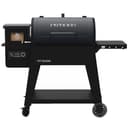
Pit Boss Navigator 850 Wood Pellet Grill
932 sq in, a 30 lb hopper and WiFi, plus a Flame Broiler lever that opens direct flame for searing to around 1,000°F — which is the one pellet grill feature that addresses charcoal's strongest argument.
Price as of October 16, 2026. #ad How we’re funded
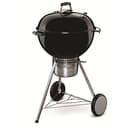
Weber Master-Touch 22-inch Charcoal Grill
443 sq in total, a hinged Gourmet BBQ System grate that takes sear grates and griddles, Char-Rails for banking a two-zone fire and a Tuck-Away lid holder. The kettle to buy if you intend to cook seriously on charcoal.
Price as of October 16, 2026. #ad How we’re funded
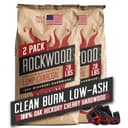
Rockwood All-Natural Lump Charcoal (20 lb, 2-pack)
A US-made all-rounder in Missouri oak, hickory, maple and pecan, sorted for consistent lump size. Charcoal's flavor advantage over pellets comes from the fuel, so this is the cheapest upgrade on the charcoal side of the comparison.
Price as of October 16, 2026. #ad How we’re funded
Three questions that settle it
1. What is the longest thing you will actually cook? If the honest answer is chicken, burgers and the occasional rack of ribs, charcoal does all of that better and cheaper. If you want brisket and pork shoulder regularly, the pellet grill is buying back your Saturday.
2. Do you want to learn fire management, or avoid it?Some people enjoy it. If managing a fire sounds like the good part of barbecue, you will find a pellet grill a little inert — and an entry-level offset is probably where you are actually headed. If it sounds like a chore, do not buy a cooker that requires it.
3. Is there an outlet where the grill will live?A pellet grill is an appliance. No power, no cook — which rules it out for a lot of campsites, tailgates and remote decks where a kettle is perfectly happy.
Why a lot of people end up with both
It is the most common outcome among people who cook a lot, and it is not indecision. The two cookers cover each other’s weaknesses almost exactly: the pellet grill does the long, unattended, repeatable cooks, and the kettle does the fast, hot, high-flavor ones. Because a charcoal kettle is so cheap next to a pellet grill, adding one later is a minor purchase rather than a second big decision.
If you are buying one cooker and want it to do both jobs honestly, the real answer is neither of these — it is a kamado, which runs 225°F all day on charcoal and still sears at the top end. It costs more than a kettle and asks you to manage a fire, which is the trade.
Frequently asked questions
Is a pellet grill better than a charcoal grill?
Neither is better overall; they are good at different things. A pellet grill is better for long unattended cooks, repeatability and anything you would rather set and forget, because a controller holds the temperature for you. A charcoal grill is better for flavor, searing heat and value, because a live charcoal fire burns hotter and dirtier and a kettle costs a fraction of a pellet grill. Pick on what you actually cook and how much attention you want to give it.
Does a pellet grill taste as good as charcoal?
It tastes milder. A pellet grill's fire is small, fan-forced and efficient, and efficient fires produce little smoke — that is physics rather than a design flaw. You get real wood flavor, just noticeably less of it than a charcoal fire with oak or hickory chunks on it. Techniques like running lower temperatures, using a smoke tube and choosing stronger pellets narrow the gap and do not close it. If deep smoke flavor is your main goal, charcoal or wood is the honest answer.
Can a pellet grill sear like charcoal?
Most cannot. The majority top out between 450 and 500°F, which browns a steak but will not build a hard crust, while a full chimney of lump under a grate puts a charcoal grill north of 600°F. Some pellet grills add a direct-flame mechanism — the Pit Boss Navigator 850's Flame Broiler lever opens the firepot for searing to around 1,000°F — and those are the ones to look at if searing matters. Otherwise plan to finish steaks in a cast-iron pan.
Is a pellet grill or charcoal grill cheaper to run?
Charcoal, usually. A pellet grill burns roughly one to three pounds of pellets an hour depending on set temperature and weather, so a long cook goes through a meaningful share of a bag. Charcoal in a closed cooker with the vents managed is economical, and lump burns longer per pound than most people expect. Charcoal also wins decisively on up-front cost: the price gap between a kettle and a mid-range pellet grill buys several years of fuel.
Do pellet grills need electricity?
Yes. The auger motor, the induction fan, the hot rod igniter and the controller all run on mains power, so a pellet grill is an appliance rather than a fire — no outlet means no cook. That rules it out for most campsites, tailgates and remote decks, where a charcoal grill works anywhere. A few owners run one from a portable power station, which works but adds cost and another thing to charge.
Which is easier for a beginner, pellet or charcoal?
A pellet grill, by a wide margin, because the controller removes the skill the beginner has not learned yet. You set a temperature and the grill holds it, so your first pork shoulder is likely to come out well. Charcoal asks you to light a fire properly, bank it for two-zone cooking and hold a line with two vents, which is learnable in a weekend but is a genuine skill. The honest caveat is that the easier cooker is also the milder-tasting one.
What about a charcoal grill with wood chunks versus a pellet grill?
That comparison widens the flavor gap rather than closing it. Wood chunks on a charcoal fire burn slowly enough to smolder and smoke for a long time, which is exactly what a clean pellet burn cannot reproduce. A 22-inch kettle running the snake method with post oak chunks will out-flavor almost any pellet grill at any setting. What it will not do is hold that temperature unattended for twelve hours, which is the trade the whole page is about.
Should I buy both a pellet grill and a charcoal grill?
It is the most common end state among people who cook a lot, and the logic holds up: the two cookers cover each other's weaknesses almost exactly. The pellet grill takes the long, repeatable, unattended cooks and the kettle takes the fast, hot, high-flavor ones. Because a charcoal kettle is cheap relative to a pellet grill, adding one later is a minor purchase. Buy whichever one matches your most frequent cook first, then add the other.
Keep reading
Best Pellet Grills for Beginners
If the pellet side wins — four ranked on how little there is to learn, not on price.
See the picks →How to Get More Smoke Flavor From a Pellet Grill
Six changes that genuinely work, three that do nothing, and an honest ceiling on how far technique gets you.
Read the guide →Charcoal vs Gas Grill
The other half of the charcoal decision — flavor and heat against speed and convenience.
Compare them →Kamado Grill vs Pellet Grill
The one-cooker answer that does both jobs: charcoal flavor, 225°F all day, and real searing heat.
Compare them →