Char-Griller Akorn vs Kamado Joe
The steel kamado against the ceramic benchmark. What triple-wall steel gives up in heat retention and durability, what it saves you, and which one is the right first kamado for you.
Quick answer
Buy the Char-Griller Akorn to try the kamado shape or move it around — triple-wall steel weighs about a third what the ceramic does, costs a fraction as much, heats up faster and won’t crack if you knock it, though it holds a low temperature slightly less steadily and its coating wears over the years. Buy the Kamado Joe Classic II to keep for decades— thick ceramic holds heat rock-steady and it ships with premium stock accessories, at the cost of being heavier, pricier and crackable if abused.
How this is funded: we earn a commission if you buy through our links, at no extra cost to you. It never changes which product we recommend, and we’ll tell you when we’d skip one, or point you to a cheaper option when it’s the better buy. Full disclosure.
| Spec | 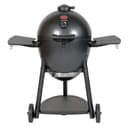 | 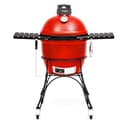 |
|---|---|---|
| Cooking area | 447 sq in (total) | 256 sq in (18 in) |
| Temp range | 200-700°F | 225-750°F+ |
| Weight | 100 lb | 188 lb |
| Price | $399.99 · View on Amazon Price as of October 21, 2026. #ad How we’re funded | $1,499.00 · View on Amazon Price as of October 21, 2026. #ad How we’re funded |
The short version
The Char-Griller Akorn and the Kamado Joe Classic II are the same shape solving the same problem two different ways. Both are sealed, egg-shaped charcoal cookers that sip fuel and run from a low-and-slow smoke to a hard sear. What splits them is the wall: the Akorn builds the kamado out of triple-wall 22-gauge steel, while the Classic II builds it out of 1.25 in ceramic. That one material choice cascades into everything a buyer actually feels — heat retention, weight, durability, what comes in the box, and price. Neither is a mistake; they aim at different buyers. This is the fork we walk through in ceramic vs steel kamados, applied to the two specific grills people cross-shop most.
One step back, if you are arriving here from a kettle: both of these give you less primary grate than a 22-inch Weber for considerably more money, and what you are buying instead is heat retention and temperature range. Whether that is the trade you actually want is the subject of Weber kettle vs kamado — worth reading before either of these, because for a lot of kettle owners the answer is no.
Construction: triple-wall steel vs 1.25 in ceramic
The Akorn is a steel kamado. Its body is three layers of 22-gauge steel with insulating air gaps between them, which is how a metal grill mimics the heat-holding behavior of a ceramic one without the mass. The whole thing weighs about 100 lb and gives you 447 sq in of total cooking area (314 sq in on the primary grate). The Classic II is the ceramic archetype: a 1.25 in-thick ceramic body that stores a huge amount of heat in its walls and radiates it back at the food, over 256 sq in of cooking area in the 18 in size. The steel version reaches temperature faster because there’s far less mass to warm up; the ceramic version takes longer to load but then behaves like a thermal flywheel, which is exactly what you want for an all-day cook.
Heat retention and fuel efficiency
This is where ceramic earns its price. The Classic II’s thick walls hold a set temperature rock-steady for hours with only small vent adjustments, and they shrug off wind and cold better than steel does — the mass simply doesn’t care much about the weather. The Akorn holds heat well for a metal grill, better than any bare-wall cooker, but its lighter body is more responsive to outside conditions: a cold, breezy day pulls heat out of it faster, so you ride the vents a little more to keep a low temp pinned. Both are genuinely fuel-efficient because both seal tightly and choke the fire with airflow rather than burning wide open — the Akorn runs a 200–700°F range and the Classic II a 225–750°F+ range, so either one covers everything from a 225°F brisket to a searing steak. The difference is steadiness, not capability. If you want to understand why, the physics is the whole point of ceramic vs steel.
Durability, weight and portability
Steel and ceramic fail in opposite ways, and that shapes who each grill suits. The Akorn’s steel body won’t crack— you can knock it, move it, or load it into a truck without a second thought, and at roughly 100 lb one person can wheel it around a patio or take it to a friend’s place. The trade is that its powder-coat finish and its gaskets wear faster than ceramic over years of thermal cycling, so it’s the grill you replace a gasket on, not the grill your grandkids inherit. The Classic II is the reverse: at 188 lb of ceramic it’s a place-it- once, leave-it-forever grill, and while the ceramic is superb it is fragile — drop the lid hard or let water freeze inside a neglected body and it can crack. Site it carefully on a solid surface. One is durable against impact; the other is durable against time.
Accessories: Divide & Conquer and the Kontrol Tower
The Classic II doesn’t just cook well; it ships with hardware you’d otherwise buy separately. Its Divide & Conquer rack system splits the cooking surface into independent half-racks you can set at different heights, so you can sear low on one side and roast higher on the other in a single cook. The Kontrol Towertop vent is machined to hold a precise setting and stays calibrated even when you open the lid, and the Air Lift hinge counterbalances the heavy ceramic dome so it opens with one finger. That kit is the reason the Classic II out-features the Big Green Egg at the same size. The Akorn’s stock hardware is far simpler — a basic grate, a straightforward damper top and bottom, a latch and a bottom ash pan that’s genuinely handy for cleanout. It cooks the same food; it just gives you fewer built-in ways to stage a multi-zone cook out of the box.
Price and value
The gap here is large and it’s the honest reason both grills exist. The Akorn costs a fraction of the Classic II — it’s one of the cheapest genuine ways into the kamado shape, which is the whole appeal. The Classic II sits at ceramic-premium money, but it’s the value benchmark withinceramic: it undercuts a comparably sized Egg while giving you more accessories, so among thick-walled kamados it’s the sensible buy rather than the extravagant one. So “value” depends on what you’re buying. If you want the lowest cost of entry to find out whether you even like cooking on a kamado, the Akorn is unbeatable value. If you want a grill that will still be holding 225°F steadily in twenty years, the Classic II’s higher price is spread over a very long life.
Which to buy
Buy the Char-Griller Akornif you want to try the kamado shape without spending ceramic money, if you need to move the grill around or take it places, or if your budget simply won’t stretch to ceramic yet. You’ll get real kamado cooking — the fuel efficiency, the wide temperature range, the sear — and you’ll learn the vents on a grill that heats fast and can’t crack. Buy the Kamado Joe Classic IIif you already know you love the format and want to keep one grill for decades: the rock-steady heat, the Divide & Conquer racks and the premium vent hardware make it the one you settle down with. Either way, read our how to use a kamado grill guide before your first cook, and weigh both against the wider field in the best kamado grills roundup.
Frequently asked questions
Is the Char-Griller Akorn as good as a Kamado Joe?
For the cooking itself it's remarkably close — both sip fuel and run from a low smoke to a hard sear. Where the Kamado Joe pulls ahead is heat steadiness, durability over decades and its stock accessories. The Akorn's edge is price, weight and crack-proof steel. It's genuinely good; it just aims at a different buyer than the ceramic Classic II.
Does a steel kamado hold heat as well as ceramic?
Not quite. The Akorn's triple-wall 22-gauge steel holds heat well for a metal grill and stays efficient, but the Kamado Joe's 1.25 in ceramic mass holds a low temperature more steadily and resists wind and cold better. In practice you ride the Akorn's vents a little more to keep a low temp pinned. The gap is steadiness, not the temperature range you can reach.
Which kamado is easier to move?
The Akorn, by a wide margin. At around 100 pounds of steel it's roughly a third the weight of the 188-pound ceramic Classic II, so one person can wheel it around a patio or load it into a vehicle. The Classic II is a place-it-once grill — you set it on a solid surface and leave it there. If portability matters at all, the steel Akorn wins.
Can the Kamado Joe Classic II crack?
It can if abused. Ceramic is fragile against impact and freezing water — drop the heavy lid hard, or leave water pooled inside a neglected body over a hard freeze, and the ceramic can crack. Sited carefully and covered, it lasts for decades. The steel Akorn is the opposite: its body won't crack, but its powder-coat finish and gaskets wear faster over the years.
Should a first-time kamado buyer get the Akorn or the Kamado Joe?
If you're unsure you'll stick with the format, or you're on a tight budget or need to move it, start with the Akorn — it's the cheapest genuine way into the shape and can't crack while you learn. If you already know you want a kamado for the long haul and have a permanent spot for it, the Classic II's steadier heat and better accessories are worth the jump.
Keep reading
Char-Griller AKORN Review
Triple-wall steel instead of ceramic — the kamado at a fraction of the price, and what the trade actually is.
Read the review →Ceramic vs Steel Kamados
The material fork behind this whole comparison — what each wall type gives and takes.
Read the comparison →Best Kamado Grills
Ceramic and steel kamados, ranked on build, cooking area and value.
See the roundup →