Oklahoma Joe's Highland vs Longhorn
The two Oklahoma Joe offsets every upgrader cross-shops. The Highland is lighter, more forgiving reverse-flow; the Longhorn is bigger, heavier 2.5 mm steel that holds temperature harder. Here's which one fits your space, your menu and how you want to cook.
Quick answer
Buy the Highland Reverse Flow if you want the more forgiving, easier-to-place offset— its reverse-flow baffles even out the hot spot, and it’s lighter and cheaper. Buy the Longhorn if you want heavier steel and more room— a 2.5 mm cold-rolled chamber that rides out the stall and a bigger cooking area, at the cost of weight and price. Highland for the forgiving first serious offset; Longhorn for the cook who wants mass and a traditional layout.
How this is funded: we earn a commission if you buy through our links, at no extra cost to you. It never changes which product we recommend, and we’ll tell you when we’d skip one, or point you to a cheaper option when it’s the better buy. Full disclosure.
| Spec | 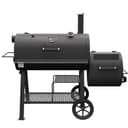 | 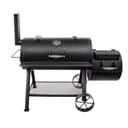 |
|---|---|---|
| Total cooking area | 1,093 sq in | 1,060 sq in |
| Configuration | Reverse-flow (convertible) | Traditional offset |
| Price | $729.00 · View on Amazon Price as of September 21, 2026. #ad How we’re funded | $629.99 · View on Amazon Price as of September 21, 2026. #ad How we’re funded |
The short version
The Oklahoma Joe’s Highland and Longhorn are the two offsets nearly every upgrader lands between — both are heavy-enough steel at a hobbyist price, both carry the Oklahoma Joe reputation, and they split along two axes: how forgiving the airflow is, and how much steel and space you’re buying. The Highland we compare here is the Reverse Flow version, whose baffle plates push heat and smoke down the length of the chamber and back before it exits, evening out the hot spot that plagues cheaper offsets. The Longhorn here is the standard traditionaloffset, built from noticeably heavier 2.5 mm cold-rolled steel, with more cooking area and a good deal more weight. Neither is better in the abstract; they suit different cooks.
Steel and heat retention
This is the Longhorn’s advantage. Its cooking chamber is built from 2.5 mm cold-rolled steel — genuinely heavier metal than most offsets in this price class — and that mass is what lets it store heat and ride out the temperature dips that come every time you open the lid or the fire settles between splits. The Highland uses a lighter heavy-gauge steel; it still cooks well, but it responds faster to wind and cold and needs the fire watched a little more closely. If you cook in an exposed yard, in shoulder-season weather, or you just want the pit to do more of the temperature-holding for you, the heavier Longhorn steel is the more forgiving-to-the-fire choice — even though, ironically, the Highland’s reverse-flow airflow is the more forgiving-to-the-cook one.
Airflow: reverse-flow vs traditional
This is the Highland Reverse Flow’s advantage. In a traditional offsetlike the standard Longhorn, heat drafts from the firebox straight across and out the far-side chimney, so the firebox end always runs hotter — a gradient a skilled cook uses on purpose and a beginner fights. The Highland’s reverse-flow baffles force the heat down under a set of plates to the far end and back, so it exits near the firebox and the whole chamber cooks more evenly. For a first serious offset, that evenness buys you forgiveness. Note the Highland Reverse Flow is convertible — remove the plates and move the stack and you can run it as a traditional offset too — which makes it the more flexible of the two on airflow.
Cooking area and capacity
Both are big smokers; the split is in how the area is arranged. The Highland Reverse Flow gives 619 sq in of primary cooking space (1,093 sq in total with the warming rack); the Longhorn gives 751 sq in in the main chamber (1,060 sq in total). In practice both handle two full briskets or a big load of ribs, but the Longhorn’s larger main chamber is the pick if you routinely cook for a crowd and want the extra flat grate for big cuts. Remember that more chamber is also more steel to bring up to temperature and more fuel to keep there.
Weight and placement
This is worth thinking about before you buy, because it’s the one thing you can’t mod away. The Longhorn’s heavier steel makes it a heavy, planted smoker — roughly 226 lb assembled — the kind of thing you position once and leave. The Highland is meaningfully lighter and easier to move and store. If you need to wheel the smoker in and out of a garage or around a small patio, the Highland is far more livable; if it’s going to sit on a pad and never move, the Longhorn’s weight is only an assembly-day problem.
Highland vs Longhorn by the numbers
| Spec | Highland Reverse Flow | Longhorn (traditional) |
|---|---|---|
| Primary cooking area | 619 sq in | 751 sq in |
| Total cooking area | 1,093 sq in | 1,060 sq in |
| Steel | Heavy-gauge | 2.5 mm cold-rolled |
| Airflow | Reverse-flow (convertible) | Traditional offset |
| Weight | Lighter, easier to move | ~226 lb, plant it once |
| Best for | The forgiving first serious offset | Heavier steel and a traditional layout |
Which should you buy?
Buy the Highland Reverse Flowif you want the most forgiving offset to learn and live with — even heat from the baffles, lighter weight, a lower price, and the flexibility to convert to traditional airflow later. It’s our overall pick in the best offset smokers roundup for exactly these reasons. Buy the Longhornif you want the heavier 2.5 mm steel that holds temperature harder, a bit more main-chamber room, and you’re happy to run a traditional hot-end layout and place a heavy smoker once. If you specifically want the Longhorn’s steel andreverse-flow evenness, there’s a Longhorn Reverse Flow that combines both — it’s the priciest of the line, and we cover it in the roundup. Whichever you pick, buy a good probe thermometer with it and read how to use an offset smoker before your first cook.
Frequently asked questions
Is the Oklahoma Joe's Highland or Longhorn better?
Neither is strictly better — they suit different cooks. The Highland Reverse Flow is lighter, cheaper and more forgiving thanks to reverse-flow baffles that even out the heat, making it the better first serious offset. The Longhorn uses heavier 2.5 mm cold-rolled steel that holds temperature harder and gives a bit more main-chamber room, at the cost of weight and price. Choose the Highland for forgiveness and flexibility, the Longhorn for mass and capacity.
What's the difference between the Highland and Longhorn?
Three things: airflow, steel and size. The Highland version compared here is reverse-flow, using baffle plates to even out the chamber temperature; the standard Longhorn is a traditional offset with a hotter firebox end. The Longhorn uses heavier 2.5 mm cold-rolled steel and is a larger, heavier smoker (around 226 lb) with a bigger main chamber. The Highland is lighter, easier to place, and convertible between reverse-flow and traditional airflow.
Is reverse-flow worth it on an Oklahoma Joe?
For most new offset owners, yes. Reverse-flow baffles push heat down the length of the chamber and back before it exits, which evens out the hot spot near the firebox and makes the smoker more forgiving to run — you fight the fire less. The Highland Reverse Flow also converts back to a traditional smokestack setup if you later prefer to run a hot end for grilling or multi-zone cooking, so you don't lose the option.
How heavy is the Oklahoma Joe's Longhorn?
The standard Longhorn is roughly 226 lb assembled — a consequence of its heavier 2.5 mm cold-rolled steel chamber. That mass is exactly what helps it hold temperature, but it also means you should plan to assemble it in place and leave it there. If you need to move the smoker around a patio or in and out of storage, the lighter Highland is much more practical.
Can the Highland and Longhorn run as traditional or reverse-flow?
The Highland Reverse Flow and Longhorn Reverse Flow models are convertible: remove the reverse-flow baffle plates and reposition the smokestack and they run as traditional offsets. The standard Longhorn is a traditional offset out of the box. So if you want the option to run both airflow styles, choose one of the Reverse Flow models — the Highland for a lighter, cheaper pit, the Longhorn Reverse Flow for the heaviest steel with even heat.
Keep reading
Best Offset Smokers
All seven offsets we rank, on steel gauge, cooking area and price.
See the roundup →Oklahoma Joe's Longhorn Review
A closer look at the heavier Longhorn — its 2.5 mm steel, capacity and the mods it wants.
Read the review →Reverse-Flow vs Traditional Offset
What reverse-flow baffles really do, and when a traditional offset is the smarter buy.
Read the comparison →Oklahoma Joe's Longhorn Reverse Flow Review
Want the Longhorn's size with the Highland's even heat? The reverse-flow Longhorn, reviewed on the numbers.
Read the review →