Grate & Grill
Fuel picks

Best Wood Pellets for Smoking

The pellets are the only ingredient your grill adds to the food, and the only running cost you can't avoid. Here are the bags worth buying, compared on wood, composition and size, with a live price on every pick.

By Stephen V.Last updated Our methodology

A pellet grill has exactly one consumable, and it is doing two jobs at once. The pellets are the fuel that produces every BTU of heat, and they are the flavoring that goes into the food. Nothing else you put in the machine touches the meat. That makes the choice of bag more consequential than it looks — and it also means the two things you should judge a bag on are not the same thing. One is how it burns; the other is what it tastes like.

How it burns comes down to composition. Good barbecue pellets are compressed sawdust and nothing else — the lignin in the wood softens under pressure and binds the pellet together, so no glue or binder is needed. Cheap bags cut in filler, and filler is what leaves your firepot full of gray ash halfway through a long cook. Ash is not a cosmetic problem: a firepot choked with it starves the fire of air, the controller compensates by feeding more pellets, and you get temperature swings and eventually a shutdown. Density and sizing matter for the same mechanical reason — an auger meters pellets by volume, so inconsistent pellets mean inconsistent fuel delivery and a controller constantly correcting.

What it tastes like is where the marketing gets slippery. A bag sold as “apple” or “mesquite” is very often a base wood — usually oak or alder, because they are cheap and burn cleanly — carrying a minority of the named species, or in the worst cases a flavoring. That is not necessarily a scam; a base-wood blend can burn better than a pure bag of a soft, resinous species. But it does mean that if you specifically want assertive hickory on a pork shoulder, you have to buy a bag that says 100% and means it, which is exactly why one of our four picks is a single-species bag.

The last variable is simply bag size, and it matters more than people expect, because pellet consumption is real. A long cook at smoking temperatures can burn through a large share of a standard bag on its own, and more in cold or windy weather. Cost per pound, not cost per bag, is the number to compare. We haven’t tested these — our methodologyexplains what we do instead, which is read the published composition and specs and be straight about what is and isn’t verifiable on a bag of sawdust.

How this is funded: we earn a commission if you buy through our links, at no extra cost to you. It never changes which product we recommend, and we’ll tell you when we’d skip one, or point you to a cheaper option when it’s the better buy. Full disclosure.

The picks, side by side

Ranked, with the published specs and a live price on every pick. Select a row to jump to the full write-up. We haven’t tested these ourselves — here’s exactly what we do instead.

#ProductBag sizeWoodsPrice
1
Traeger Signature Blend Hardwood Pellets (18 lb)

Traeger Signature Blend Hardwood Pellets (18 lb)

Best all-round blend
18 lbHickory, maple, cherry
$19.99 · View on Amazon

Price as of September 6, 2026. #ad How we’re funded

2
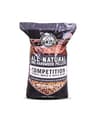
Pit Boss Competition Blend Hardwood Pellets (40 lb)

Pit Boss Competition Blend Hardwood Pellets (40 lb)

Best value per pound
40 lbMaple, hickory, cherry
$25.99 · View on Amazon

Price as of September 6, 2026. #ad How we’re funded

3
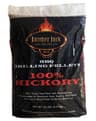
Lumber Jack 100% Hickory BBQ Pellets (20 lb)

Lumber Jack 100% Hickory BBQ Pellets (20 lb)

Best single species
20 lb100% hickory
$28.40 · View on Amazon

$37.9925% off

Price as of September 6, 2026. #ad How we’re funded

4
Bear Mountain Gourmet Blend Wood Pellets (20 lb)

Bear Mountain Gourmet Blend Wood Pellets (20 lb)

Best no-additive everyday bag
20 lbGourmet blend
$22.99 · View on Amazon

Price as of September 6, 2026. #ad How we’re funded

The picks in full

#1Best all-round blend

Traeger Signature Blend Hardwood Pellets (18 lb)

The safest default bag in the category. Hickory, maple and cherry in one blend is deliberately middle-of-the-road — assertive enough on pork and beef, mild enough that it doesn't bully chicken or fish — and Traeger's pelletizing is consistent, which matters more than romance about wood species. Consistent pellet density is what keeps an auger feeding evenly and a PID controller holding its line.

What the numbers say
  • Hickory, maple and cherry blend suits nearly any protein
  • Consistent pellet density feeds evenly through an auger
  • Stocked nearly everywhere, so re-buying is never a project
Worth knowing
  • 18 lb bag — smaller than most rivals for a comparable price
  • A blend can't be dialed to a specific meat the way a single species can

Best for: The one bag that works on everything

Specs read from Traeger Signature Blend product page + Amazon listing, last checked August 18, 2026. Prices change; the number in the card is fetched live.

#2Best value per pound

Pit Boss Competition Blend Hardwood Pellets (40 lb)

The value play, and the value is in the bag size. Forty pounds is more than double the standard bag, and pellets are the one barbecue cost that scales directly with how much you cook — an all-day brisket can burn through 15 to 20 lb on its own. The Competition Blend of maple, hickory and cherry lands in the same all-purpose territory as Traeger's Signature, for materially less per pound.

What the numbers say
  • 40 lb bag — roughly double the standard size
  • Maple, hickory and cherry blend is an all-purpose profile
  • Lowest cost per pound of the bags here
Worth knowing
  • 40 lb is heavy and awkward to store dry once opened
  • Pellet consistency is a shade behind Traeger's

Best for: The best cost per pound for people who cook often

Specs read from Pit Boss Competition Blend product page + Amazon listing, last checked August 18, 2026. Prices change; the number in the card is fetched live.

#3Best single species

Lumber Jack 100% Hickory BBQ Pellets (20 lb)

A single-species bag, which is the point. Plenty of pellets sold as hickory are a base wood carrying a minority of hickory; this bag is hickory all the way through, so what you get on pork shoulder and beef ribs is the real, assertive, bacon-adjacent smoke people are actually chasing. Use it where you want the smoke to be an ingredient rather than a background note.

What the numbers say
  • 100% hickory rather than a base wood carrying a hickory minority
  • Assertive smoke profile that stands up to pork shoulder and beef ribs
  • 20 lb bag at a sensible mid-range price
Worth knowing
  • Too assertive for chicken, fish and long cooks on delicate proteins
  • Single species means you'll want a second bag for lighter work

Best for: Pork and beef, when you want the smoke forward

Specs read from Lumber Jack 100% Hickory pellets product listing + Amazon listing, last checked August 18, 2026. Prices change; the number in the card is fetched live.

#4Best no-additive everyday bag

Bear Mountain Gourmet Blend Wood Pellets (20 lb)

The everyday bag that isn't a grill brand's own. Bear Mountain's pellets are all-natural hardwood with no binders or additives, which is the spec that matters for a clean burn and low ash — filler and binder are what leave a firepot full of gray powder halfway through a long cook. A sane 20 lb bag at a sane price, and a good default if your grill isn't a Traeger.

What the numbers say
  • All-natural hardwood with no binders or additives
  • 20 lb bag at a mid-market price
  • Blend profile works across pork, poultry and beef
Worth knowing
  • Blend composition varies between production runs
  • Less widely stocked in stores than Traeger or Pit Boss

Best for: A no-additive everyday bag at a fair price

Specs read from Bear Mountain Gourmet Blend product listing + Amazon listing, last checked August 18, 2026. Prices change; the number in the card is fetched live.

Matching wood to meat

The useful mental model is a scale from mild to assertive, and the rule is to match the strength of the wood to the strength of the meat. Overwhelm a delicate protein and you taste only smoke; under-smoke a big cut over twelve hours and the wood contributes nothing.

  • Mild — apple, cherry, maple, pecan. Poultry, fish, pork loin, vegetables, cheese. Cherry also gives the best color on poultry skin, which is why competition cooks reach for it.
  • Medium — oak. The default base wood and the safe answer for anything. Central Texas brisket is cooked over post oak for a reason: it is steady, clean and does not shout.
  • Assertive — hickory.Pork shoulder, ribs, beef ribs, bacon. This is the flavor most people mean when they say “barbecue.” It will bully chicken over a long cook.
  • Very assertive — mesquite. Best used briefly and on beef. Over a long smoke it turns bitter, which is why it is more of a grilling wood than a smoking one.
  • Blends. Deliberately middle-of-the-road, and genuinely the right answer if you want one bag that does not embarrass itself on anything.

Storage: the thing that actually ruins pellets

Pellets are compressed sawdust held together by nothing but pressure and lignin. Add moisture and they swell, crumble and turn into sawdust again — in the bag, in the hopper, or worst of all in the auger tube, where a swollen pellet jams the mechanism. This is the single most common pellet-grill failure and it is entirely preventable.

Keep opened bags in a sealed container, indoors or in a dry shed, not in the hopper. Empty the hopper if the grill will sit unused for weeks, especially in a damp season — hoppers are not airtight and overnight condensation is enough. If you find pellets that crumble to dust between your fingers, throw them out rather than feeding them through the auger. And never let a bag sit in a garage on a concrete floor, which wicks moisture up into the bag from underneath.

How much will you actually use?

Consumption scales with temperature, weather and how well insulated the grill is, so treat any published figure as a range rather than a number. What matters practically is that a full-day smoke can empty a hopper more than once, so the useful habit is checking the hopper level at the same time you check the meat — and keeping a second bag on hand before you start a long cook rather than discovering the problem at hour nine. Grills with larger hoppers, like the ones in our best pellet grills roundup, buy you more unattended hours before that becomes a question. If you want to understand exactly how the auger, firepot and controller turn these pellets into heat, that’s in how a pellet grill works.

Do you need the grill maker’s own brand?

No. Pellet grills are not printers: there is no chip in the bag and no warranty clause anywhere in the mainstream market that requires you to buy branded fuel. What matters is that the pellets are food-grade hardwood, correctly sized (roughly ¼-inch diameter is the standard) and dry. Buy on composition and cost per pound, and buy the grill maker’s bag only when it happens to be the best deal on the shelf.

Frequently asked questions

What are the best wood pellets for smoking?

For one bag that handles everything, a hardwood blend like Traeger's Signature (hickory, maple and cherry) is the safe default — assertive enough for pork and beef, mild enough not to bully chicken. If you cook a lot, a 40 lb Competition Blend bag drops the cost per pound substantially. If you want a specific, forward smoke flavor on pork or beef ribs, buy a bag that says 100% of a single species rather than a blend.

Are cheap wood pellets bad for your grill?

The cheap bags worth avoiding are the ones with filler. Good barbecue pellets are compressed hardwood sawdust and nothing else — the wood's own lignin binds them. Filler and binders burn dirty and leave far more ash, and a firepot choked with ash starves the fire of air, which makes the controller overfeed pellets and the temperature swing. Check the bag says all-natural hardwood with no additives.

Does the type of wood pellet really change the flavor?

Yes, but less dramatically than the marketing suggests, and only if the bag actually contains the wood on the label. Many pellets sold under a species name are mostly a cheap base wood such as oak or alder with a minority of the named wood. A genuine 100% hickory bag tastes clearly stronger than a blend on pork shoulder; a 'hickory' blend may be barely distinguishable from a general-purpose bag.

How should you store wood pellets?

Sealed and dry. Pellets are held together only by pressure and the wood's own lignin, so moisture makes them swell and crumble back into sawdust — which then jams the auger. Keep opened bags in a sealed container somewhere dry, don't leave pellets sitting in the hopper between cooks in damp weather, and don't store bags directly on a concrete garage floor, which wicks moisture up from underneath.

Do you have to use the same brand of pellets as your grill?

No. There's no chip in the bag and no mainstream warranty that requires branded fuel. What matters is that the pellets are food-grade hardwood, dry, and the standard size (roughly a quarter-inch in diameter) so the auger meters them consistently. Buy on composition and cost per pound; the grill maker's own bag is worth buying only when it happens to be the best value on the shelf.

Keep reading