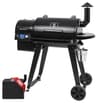
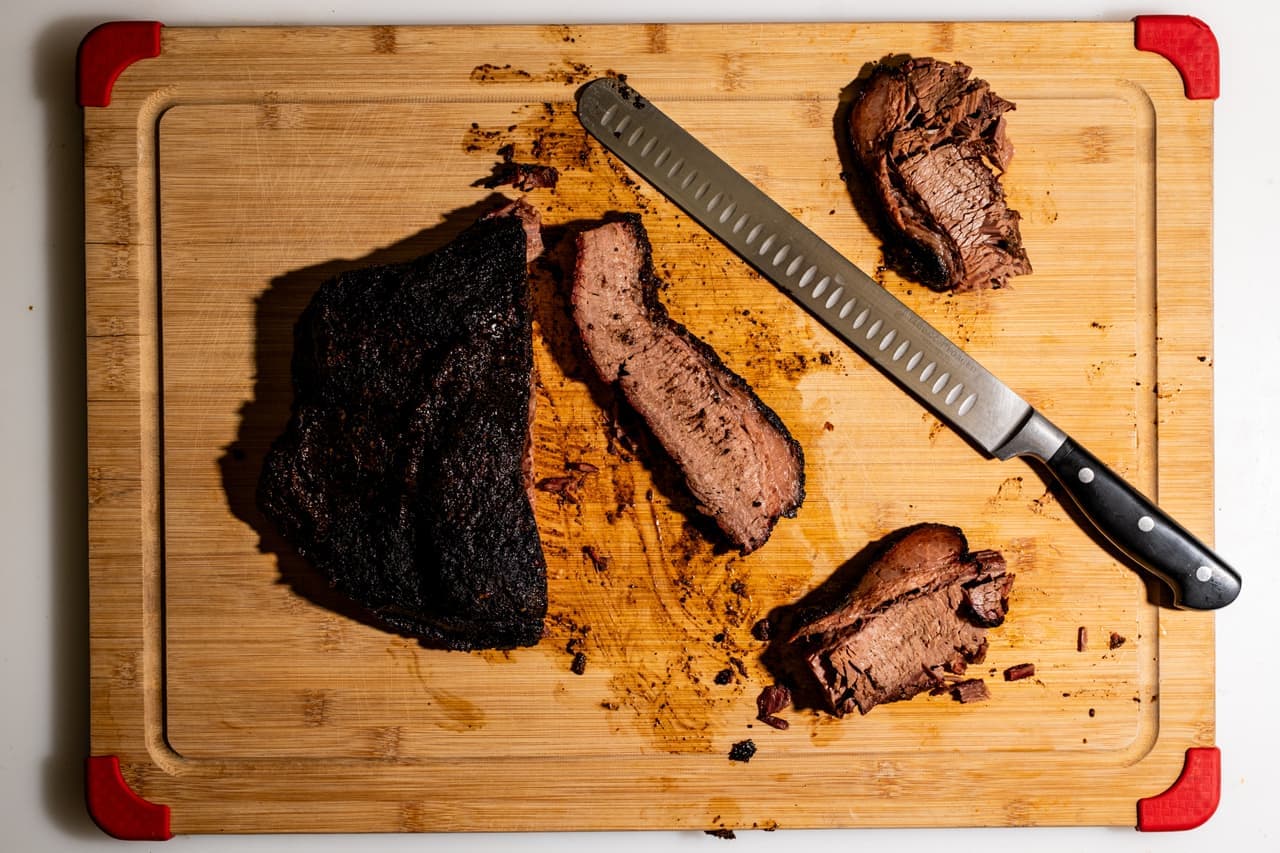
A pellet grill is a wood-fired oven with a thermostat. An auger feeds compressed hardwood pellets from a hopper into a firepot, a hot rod lights them, and a fan keeps the fire breathing while a controller adds or withholds fuel to hold whatever temperature you dial in. That is the whole pitch: the wood-smoke flavor of burning hardwood with roughly the effort of running a kitchen oven. For someone moving up from a gas grill or a kettle, it is the shortest honest path to pulling a brisket off the grate without babysitting a fire for twelve hours.
The part that decides how well any pellet grill actually holds a line is the controller. The cheap end of the market still ships simple on/off or three-position controllers that overshoot and dip in a wide sawtooth — fine for 375°F chicken, sloppy at a 225°F smoke where a 30°F swing changes the cook. A PID controllerreads the temperature continuously and trims the auger in small corrections, so it settles into a tight band and stays there. Every grill in this roundup runs a PID or better; the Z Grills 700D holds temperature this way for the least money in the category, which is most of why it earns a spot.
After the controller, the two spec-sheet numbers worth caring about are cooking area and hopper capacity. Cooking area is square inches of grate, and it climbs fast: the Pit Boss Navigator 850 lists 932 sq in, the Traeger Woodridge 860, the Camp Chef Woodwind Pro 24 811, the Z Grills 700D 697, and the portable Z Grills 450B 459 sq in. Buy for the menu you actually cook, not the one you imagine — more grate is also more metal to bring up to temperature. Hopper capacity sets how long the grill runs unattended: a 30 lb hopper on the Navigator, 22 lb on the Camp Chef, 20 lb on the Traeger and the 700D, and 15 lb on the 450B. A big hopper is the difference between checking pellets at breakfast and topping up at 2 a.m.
The honest limitation is searing. Most pellet grills top out near 500°F, which puts a fine roast on a steak but not a hard crust. The Traeger Woodridge is a 500°F grill and no more. The workaround the value pick uses is a direct-flame hatch: the Navigator’s Flame Broiler lever opens the firepot for open-flame searing up to roughly 1,000°F, and the Camp Chef Woodwind Pro 24 exposes flame through its Slide and Grill door up to 650°F. If you want one cooker that both smokes low and sears hot, weigh those two before you pay a brand premium for a grill that only does the first half. We lay the two approaches out in Traeger vs Pit Boss.
WiFiis the feature that most separates the premium tier from the value tier, and it matters less than the marketing suggests. Traeger’s WiFIRE app control with a proper RTD sensor is genuinely good, and the Camp Chef and Pit Boss include app control too. The Z Grills skip it at their trim. WiFi is convenience — watching the cook from the couch — not accuracy, and it is no substitute for a probe in the meat. If connectivity is the only reason you are reaching for the expensive grill, a cheap WiFi meat thermometer gets you the same phone alerts on any cooker.
Two things people underrate: pellets and cleanup. Pellets matter— the food-grade hardwood pellets a grill is built for burn cleaner and leave a steadier fire than the cheap filler-heavy bags, and running the wrong pellet is a common reason a new owner blames the grill for a bad cook. Budget for the fuel, not just the machine. Cleanupis the chore that quietly decides how often you use the thing: ash builds in the firepot and has to come out, and Camp Chef’s patented ash-cup lever — pull it and the ash dumps, no shop-vac — is the best answer in the category and the whole reason the Woodwind Pro 24 is our cleanup pick.
Who should buy a pellet grill? The cook who values a repeatable result and a free Saturday over the craft of managing a live fire. If the fire itself is the point — if you want the deeper smoke and the bark an offset gives — read our offset vs pellet comparison before you spend, because a pellet grill will always trade some smoke depth for its convenience. If you are still on the fence about the whole format, we make the honest case both ways in is a pellet grill worth it. We did not test these in a lab — nobody handing you a listicle tested a shed full of grills either. What we did is compile every published spec, do the capacity-and-fuel arithmetic, and read the consensus of real owners; exactly how is on our methodology page.