Grate & Grill
Segment roundup

Best Pellet Grills for Beginners

A pellet grill is the easiest cooker in barbecue to get a good result from, which means the beginner question is not really about cooking — it is about which one has the fewest ways to go wrong in the first month. Four ranked on exactly that, with the published specs and a live price on each.

By Stephen V.Last updated Our methodology

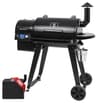
If this is your first pellet grill, buy the Z Grills 700D4E. It has a PID controller, 697 square inches of grate, a 20 lb hopper and no app — you set a number on a dial, the grill holds it, and there is nothing else to configure before your first cook. That is the right trade for a beginner, because every part of a pellet grill that can confuse you in month one is a part that exists to do something you do not need yet. If you would rather have app control, recipes and a dealer network behind you, the Traeger Woodridgeis the one to buy instead, and for a lot of people it is the better long-term purchase — you are paying a brand premium for support rather than for better cooking.

This page ranks on how little there is to learn. That is a different question from which pellet grill gives you the most under a thousand dollars, and it produces a different order: a grill can be excellent value and still be the wrong first one, because features you cannot yet use are just more surface area for frustration.

Why a pellet grill is the easy answer, and where that stops being true

A pellet grill is a thermostat with a fire attached. An auger feeds hardwood pellets from a hopper into a firepot, a hot rod lights them, a fan controls the burn, and a controller reads the chamber temperature and adjusts the feed rate to hold the number you set. The full mechanism is in how a pellet grill works, but the practical consequence is the part that matters here: there is no fire to manage. An offset smokerasks you to hold 250°F by hand for twelve hours. A pellet grill asks you to press a button.

That is a genuine advantage and it is why pellet grills sell. It is also where most beginner disappointment comes from, so it is worth saying plainly before you spend any money:

  • A pellet grill produces less smoke flavor than a charcoal or wood cooker.It is a clean, efficient burn, and clean efficient burns do not lay down much smoke. There are real techniques that help — see how to get more smoke flavor from a pellet grill— and there is an honest ceiling on how far they get you.
  • Most pellet grills do not sear.Three of the four picks here top out between 450 and 500°F, which browns a steak but will not build a hard crust. Only the Pit Boss below has a mechanism for direct flame.
  • It needs electricity.A pellet grill is an appliance. No outlet, no cook — which matters if you were planning to take it camping.

The four things that actually decide the beginner question

1. The controller type. This is the biggest difference between a pellet grill that holds a line and one that swings. A PID controller measures, predicts and feeds continuously; an older fixed-cycle controller feeds in timed bursts and lets the temperature wander around the setpoint. Every pick on this page runs a PID or comparable closed-loop controller, and that is not true of the cheapest pellet grills on the market. It is the one spec not to compromise on.

2. Whether you want an app at all.App control is genuinely useful on a long cook — it is the difference between sitting near the grill for ten hours and getting an alert on your phone. It is also one more thing to pair, update and troubleshoot in week one. Both answers are defensible. What is not defensible is paying for an app and then never connecting it.

3. Hopper capacity against the cook you want to do.A pellet grill burns roughly one to three pounds of pellets an hour depending on temperature and weather, so a 15 lb hopper is a short-cook hopper and a 20 lb hopper will usually see a brisket through. The arithmetic is laid out in how long a bag of pellets lasts. Running dry mid-cook is the most common beginner mistake, and hopper size is what makes it avoidable.

4. Cooking area you will actually use. Nine hundred square inches sounds like value and costs you patio space, assembly time and pellets to heat. Two racks of ribs need about 400 square inches. A beginner buying for the cookout they might host once a year is buying the wrong grill.

What is not on that list: peak temperature, WiFi range, and how many accessories a brand sells. Those decide your third pellet grill, not your first.

How this is funded: we earn a commission if you buy through our links, at no extra cost to you. It never changes which product we recommend, and we’ll tell you when we’d skip one, or point you to a cheaper option when it’s the better buy. Full disclosure.

The picks, side by side

Ranked, with the published specs and a live price on every pick. Select a row to jump to the full write-up. We haven’t tested these ourselves — here’s exactly what we do instead.

#ProductCooking areaHopper capacityTemp rangeControlPrice
1
Z Grills 700D4E Wood Pellet Grill

Z Grills 700D4E Wood Pellet Grill

Best overall for a beginner
697 sq in20 lb180-450°FPID controller
$579.00 · View on Amazon

Price as of October 16, 2026. #ad How we’re funded

2
Traeger Woodridge Wood Pellet Grill

Traeger Woodridge Wood Pellet Grill

Best supported
860 sq in20 lb180-500°FWiFIRE app + RTD probe
$899.99 · View on Amazon

Price as of October 16, 2026. #ad How we’re funded

3
Z Grills 450B Portable Wood Pellet Grill

Z Grills 450B Portable Wood Pellet Grill

Best on a small budget
459 sq in15 lb180-450°FPID controller
$369.00 · View on Amazon

$399.008% off

Price as of October 16, 2026. #ad How we’re funded

4
Pit Boss Navigator 850 Wood Pellet Grill

Pit Boss Navigator 850 Wood Pellet Grill

Best if you also want to sear
932 sq in30 lb180-500°F (sear to ~1,000°F)WiFi + Bluetooth
$780.00 · View on Amazon

Price as of October 16, 2026. #ad How we’re funded

The picks in full

#1Best overall for a beginner

Z Grills 700D4E Wood Pellet Grill

The price-per-square-inch champion. A PID controller keeps temperature within a tight band, the 20 lb hopper runs long cooks, and it does the pellet-grill job — steady low-and-slow — for hundreds less than the name brands. You give up app control and a national dealer network; the cooking is honest.

What the numbers say
  • PID controller holds temperature tightly for the price
  • 697 sq in and a 20 lb hopper — real capacity, low cost
  • Simple, repairable, and widely owned
Worth knowing
  • No app control at this trim
  • Support and parts network is smaller than Traeger's

Best for: Maximum cooking area for the least money

Specs read from Z Grills product page + Amazon listing, last checked July 22, 2026. Prices change; the number in the card is fetched live.

#2Best supported

Traeger Woodridge Wood Pellet Grill

Traeger's current mainstream grill and the safe default in pellet. The WiFIRE app control and RTD temperature probe are genuinely good, and the ecosystem is enormous. You pay a Traeger premium for polish and resale value more than raw cooking area — which, for a lot of upgraders, is a fair trade.

What the numbers say
  • WiFIRE app control with a reliable RTD sensor, not a thermocouple
  • 860 sq in and a 20 lb hopper handle long, unattended cooks
  • The biggest accessory and support ecosystem in pellet
Worth knowing
  • You pay a brand premium versus equal-spec rivals
  • Tops out at 500°F — searing is limited

Best for: The set-and-forget cook who values the ecosystem

Specs read from Traeger product page + Amazon listing (B0DQTBRS3M, Model TFB86MLH) incl. its published 10-year limited warranty, last checked July 22, 2026. Prices change; the number in the card is fetched live.

#3Best on a small budget

Z Grills 450B Portable Wood Pellet Grill

The small-space and camping pellet grill. 459 sq in and a light body make it the one to take to a tailgate or park on a balcony, and it still runs the same PID-steady fire as its bigger siblings. The pick when a 900 sq in cabinet simply won't fit.

What the numbers say
  • 459 sq in in a light, movable body
  • Same PID-steady temperature control as the big Z Grills
  • Lowest price and footprint in a real pellet grill
Worth knowing
  • Small cooking area limits big-crowd cooks
  • 15 lb hopper needs topping up on all-day smokes

Best for: Balconies, campsites and small patios

Specs read from Z Grills product page + Amazon listing (ZPG-450A), last checked July 22, 2026. Prices change; the number in the card is fetched live.

#4Best if you also want to sear

Pit Boss Navigator 850 Wood Pellet Grill

More grill for the money than the equivalent Traeger, plus a Flame Broiler lever that opens direct flame for real searing up to about 1,000°F — the thing pellet grills usually can't do. WiFi and Bluetooth are included. The value pick for an upgrader who wants sear heat without a second grill.

What the numbers say
  • Flame Broiler lever gives open-flame searing to ~1,000°F
  • 932 sq in and a big 30 lb hopper for the price
  • WiFi + Bluetooth control included, not an upsell
Worth knowing
  • App and controller feel less polished than Traeger's
  • Build tolerances vary unit to unit

Best for: The value shopper who also wants to sear

Specs read from Pit Boss product page + Amazon/Do It Best listing (PB850M), last checked July 22, 2026. Prices change; the number in the card is fetched live.

Your first three cooks, in order

The grill is the easy part. This sequence gets a new pellet owner to a good result fastest, and each cook teaches the next.

Cook one: chicken thighs or a whole chicken at 350°F.Short, forgiving, and it teaches the one habit that matters — cooking to internal temperature rather than to a clock. Poultry has a USDA safe minimum of 165°F and nothing about a pellet grill changes that.

Cook two: a pork shoulder at 250°F. The most forgiving large cut in barbecue. It will take eight to twelve hours, it will stall for two of them, and it is almost impossible to ruin. Our pulled pork walkthrough is written for an offset, but the temperatures and the doneness cues are identical on a pellet grill.

Cook three: ribs at 250°F. Now the finish is a judgement call rather than a number, which is the actual skill in barbecue. How to smoke ribscovers the doneness cues. Save brisket for cook five or six — it is the most expensive piece of meat in the shop and the least forgiving.

Buy an instant-read thermometer before any of this. The lid readout on a pellet grill tells you about the air in the chamber; it tells you nothing about the meat, and the gap between those two numbers is where beginner cooks go wrong. Our meat thermometer roundup starts at about the price of a bag of pellets, and the smoking temperature chart is the reference to cook against.

What pellets to buy first

One 20 lb bag of a hardwood blend, and do not overthink it. Blends are milder and more forgiving than single-species hickory or mesquite, which a beginner will usually over-apply. Species matters far less on a pellet grill than in a wood-burning cooker, for the same reason the smoke is lighter overall. When you want to start choosing deliberately, best wood pellets for smoking compares blends, single species and cost per pound.

One storage rule overrides all of it: keep pellets dry. Pellets are compressed sawdust held together by the wood’s own lignin. Damp pellets swell, jam the auger and turn a cook into a strip-down. Store the bag indoors in a sealed bucket, and never leave pellets sitting in the hopper over a wet winter.

Should a beginner buy a pellet grill at all?

Sometimes not, and it is worth being honest about it. If what you want is the deep smoke flavor of competition barbecue, a pellet grill will disappoint you and an entry-level offsetwill not — at the cost of learning fire management. If you mostly want to cook weeknight dinners fast, a gas grill is quicker to light and cheaper to run. If you want one charcoal cooker that both sears and runs low and slow, look at a kamado.

The pellet grill is the right first cooker for one specific person: someone who wants to cook barbecue on weekends without standing over a fire, and who would rather spend their attention on the meat than on the heat. If that is you, start with the Z Grills above — and read is a pellet grill worth it first if you are still deciding.

Frequently asked questions

What is the best pellet grill for a beginner?

The Z Grills 700D4E, for most people. It runs a PID controller that holds temperature tightly, it has 697 square inches of grate and a 20 lb hopper that will see a brisket through, and it has no app to set up — you set a temperature and cook. That simplicity is the point for a first pellet grill. If you want app control and a large support network instead, the Traeger Woodridge is the better buy, and you are paying for the ecosystem rather than for better cooking.

Are pellet grills good for beginners?

They are the easiest cooker in barbecue to get a good result from, because the controller manages the fire for you. You set a temperature, the auger and fan hold it, and there are no vents to balance the way an offset smoker demands. The trade-off is flavor: a clean pellet burn produces noticeably less smoke than charcoal or wood, and most pellet grills cannot sear. If deep smoke flavor is your goal, a pellet grill will underwhelm you.

How much should a beginner spend on a pellet grill?

Enough to get a closed-loop PID controller, which is the one specification that decides whether the grill holds a line or swings around the setpoint. Below that threshold you are buying a cooker that teaches bad habits by being unpredictable. All four picks on this page clear it. The extra money above that buys app control, cooking area, hopper size and a sear mechanism — useful things, none of which makes the cooking easier to learn.

What size pellet grill do I need as a beginner?

Around 450 to 700 square inches covers almost every beginner cook. Two racks of ribs need roughly 400 square inches, a pork shoulder far less, and a brisket fits on anything on this page. Bigger grills cost more to heat, take longer to assemble and take up more patio, so buying 900 square inches for a cookout you might host once a year is the wrong trade. Buy for your normal weekend, not for your biggest imaginable day.

Do I need WiFi on a pellet grill?

No, but it is genuinely useful on a long cook. WiFi or Bluetooth lets you watch a twelve-hour brisket from inside the house and get an alert if the temperature drifts, which is the difference between sitting by the grill all day and not. What it does not do is improve the cooking. If you would rather not pair and update an app in your first month, buy the Z Grills 700D4E; if you would use it, the Traeger Woodridge and the Pit Boss Navigator 850 both include it.

What do I need to buy with a first pellet grill?

An instant-read thermometer, one 20 lb bag of hardwood blend pellets, and a sealed bucket to keep them dry. The thermometer is the one with no exceptions, because the lid readout tells you about the air in the chamber and nothing about the meat. Everything else can wait: a cover once you know where the grill lives, and a leave-in probe monitor when you start cooking things that run longer than an afternoon.

Can you sear a steak on a beginner pellet grill?

On three of the four here, not properly. The two Z Grills models top out at 450°F and the Traeger Woodridge at 500°F, which browns a steak but will not build a hard crust. The Pit Boss Navigator 850 is the exception on this page: its Flame Broiler lever opens the firepot to direct flame for searing. If searing matters to you, read our pellet grills for searing roundup before buying anything else.

How long do pellet grills last?

With maintenance, a decade or more; without it, a few seasons. The parts that wear are the hot rod igniter, the induction fan, the auger motor and the firepot, and all four are replaceable rather than terminal. The two things that actually shorten a pellet grill's life are ash left in the barrel and water — damp pellets jam augers, and a grill left uncovered through a wet winter rusts from the inside out.

Sources

Keep reading