Grilling vs Broiling
Both cook with intense, dry, radiant heat and almost nothing else in common follows from that — because one heats from below and the other from above. Here is what that single difference actually changes, and when the oven is the better tool.
Quick answer
Grilling heats from below; broiling heats from above. Everything else follows from that. Because fat drips away from a broiler element and intoa grill fire, grilling gets flare-ups, smoke and the charred-fat flavor people actually want, while broiling gets none of it — and also no grill marks, because there is no hot metal pressed against the food. Use the broiler for thin, quick, fatty things in bad weather: it preheats in minutes, needs nothing you do not already own, and melts, browns and crisps tops beautifully. Use a grill when you want the flavor, when the food is thick enough to need two heat zones, or when you are cooking for more than about four people — a broiler pan is small and a broiler has exactly one setting.
The same heat, pointed the other way
Both methods are radiant dry heat at high intensity, applied to one surface of the food at a time. That is genuinely the same cooking mechanism, which is why broiling instructions and grilling instructions often read almost identically, and why many recipes list them as interchangeable. In the UK the oven element is even called the grill, which is where a lot of the confusion comes from.
The direction is not a detail. Gravity does not care how you have arranged your heat source, so fat and juices always fall downward — which means:
- On a grill, drippings land on the heat. They vaporize, catch, and rise back through the food as smoke. That is the flavor. It is also the flare-up.
- Under a broiler, drippings land in a pan. Nothing vaporizes, nothing rises, nothing adds flavor. You get clean browning and a tray of fat to wash.
One is not a worse version of the other. They are different outputs, and if you know which one you want, the choice makes itself.
Side by side
| Grilling | Broiling | |
|---|---|---|
| Heat direction | From below | From above |
| Where drippings go | Onto the fire — smoke and flare-ups | Into a pan — no flavor returned |
| Smoke flavor | Yes, and more with wood or charcoal | None |
| Grill marks | Yes — hot bars on the food | No contact, so no marks |
| Heat control | Two or more zones; vents or knobs | On, and a choice of rack height |
| Preheat | 10–20 min (chimney, or burners) | 3–5 min |
| Capacity | A grate — scales to a crowd | One pan, one layer |
| Weather | Outdoors, so weather matters | Indifferent — it is an oven |
| Cost to start | A grill | Nothing — you own it already |
| Cleanup | Grate and ash | A greasy pan, and sometimes the oven |
| Smoke in the house | None | Genuinely possible — the main complaint |
Three things a broiler genuinely does better
This is not a page that concludes the grill wins everything, because it does not.
1. Melting and browning a top surface. Heat from above is the right tool for finishing something whose inside is already cooked: cheese on French onion soup, the top of a casserole, a gratin, nachos, cheese on an open burger. A grill cannot do any of those, because the heat is under the food and the cheese is on top of it.
2. Speed on a weeknight. Three to five minutes of preheat against fifteen to twenty for a chimney of charcoal. For two salmon fillets on a Tuesday in February, the broiler is the sane choice and the flavor difference is not worth standing in the rain for.
3. Thin, delicate or small items.A broiler pan is a solid surface, so nothing falls through. Shrimp, scallops, asparagus spears, thin fish fillets and anything sliced are all easier under a broiler than on a grate — which is the same structural problem best foods to grill identifies as the reason people think they cannot grill fish.
Four things a grill does that a broiler cannot
1. Flavor from its own drippings. The vaporized-fat loop is the entire reason grilled food tastes grilled. No broiler setting reproduces it, and no seasoning substitutes for it.
2. Smoke.Charcoal, wood chunks and even a gas grill’s flavorizer bars add something a clean electric element cannot. If smoke is what you are chasing, see best wood for smoking— and be honest that this is a grill-only column.
3. Two-zone cooking. This is the big one and it is under-appreciated. A grill lets you sear over the fire and then move food somewhere cooler to finish, which is how thick cuts get cooked through without burning. A broiler has one intensity and a choice of rack heights, so a thick steak under a broiler browns long before the middle is ready. That is why broiler recipes are almost always for thin cuts.
4. Capacity and low-and-slow.A grate scales: twelve burgers, a dozen chicken thighs, a whole spatchcocked bird. And with the lid down a grill becomes an outdoor oven that will hold 250°F for hours, which is where ribs and pork shoulder come from. A broiler does neither — one pan, one layer, one setting.
How to broil properly, if that is the tool you have
Most disappointing broiler food comes from treating the broiler like a hot oven. It is not; it is a one-sided blowtorch.
- Preheat the element. Three to five minutes with the broiler on before food goes in. Cold element, gray food.
- Use rack height as your thermostat.Closer is hotter and faster — three to four inches for thin things you want charred, six or more for anything that needs a few minutes to cook through. This is the only heat control you have.
- Use a slotted broiler pan, not a sheet pan. Drippings have to drain away from the food. In a flat pan the food sits in its own fat and steams instead of browning.
- Pat the food dry and oil it lightly. Surface water has to boil off before browning starts, exactly as on a grill.
- Stay in the room. There is no two-zone escape and the margin is often thirty seconds. Broiler fires are a real kitchen hazard, and the usual cause is walking away.
- Leave the oven door ajar if your manual says to. Many electric ovens are designed to broil that way so the thermostat does not cut the element. Check the manual rather than guessing.
- Still use a thermometer.The published USDA safe minimums do not change because the heat moved: 165°F for poultry, 160°F for ground beef, 145°F plus a three-minute rest for whole cuts and fish.
What this needs you to own
Broiling needs nothing you do not already have, which is its best argument. The purchases on this page are all on the grill side — and the first one is shared, because doneness is the one skill both methods demand.
How this is funded: we earn a commission if you buy through our links, at no extra cost to you. It never changes which product we recommend, and we’ll tell you when we’d skip one, or point you to a cheaper option when it’s the better buy. Full disclosure.
The shared tool, the cheapest real grill, and the even-heat fix
Live prices, fetched and date-stamped. One works under a broiler as well as over a fire; the other two are the honest answers to the two complaints this comparison raises.
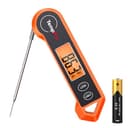
ThermoPro Digital Instant-Read Meat Thermometer
Reads in three to four seconds through a foldaway probe. The USDA safe minimums do not change because the heat moved, and under a broiler the margin is often thirty seconds — which is exactly when a three-second reading matters most.
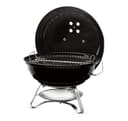
Weber Jumbo Joe 18-inch Portable Charcoal Grill
An 18-inch porcelain Weber kettle with a lid-lock carry handle and 240 sq in — enough for four to six. If this page has convinced you that the flavor column is the one you want, this is the lowest-cost way to own a genuine charcoal grill rather than a compromise.
Price as of October 20, 2026. #ad How we’re funded
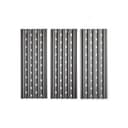
GrillGrate Sear Station Interlocking Panels (3-panel set)
Three interlocking hard-anodized panels, reversible: rails up for searing, flat side up for shrimp, thin fish and sliced vegetables. It gives a grill the solid-surface advantage a broiler pan has, which is the one structural edge broiling holds. Needs a grate at least 15 in deep.
Price as of October 20, 2026. #ad How we’re funded
Which foods suit which
| Food | Better method | Why |
|---|---|---|
| Thick steak, 1.5 in+ | Grill | Needs two zones to cook through without burning |
| Thin steak or flank | Either | Cooks before it burns under either heat |
| Burgers | Grill | Dripping fat is most of the flavor |
| Bone-in chicken pieces | Grill | Too thick for one-sided heat; needs a cool zone |
| Salmon fillets | Either | Broiler is easier; grill adds flavor |
| Thin white fish | Broil | Solid pan, nothing falls through or tears |
| Shrimp and scallops | Broil | Small, fast, and they drop through a grate |
| Cheese on anything | Broil | Heat has to come from above |
| Vegetables, sliced | Broil | No fall-through; even browning |
| Corn, peppers, onions whole | Grill | Char is the point, and they hold up fine |
| Ribs, pork shoulder, brisket | Grill (indirect) | Hours of low heat; a broiler cannot do it at all |
| Anything for eight people | Grill | A broiler pan holds one layer |
So which should you use?
Use the broiler when the weather is bad, the food is thin or delicate, the job is melting or browning a top, or dinner needs to be on the table in fifteen minutes. It is free, it is fast, and treating it as a serious cooking method rather than a last resort will genuinely improve your weeknights.
Use a grill when flavor is the point, when the cut is thick, when you are feeding more than a few people, or when you want to cook something low and slow. Those four cases cover most of what people mean when they say they want to cook outdoors, and none of them has a broiler workaround.
And if the honest answer is that you do not own a grill yet: the entry price is lower than most people assume. A kettle will do everything in the grill column of both tables above, including the low-and-slow row with the snake method. Start with best charcoal grills for beginners, or best budget gas grills if lighting a fire on a weeknight is the thing standing in your way.
Where to go next
For the other method comparisons on this site: charcoal vs gas is the fuel decision within grilling, grilling vs smoking is the hot-and-fast against low-and-slow decision, and griddle vs grillcovers the third outdoor surface — which, like a broiler pan, solves the fall-through problem. If you want to know what to put on whichever one you pick, best foods to grill sorts twenty foods by heat zone and doneness cue.
Frequently asked questions
What is the difference between grilling and broiling?
The direction of the heat. Grilling applies intense radiant heat from below; broiling applies it from above. Both are the same dry high-heat cooking mechanism, but because fat always falls downward, grilling drips it onto the heat source where it vaporizes into smoke and flavor, while broiling drips it into a pan where it does nothing. That one difference also explains why grilling produces grill marks and flare-ups and broiling produces neither.
Is broiling the same as grilling?
Mechanically it is very close, which is why recipes often list them as interchangeable, and in British usage the oven element is actually called the grill. The results differ in three ways that matter: there is no smoke flavor under a broiler because drippings never touch the element, there are no grill marks because nothing hot is pressed against the food, and there is no second heat zone, so thick cuts brown long before the middle is done.
Can you use a broiler instead of a grill?
For thin, quick, fatty foods, yes — and it is a genuinely good substitute in bad weather. Thin steaks, salmon fillets, chicken thighs flattened out, sausages and sliced vegetables all work well. Where the substitution fails is thick cuts that need a cool zone to finish in, anything where smoke flavor is the point, cooking for more than about four people, and low-and-slow barbecue, which a broiler cannot do at all.
Which is healthier, grilling or broiling?
They are close, and broiling has a small edge on one specific point: drippings fall into a pan rather than onto a heat source, so there is less charred-fat smoke contacting the food. Both methods let fat drain away from the food, which is why they compare well against frying. The variables that actually matter are the same for both — how heavily you char the surface, how fatty the cut is, and whether you burn the outside. Trim the fat, avoid heavy charring and cook to temperature rather than to color.
Why does my food smoke up the kitchen when I broil?
Because the drippings are landing somewhere hot and there is no outdoor air to carry it away. Three fixes: use a slotted broiler pan so fat drains into the lower tray instead of pooling under the food, keep the pan reasonably clean since last week's residue is what usually smokes first, and move the rack down a level for fatty foods so less fat is flung at the element. Running the extractor before you start helps more than running it after.
What temperature is a broiler?
Most domestic broilers do not give you a temperature at all — they are on or off, and rack height is the control. The element itself runs far hotter than any oven setting, which is why food can go from pale to burnt in under a minute at the top rack. Treat three to four inches from the element as your high heat for thin food you want charred, and six inches or more as moderate for anything that needs a few minutes to cook through.
Can you get grill marks from a broiler?
Not really, because grill marks are a contact effect — they come from hot metal bars pressed against the food, not from the heat itself. Under a broiler nothing is touching the food except the pan beneath it. A heavy ridged cast-iron grill pan preheated under the broiler gets you closer, since the ridges make contact, but you are then pan-cooking with overhead heat rather than broiling. If marks matter, that is a grill job.
Is it cheaper to broil than to grill?
To start, yes, and by a lot — you already own a broiler, so the equipment cost is zero, whereas grilling needs a grill. Per cook the figures are closer than people expect: a broiler uses meaningful electricity or gas for a short burn, while charcoal costs a few dollars per cook and propane rather less. The real cost difference is up front, which is why a broiler is the right tool for someone deciding whether they want to cook this way at all.
Sources
- USDA FSIS — Safe Minimum Internal Temperature Chart — The USDA's official safe minimum internal cooking temperatures for beef, poultry, pork and more (accessed July 22, 2026)
- USDA FSIS — Grilling Food Safely — USDA guidance on safe grilling, thermometer use and avoiding cross-contamination (accessed July 22, 2026)
Keep reading
Best Foods to Grill
Twenty foods sorted by heat zone, rough timing and doneness cue — including the ones a broiler handles better.
Read the guide →Charcoal vs Gas Grill
The next decision if this page pushed you toward a grill — flavor and heat against speed and convenience.
Compare them →Grilling vs Smoking
The other method comparison: hot and fast against low and slow, and which cooker each one needs.
Compare them →Griddle vs Grill
The third surface — solid steel, which solves the same fall-through problem a broiler pan does.
Compare them →