How to Smoke a Turkey on a Pellet Grill
Most smoked turkeys fail in the same two ways: flabby skin and a dry breast. Both come from running the grill too cool for too long. Here is the hotter, shorter method, the one temperature that decides when it is done, and why a dry brine beats a bucket of water.
Quick answer
Smoke the turkey at 300–325°F, not 225°F, and pull it when the thickest part of the breast reads 165°F— the USDA safe minimum internal temperature for poultry. Dry brine it uncovered in the refrigerator for 24–48 hours first, use a mild wood, and do not stuff it. At 300°F plan on roughly 20–25 minutes per pound as a schedule, but let the thermometer decide: a 14 lb bird is usually done in four to five hours. The higher temperature is what gives you skin worth eating.
Why 225°F is the wrong temperature for a turkey
Everything else you smoke rewards patience. Brisket, pork shoulder and ribs are tough cuts full of collagen, and the entire point of holding them at 225°F for hours is to give that collagen time to break down into gelatin. A turkey has almost none of that. It is a lean, tender bird with a large thin-skinned surface, and there is nothing in it that needs eight hours to become edible.
What a long low cook does to a turkey instead is two bad things. The skin never renders.Poultry skin needs real heat to drive moisture out and crisp the fat; held at 225°F it dehydrates into something pale and rubbery that everyone peels off and leaves on the plate. And the breast spends far longer than it needs to drying out while you wait for the thigh to catch up.
Running at 300–325°F fixes both, and the thing people worry about losing — smoke flavor — is less affected than you would think. A pellet grill at 300°F is still burning wood and still putting smoke on the bird for four hours, and a turkey is a mild meat that takes on smoke readily. Plenty of people find a 225°F turkey tastes over-smoked and slightly acrid.
The one number that matters: 165°F
The USDA’s safe minimum internal temperature for all poultry, whole or ground, is 165°F, measured in the thickest part of the meat without touching bone. That is the number that ends the cook. It is not a target you creep up on with a timer; it is a measurement, and the only way to take it is with a thermometer.
The USDA is also explicit that color is not a doneness test — poultry can be safe and still look pink near the bone, and it can be unsafe and look done. On a smoked bird this is worse than usual, because smoke itself turns the outer layer of meat pink in a ring that has nothing to do with whether it is cooked. If you cook a smoked turkey by eye you will either serve it unsafe or, far more commonly, cook it to 185°F trying to make the pink go away and serve sawdust.
Measure the breast.The breast and the thigh finish at different times — thigh meat is darker, fattier and perfectly pleasant at 175–180 °F, while breast meat is dry by then. Cooking until the thigh reads 175°F is the single most common way to ruin an otherwise good turkey. Pull at 165°F in the breast; if the legs need more, tent the breast in foil and keep going.
Dry brine, not wet brine
A wet brine — a bird submerged in salted water in a bucket in the fridge — does work, and it is the wrong tool for a smoked turkey specifically. Wet brining adds water to the meat and, more importantly, to the skin. You then spend the whole cook trying to drive that water back out to get the skin to crisp. It also requires finding refrigerator space for a bucket, which in the last week of November is its own problem.
A dry brine is salt rubbed on and left. The salt draws moisture out of the surface, dissolves in it, and is reabsorbed as seasoned liquid — so the meat ends up seasoned all the way through, while the skin ends up drierthan it started. Dry skin plus 325°F is the whole crispy-skin mechanism. Roughly half a teaspoon of kosher salt per pound of bird, 24 to 48 hours uncovered on a rack in the fridge, and that is the entire technique.
One note if you are buying rather than cooking from a frozen bird you already have: check whether the turkey is already brined. Many supermarket birds are sold pre-brined or self-basting, and salting one of those again produces something inedible. The label will say.
Which wood, and how much
Turkey is the clearest case in barbecue for restraint. Hickory and mesquite are the classic strong woods and both will dominate poultry — you get smoke and not much turkey. Fruit woods (apple, cherry) and blends are the right choice, and a blend is the easy answer because you do not have to think about it.
You also cannot control smoke on a pellet grill by adding less wood, which is worth understanding: the pellets arethe fuel, so the grill burns whatever it needs to hold temperature. The variables you control are which wood you load and how long the bird is in there — which is one more argument for the shorter, hotter cook.
How this is funded: we earn a commission if you buy through our links, at no extra cost to you. It never changes which product we recommend, and we’ll tell you when we’d skip one, or point you to a cheaper option when it’s the better buy. Full disclosure.
Three things, and only one of them is expensive
Live prices, fetched and date-stamped. A leave-in thermometer is not optional on a turkey — it is the only way to hit 165°F in the breast without opening the lid and guessing. The other two are what make the day easier.
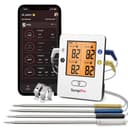
ThermoPro TP25 4-Probe Bluetooth Thermometer
Four color-coded leave-in probes with 650 ft of range, so you can watch the breast and the thigh from inside the house. On a holiday cook with the oven and the grill both running, four probes is not excessive.
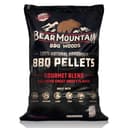
Bear Mountain Gourmet Blend Wood Pellets (20 lb)
An all-natural hardwood blend with no binders — mild enough that the turkey still tastes of turkey. The pick over straight hickory, which overwhelms poultry.
Price as of October 14, 2026. #ad How we’re funded
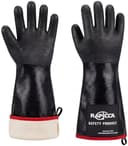
RAPICCA 932°F Neoprene BBQ Gloves (14 in)
Neoprene-coated, 14 inches, maker-rated to 932°F and waterproof — which matters when you are lifting a hot, heavy, greasy turkey off a grate with no handles.
Planning the day: the arithmetic
Time per pound is a planning tool, not a doneness test. Use it to work out when the bird goes on; use the thermometer to work out when it comes off.
| Bird weight | At 300°F (approx.) | Refrigerator thaw needed | Grate space |
|---|---|---|---|
| 10–12 lb | 3½–4½ hours | ~2–3 days | Fits any pellet grill here |
| 12–14 lb | 4–5 hours | ~3 days | Fits 450 sq in and up |
| 16–18 lb | 5–6½ hours | ~4 days | Wants 650 sq in and up |
| 20 lb+ | 6½ hours and up | ~5 days | Consider two smaller birds instead |
Two practical notes on that table. Two smaller birds beat one huge one on almost every measure: they cook faster, more evenly, give you twice as much skin and twice as many legs, and they fit a backyard cooker. And build in a buffer of at least 45 minutes. A turkey that finishes early can rest, be tented, or sit in a cooler wrapped in towels for an hour without harm. A turkey that finishes late holds the entire meal hostage.
Does your grill have room?
Grate area is not the only question — height under the lid matters too, and a 16 lb bird breast-up is tall. On the compact end of the category a mid-size pellet grillhandles a 12 to 14 lb turkey comfortably; the 450-square-inch portables will take a small one and not much more. If you are planning turkey as an annual event and currently shopping, this is a genuine argument for the larger cabinet.
The mistakes that actually ruin it
- Stuffing the cavity.Stuffing must also reach 165°F, and it is the last thing in the bird to get there. By then the breast is well past it. Cook stuffing separately; it will be better anyway.
- Cooking to the thigh.175°F in the thigh means roughly 180°F in the breast. Pull on the breast.
- Opening the lid to look. Every lid lift dumps heat and lengthens the cook, which is the opposite of what a turkey wants. This is what the leave-in probes are for.
- Starting with a partly frozen bird. No technique recovers from this. Three days in the fridge for a 14-pounder, and start counting backwards from dinner.
- Basting. Painting liquid onto skin you spent two days drying out undoes the work. If you want color, a thin coat of oil or softened butter before it goes on is enough.
Where to go next
If smoke flavor is the thing you want more of out of this cook, how to get more smoke flavor from a pellet grill is the full set of levers. For which pellets to load, best pellets for smoking breaks them down by species and strength, and how long a bag of pellets lasts will tell you whether the bag in your garage will get you through the day. If you want the big-cut version of this skill set, our pork shoulder and brisket walkthroughs are the two cooks that teach fire management properly.
Frequently asked questions
What temperature do you smoke a turkey at on a pellet grill?
300-325°F, not 225°F. A turkey has very little collagen, so there is nothing in it that benefits from a long low cook — and poultry skin needs real heat to render, or it ends up pale and rubbery. At 300°F a 14 lb bird is usually done in four to five hours and the skin is worth eating. The smoke flavor is still there: a pellet grill at 300°F is burning wood for the whole cook.
What internal temperature should a smoked turkey be?
165°F, measured in the thickest part of the breast without touching bone — that is the USDA safe minimum internal temperature for all poultry. Measure the breast rather than the thigh, because the breast is the cut that dries out: thigh meat is fine at 175-180°F but by then the breast is overcooked. If the legs are lagging, tent the breast with foil and give them another 15 minutes.
How long does it take to smoke a turkey?
At 300°F, roughly 20-25 minutes per pound — about 3½ to 4½ hours for a 10-12 lb bird, 4 to 5 hours for a 12-14 lb bird, and 5 to 6½ hours for a 16-18 lb one. Treat that as a schedule for when the turkey goes on, not as a doneness test: the thermometer decides when it comes off. Build in at least 45 minutes of buffer, because a bird that finishes early can rest safely and one that finishes late holds up the whole meal.
Should you brine a turkey before smoking it?
Yes, and dry brine rather than wet. Salt the bird inside and out — around half a teaspoon of kosher salt per pound — and leave it uncovered on a rack in the refrigerator for 24 to 48 hours. The salt seasons the meat all the way through while the open air dries the skin, and dry skin is what crisps. A wet brine adds water to the skin, which you then spend the whole cook trying to drive back out. Check the label first: many supermarket birds are already brined and must not be salted again.
What wood is best for smoking turkey?
A mild wood or a blend. Fruit woods like apple and cherry, or an all-purpose hardwood blend, let the turkey still taste of turkey. Straight hickory and mesquite are the classic strong woods and both dominate poultry — you get smoke and little else. On a pellet grill you cannot simply use less wood, since the pellets are also the fuel, so the choice of pellet and the length of the cook are the two levers you have.
Can you stuff a turkey you are smoking?
Don't. Stuffing inside the cavity has to reach 165°F as well, and it is the last thing in the bird to get there — so by the time the stuffing is safe, the breast is substantially overcooked. The cavity also restricts airflow through the bird, which makes the whole cook slower and less even. Cook the stuffing separately in a pan, where it will brown properly and be better for it.
Why is my smoked turkey skin rubbery?
Almost always because the grill ran too cool. Poultry skin needs genuine heat to render its fat and crisp; held at 225°F it merely dehydrates into something pale and leathery. The two fixes are temperature and dryness: cook at 300-325°F, and dry brine uncovered in the fridge for a day or two beforehand so the skin starts the cook dry. Do not baste — painting liquid onto the skin undoes both.
Is a smoked turkey safe if the meat is pink?
Pink is not a safety indicator, in either direction. The USDA is explicit that color is not a reliable doneness test — poultry can be fully cooked and still pink near the bone. On smoked birds this is especially misleading, because smoke itself turns the outer layer of meat pink in a ring that has nothing to do with doneness. The only answer is a thermometer reading 165°F in the thickest part of the breast.
Sources
- USDA FSIS — Safe Minimum Internal Temperature Chart — The USDA's official safe minimum internal cooking temperatures for beef, poultry, pork and more (accessed July 22, 2026)
- USDA FSIS — Doneness Versus Safety — USDA on why color is not a reliable doneness test and a thermometer is (accessed July 22, 2026)
Keep reading
Best Pellets for Smoking
By species and strength — which woods suit poultry, pork and beef, and why a blend is the easy answer.
See the picks →How to Get More Smoke Flavor From a Pellet Grill
The single most common complaint about the category, and every lever you have before buying a different cooker.
Read the guide →Best WiFi Meat Thermometers
Leave-in monitors that let you watch a long cook from inside — ranked on probes, range and app.
See the picks →How to Smoke a Pork Shoulder
The most forgiving large cut in barbecue — trim, 250°F, the stall, and why the finish temperature is not about safety.
Read the guide →