Kamado Joe Classic III Review
The Classic II with two additions: a Harvard-designed SloRoller heat diffuser that evens out low-and-slow smoking, and a three-tier Divide & Conquer rack. Here's an honest, spec-driven look at what the Classic III adds, and whether those upgrades are worth the step up for the way you cook.
Quick answer
The Kamado Joe Classic III is the smoking-focused version of the excellent Classic II. It adds a SloRollerheat-diffusion insert that genuinely evens out low-and-slow heat and smoke, plus a three-tier Divide & Conquer rack for more cooking flexibility. Everything else — the 18-inch ceramic, the Air Lift hinge, the Kontrol Tower vent — is the same. If you smoke often, the SloRoller is worth the jump; if you mostly grill and sear, the Classic II saves money.
How this is funded: we earn a commission if you buy through our links, at no extra cost to you. It never changes which product we recommend, and we’ll tell you when we’d skip one, or point you to a cheaper option when it’s the better buy. Full disclosure.
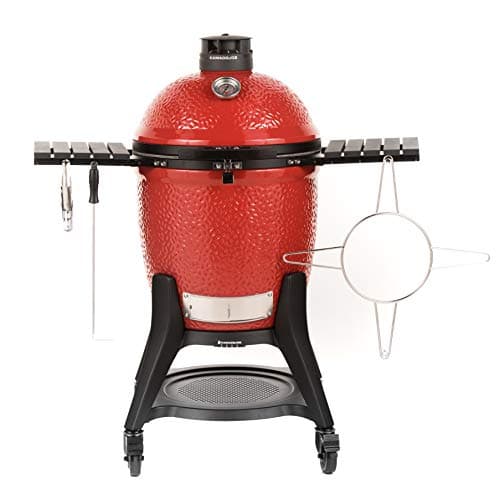
Kamado Joe Classic III 18-inch Ceramic Grill
Price as of October 21, 2026. #ad How we’re funded
What it is
The Classic III sits at the top of Kamado Joe’s 18-inch ceramic line, above the Classic II. It’s the same thick-walled ceramic kamado — 256 square inches of primary cooking area, a range from a 225°F smoke to a 700°F+ sear, the Air Lift hinge that makes the heavy lid feel weightless, and the Kontrol Tower top vent for precise airflow — with two upgrades layered on: the SloRoller heat diffuser and a three-tier Divide & Conquer rack system. Everything that makes a Kamado Joe great is here; the III is about doing one thing, smoking, noticeably better.
The SloRoller: the reason to buy it
The SloRoller is the Classic III’s headline feature and the single biggest reason to choose it over the II. It’s a Harvard-designed heat-diffusion insertthat replaces the standard heat deflector for low-and-slow cooking. Instead of simply blocking direct heat, its baffles circulate heat and smoke in a rolling pattern around the food, producing a more even temperature across the grate and a more consistent, heavier smoke than a plain deflector. In practice, owners who smoke report noticeably more even results — especially with several pieces of meat — and a richer smoke flavor at low temperatures. If you smoke ribs, pork and brisket regularly, this is a genuine cooking upgrade, not a marketing insert. (You can buy a SloRoller separately for a Classic II, but the III bundles it.)
The three-tier rack system
Both the II and III use Kamado Joe’s Divide & Conquersystem — a flexible rack setup that lets you cook on split half-grates at different heights and with different surfaces (a sear grate on one side, standard on the other). The Classic III expands this to a three-tierarrangement, giving you more vertical layers to work with for multi-zone or high-volume cooks. It’s a real convenience if you routinely cook several things at once, and a nice-to-have if you don’t. On its own it wouldn’t justify the price step; paired with the SloRoller, it rounds out the III as the flexible, smoking-first model.
Everything else it shares with the II
For grilling, searing, roasting and pizza, the Classic III cooks identically to the Classic II, because the ceramic, the hardware and the temperature range are the same. Both give you the same 256 square inches on the primary grate, the same thick ceramic that holds a rock-steady temperature for hours on little charcoal, the same premium Air Lift hinge and Kontrol Tower vent, and the same roughly 188 lb heft. If you don’t smoke much, you would be hard-pressed to tell them apart in daily use — which is exactly why the II is the better value for a grill-and-sear cook, and the III is the pick for a dedicated smoker.
Where it falls short
Two honest points. First, price: the Classic III is a clear step up in cost over the Classic II, and the SloRoller is the whole justification — if you rarely smoke, you’re paying for a feature you won’t use, and the II gives you everything else that makes a Kamado Joe great for less. Second, like every ceramic kamado, it’s heavy and fragile — roughly 188 lb, and thick ceramic can crack if knocked or thermally shocked — so site it carefully on a cart or nest and handle it with respect. Neither is a flaw; they’re the nature of a premium ceramic cooker.
Who should buy it
Buy the Classic III if you smoke often and want the SloRoller’s more even low-and-slow heat and the extra rack tier — it’s the smoker’s kamado. The honest test is simple: if “how evenly does it smoke” is a question you care about, pay for the III; if it isn’t, the Classic II gives you every other thing that makes a Kamado Joe great for less. We weigh the two directly in Classic II vs III, and rank the whole ceramic-and-steel field in the best kamado grills roundup. New to the format? Read how to use a kamado grill first.
Frequently asked questions
Is the Kamado Joe Classic III worth it over the Classic II?
It's worth it if you smoke often. The Classic III adds a Harvard-designed SloRoller heat diffuser that noticeably evens out low-and-slow temperatures and produces a richer smoke, plus a third Divide & Conquer rack tier. Everything else — the 18-inch ceramic, the Air Lift hinge, the Kontrol Tower vent, the 225-750°F+ range — is identical to the Classic II. If you grill and sear more than you smoke, the II gives you all of that for less; the SloRoller is the reason to pay more.
What does the SloRoller do on the Kamado Joe Classic III?
The SloRoller is a heat-diffusion insert that replaces the standard deflector for low-and-slow cooking. Rather than just blocking direct heat, its baffles circulate heat and smoke in a rolling pattern around the food, producing a more even grate temperature and a more consistent, heavier smoke. Owners who smoke report more even results, especially with several pieces of meat. It's the Classic III's signature feature and the main reason to choose it over the II.
Do the Kamado Joe Classic II and III cook differently?
For grilling, searing, roasting and pizza, no — they use the same 18-inch ceramic, the same range and the same hardware, so they cook identically. The difference shows up in low-and-slow smoking, where the Classic III's SloRoller produces more even heat and smoke than the Classic II's standard deflector, and the III's three-tier rack adds cooking flexibility. If you rarely smoke, you'd struggle to tell them apart.
How heavy is the Kamado Joe Classic III?
Roughly 188 lb, like the Classic II — a consequence of its thick ceramic body, which is exactly what lets it hold temperature so steadily on little charcoal. That weight, plus the fact that thick ceramic can crack if knocked or thermally shocked, means you should site it carefully on a cart or nest and handle it with care. Plan its home before it arrives, because it's not something you'll move often.
Can you add a SloRoller to a Classic II instead of buying the III?
Yes — Kamado Joe sells the SloRoller as a separate accessory that fits the Classic II, so you can add the III's signature smoking upgrade later. Buying the II plus a SloRoller can cost about the same as the III, so if you already know you want it, the bundled Classic III is often simpler; if you're unsure, start with the II and add the SloRoller only if you smoke enough to need it.
Keep reading
Kamado Joe Classic II vs III
The SloRoller and a third rack tier are the whole difference — which one to buy.
Read the comparison →Best Kamado Grills
Ceramic and steel kamados ranked on cooking area, heat retention and price.
See the roundup →Big Green Egg Large Review
The ceramic that made the category — the deepest accessory ecosystem, a lifetime warranty, and the dealer-only catch, examined honestly.
Read the review →