Z Grills vs Traeger
Price-per-square-inch value against the biggest ecosystem in pellet. What Traeger's premium actually buys, where Z Grills matches it, and which one your money is better spent on.
Quick answer
Buy the Z Grills 700D to save money— it delivers the most cooking area per dollar in pellet, a PID controller that holds temperature tightly, and a 20 lb hopper, for hundreds less than the name brands. What you give up is an app at this trim and a national dealer network. Buy the Traeger Woodridge for the app and ecosystem— WiFIRE control, an RTD sensor, the biggest accessory-and-support network in pellet, and the resale value that comes with it. Same core job; you’re choosing value or ecosystem.
How this is funded: we earn a commission if you buy through our links, at no extra cost to you. It never changes which product we recommend, and we’ll tell you when we’d skip one, or point you to a cheaper option when it’s the better buy. Full disclosure.
| Spec | 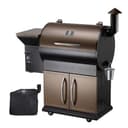 | 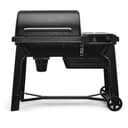 |
|---|---|---|
| Cooking area | 697 sq in | 860 sq in |
| Hopper capacity | 20 lb | 20 lb |
| Temp range | 180-450°F | 180-500°F |
| Control | PID controller | WiFIRE app + RTD probe |
| Price | $579.00 · View on Amazon Price as of October 21, 2026. #ad How we’re funded | $899.99 · View on Amazon Price as of October 21, 2026. #ad How we’re funded |
The short version
These two grills cook the same way — a PID-managed hardwood fire holding a set temperature while you do something else — but they sell on opposite promises. The Z Grills 700Dis the price-per-square-inch champion: 697 sq in of grate and a 20 lb hopper for a price the name brands can’t touch, with the trade being no app at this trim and a smaller support network. The Traeger Woodridge is the ecosystem play: 860 sq in, the WiFIRE app, an RTD temperature probe, and the deepest accessory and dealer network in the category — at a brand premium. Neither is a bad grill. The decision is entirely about what you value with your last few hundred dollars.
Temperature control
Both grills run a PID controller, and that’s the part that matters most. PID reads the chamber many times a minute and trickles pellets in small corrections, holding a set 225°F within a tight band instead of overshooting and sagging the way older on/off controllers do. The Z Grills 700D does this well for the money — a genuinely steady fire that’s the whole reason it earns its value reputation. Traeger’s WiFIRE controller pairs its PID algorithm with an RTD temperature sensor, a more accurate probe than the thermocouples cheaper grills use, and it’s app-connected so you can adjust the set temperature from your phone. In pure hold-a-temperature terms the two are closer than the price gap suggests; the Traeger’s edge is the sensor accuracy and the fact that you can drive it remotely, not a dramatically steadier fire.
Cooking area and hopper
On paper the Traeger gives you more grate — 860 sq in against the Z Grills’ 697 sq in — but that comparison flips the moment you factor in price. Dollar for dollar, the Z Grills delivers markedly more cooking area, which is exactly its pitch. Both carry a 20 lb hopper, so unattended runtime is a wash: either grill runs an all-day cook without a top-up, and neither is the one to reach for if you routinely smoke overnight and want the biggest possible bin (that’s the 30 lb Pit Boss Navigator 850, which we cover in the under-$1,000 roundup). If your decision comes down to raw grate-per-dollar, the Z Grills wins it cleanly. If you want the larger absolute cooking area and don’t mind paying for it, the Traeger has it.
App and ecosystem
This is where the Traeger premium actually lives. The WiFIRE app is the most polished in pellet: set and change temperatures remotely, get probe alerts on your phone, and run guided cooks with the grill managing the ramps. The Z Grills 700D at this trim has no app — you set the temperature on the dial and let a probe thermometerwatch the meat. Beyond the app, Traeger’s ecosystem is the real moat: a huge catalog of grates, shelves, covers, and first- and third-party accessories, plus the largest dealer and support network in the category, so parts and help are easy to find. Z Grills’ network is smaller and more online-order than local-dealer. Whether that gap is worth the money depends on whether you want to run cooks from your couch and whether easy local support matters to you.
Build and support
Both are conventional pellet grills — a barrel chamber, an auger-fed firepot, a hopper on the side — and both are widely owned and repairable. The Z Grills 700D is simple and proven, with porcelain-coated grates and a reputation for being easy to live with and fix; its weak point is that when something does need a part, the support network is thinner. Traeger’s advantage isn’t that the metal is dramatically better at this tier, it’s that the support behind it is deeper: more dealers, more documentation, more people who’ve solved the same problem. For a first pellet grill where you want a safety net, that network has real value. For an experienced owner comfortable swapping an auger motor or a controller, it matters less.
Price and resale
Up front, the Z Grills undercuts the Traeger by a clear margin for comparable core cooking — that’s the entire reason to buy it. Where the Traeger claws value back is at the other end of ownership: the most recognized name in pellet holds its resale value better, so some of the premium comes back if you ever sell or upgrade. Running costs are the same in kind — both burn hardwood pellets, and budgeting for good food-grade pellets matters more than the badge on the hopper. Think of it as paying now versus paying less now and keeping less later: the Z Grills is cheaper to own outright, the Traeger softens its premium on the way out.
Which should you buy?
Buy the Z Grills 700Dif value is your priority: you want the most steady-PID cooking area for the least money, you’re happy to run the cook from the dial and a probe thermometer, and you don’t need an app or a local dealer. Buy the Traeger Woodridgeif you want the WiFIRE app, the RTD sensor, the biggest ecosystem in pellet, and the resale value — and you’ll pay a premium for that peace of mind. If searing also matters, note that neither of these breaks past about 500°F, so weigh the direct-flame Pit Boss in Traeger vs Pit Boss and read our Traeger Woodridge review for the full breakdown of what the premium buys. Either way, see both in context in the best pellet grills under $1,000.
Frequently asked questions
Is Z Grills as good as Traeger?
For core cooking, close. Both run a PID controller that holds temperature tightly, so the Z Grills 700D smokes about as steadily as a Traeger for hundreds less. What Traeger adds is the WiFIRE app, an RTD sensor, the biggest accessory and dealer network in pellet, and stronger resale. Z Grills wins on price-per-square-inch; Traeger wins on ecosystem and support. Neither is a bad grill — they sell on opposite promises.
Why is Traeger more expensive than Z Grills?
You're paying for the ecosystem, not dramatically better steel. Traeger's premium buys the polished WiFIRE app, an accurate RTD temperature sensor, the largest accessory and support network in pellet, and the resale value of the most recognized name in the category. Z Grills spends its budget on cooking area instead, skipping the app at this trim and running a smaller support network. Same core PID cook, different value proposition.
Does the Z Grills 700D have WiFi?
Not at this trim. The Z Grills 700D is controlled from the dial on the front, with a PID controller holding your set temperature — there's no app to run the cook from your phone. That's part of how it hits its low price. If app control is important to you, that's a reason to pay up for the Traeger Woodridge's WiFIRE, or to look at the Camp Chef and Pit Boss, which include WiFi.
Can the Z Grills 700D or Traeger Woodridge sear?
Not really — both top out around 500°F (the Z Grills at 450°F), which roasts a steak well but won't build a hard, dark crust. Neither has a direct-flame hatch. If you want one pellet grill that also sears, look at the Pit Boss Navigator 850's Flame Broiler or the Camp Chef's slide-and-grill instead. For pure low-and-slow smoking, though, both of these do the job cleanly.
Which holds its value better, Z Grills or Traeger?
Traeger. As the most recognized name in pellet, it has the strongest used-market demand, so it holds resale value better than a Z Grills — meaning some of the higher purchase price comes back if you ever sell or upgrade. The Z Grills is cheaper to buy outright but returns less later. If total cost of ownership matters to you, factor resale into the comparison, not just the sticker.
Keep reading
Traeger vs Pit Boss
The ecosystem premium against the value-plus-searing challenger — the other big pellet fork.
Read the comparison →Traeger Woodridge Review
An honest, spec-driven look at what the Traeger premium actually buys on the numbers.
Read the review →Z Grills 700D Review
The value champion examined on its own — a PID controller and 697 sq in for the least money.
Read the review →