How to Get More Smoke Flavor From a Pellet Grill
The complaint is fair and the reason is physics: an efficient fan-fed pellet fire burns clean, and clean fires make less of what you taste as smoke. Six changes that genuinely help, three popular tricks that don't, and an honest ceiling on how far you can get.
Quick answer
The single biggest change is cook lower for longer: run 200–225°Ffor the first three or four hours instead of 250–275°F, because smoke deposits onto cool, damp surfaces and a pellet grill lays down most of its smoke at the bottom of its range. Then put the meat on straight from the fridge, use single-species pellets with no filler wood, keep the firepot clear of ash, and wrap later than you think. If you want a genuine step change rather than an improvement, you need hardware that burns actual wood chunks.
First, why the problem is real
This is not in your head and it is not a fault with your grill. A pellet grill feeds small, dry, uniform pellets into a small firepot and blows air through them with a fan. That is a very efficient combustion arrangement, and efficient combustion is the opposite of what produces smoke flavor.
What people taste as “smoke” is largely the product of incompletecombustion — the compounds a fire releases when wood is burning imperfectly. A stick burner smoldering a split at the edge of its fire produces a great deal of that. A fan-fed pellet fire burning cleanly produces much less. Everything below is therefore about one of two strategies: making the fire slightly less efficient, or making the meat better at catching what smoke there is.
It also means there is a ceiling. A pellet grill well set up will not match an offset, and anyone telling you otherwise is selling something. What it will do is close a lot of the gap — enough that most people stop noticing. If the gap itself is the problem, that is a cooker decision, not a technique decision, and offset smoker vs pellet grill is the honest comparison.
1. Cook lower, for longer — the big one
If you change one thing, change this. Pellet grills lay down noticeably more smoke at the bottom of their range than in the middle, for two compounding reasons: at a low set temperature the controller runs the fire in shorter, cooler cycles that burn less completely, and the food spends far longer in the smoke.
Practically: run 200–225°F for the first three to four hours, then raise the temperature to finish if you are short of time. That sequencing matters, because the smoke-absorbing window is at the start. Many grills also have a dedicated low “smoke” setting below their normal minimum — the Camp Chef Woodwind Pro publishes a range starting at 160°F, lower than most — and that is exactly what it is for.
The cost is hours. Low and slow for the first half of a cook adds real time to a brisket or a pork shoulder, which is the honest trade.
2. Put the meat on cold, and keep the surface damp
Smoke compounds deposit onto surfaces that are cool and moist. Once a crust has set and the surface is hot and dry, it takes up far less. This is why the first hours of a cook do most of the flavor work and why extra smoke late in a cook mostly just accumulates.
So: take the meat out of the fridge and put it straight on. Do not let it come to room temperature first, which is the standard advice for roasting and exactly wrong here. A cold surface gives you a longer window before the crust sets.
Keeping it damp helps for the same reason. Spritzing lightly with water, cider vinegar or apple juice once an hour after the first hour slows the surface drying. A water pan in the chamber does the same job passively by raising humidity, and it has a second benefit: it adds thermal mass, which steadies the temperature. Both are free.
3. Use single-species pellets with no filler wood
This is where most people’s money is being quietly wasted. A great many flavored pellets are a base wood— commonly oak or alder, chosen because it is cheap and burns consistently — carrying a proportion of the advertised species. A bag labeled “hickory” may be substantially something else.
That is not fraud and the better blends are genuinely good products: a consistent base wood is what keeps an auger feeding evenly and a firepot burning predictably, which is why blends dominate the category. But if you specifically want assertive smoke, a 100% single-species bag with no filler is the straightforward answer. Lumber Jack publishes 100% hickory with no filler wood, and on pork and beef the difference is not subtle.
Two things to be realistic about. Strong single species are toostrong for chicken, fish and anything delicate, so this is a second bag rather than your only bag. And pellets are not brand-locked — any pellet grill burns any hardwood pellet, so you are free to choose on composition rather than badge. The full field, on bag size, species and cost per pound, is in best wood pellets for smoking.
4. Keep the firepot clear of ash
Ash accumulating in and around the firepot restricts the airflow the fire depends on, and a starved fire behaves erratically: it swings temperature, it struggles to light, and its combustion becomes unpredictable rather than usefully incomplete.
Be clear about what this gets you. A clean firepot does not produce more smoke — it produces consistentsmoke, which is what you actually want once you have found a setup you like. An ashed-up grill is one where last weekend’s result does not repeat.
This is also the one place where hardware design changes the behavior, because a cleanout system that is easy gets used. Camp Chef’s patented ash cup — pull a knob, the ash drops into a removable cup — turns a shop-vac job into a five-second habit. On most pellet grills it is a chore you postpone.
5. Wrap later than you think, or not at all
Wrapping in foil or butcher paper during the stall is a legitimate technique and it roughly halves the remaining cook time. But a wrapped piece of meat takes up no further smoke at all — you have sealed it.
On a pellet grill, where smoke is the scarce resource, that matters more than it does on an offset. If flavor is the priority, push the wrap as late as you can tolerate or skip it entirely and accept the extra hours. Butcher paper rather than foil is the sensible middle ground: it breathes slightly, so you keep more bark and more smoke exposure while still beating the stall. The mechanics of the stall itself are explained in how to smoke a pork shoulder.
6. The hardware answer: burn actual wood
Everything above is technique, and technique has limits. The only genuine step change is a grill that burns real wood chunks or lump charcoal alongside the pellets.
Camp Chef’s Pro models carry a Smoke Box— a separate compartment loaded with chunks, chips or charcoal that burns on top of the PID-controlled pellet fire rather than instead of it. You keep set-and-forget temperature control and add a second, deliberately less efficient wood fire purely for flavor. That is the one feature on any pellet grill that addresses this problem at its root, and no amount of pellet selection matches it.
It is not free. The Woodwind Pro sits at the top of our pellet shortlist on price, and the Smoke Box is another thing to load and empty. If you are buying a pellet grill becausesmoke flavor is your sticking point, it is the one to look at — the full write-up is our Camp Chef Woodwind Pro 24 review, and the head-to-head against the obvious alternative is Traeger vs Camp Chef.
How this is funded: we earn a commission if you buy through our links, at no extra cost to you. It never changes which product we recommend, and we’ll tell you when we’d skip one, or point you to a cheaper option when it’s the better buy. Full disclosure.
The fuel change first, the hardware change last
Live prices from our daily refresh. Start with a single-species bag — it is the cheapest change on this page and the second most effective after cooking lower. The chunks only apply if your grill has a smoke box to put them in.
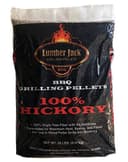
Lumber Jack 100% Hickory BBQ Pellets (20 lb)
100% hickory, 20 lb, no filler wood — the straightforward fix for mild smoke on pork and beef. Too strong for chicken or fish, so treat it as a second bag.
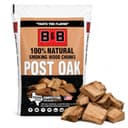
B&B Charcoal Post Oak Wood Smoking Chunks (549 cu in)
Post oak chunks for a Camp Chef Pro Smoke Box or any cooker that burns chunks. These do nothing in a standard pellet hopper — check your grill has somewhere to put them.
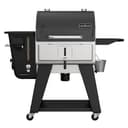
Camp Chef Woodwind Pro WiFi 24 Pellet Grill
The Smoke Box burns real wood alongside the pellets, plus a 160°F low end and the ash cup that keeps combustion consistent. The only hardware answer to this problem.
Three things that don’t work
Loading more pellets. The hopper is a reservoir, not a throttle. The controller decides how fast the auger turns based on the temperature it is targeting, so a full hopper and a quarter-full hopper burn at identical rates. The only thing a fuller hopper buys you is unattended runtime.
Soaking pellets.Pellets are compressed sawdust held together by the wood’s own lignin. Water makes them swell and disintegrate, and wet sawdust in an auger is a jam waiting to happen. The advice has drifted over from soaking wood chips for a gas grill smoker box, where it is debatable; on pellets it is actively harmful. Never do it.
Chasing a smoke ring. The pink band under the surface is a cosmetic chemical reaction, not a measure of flavor. Pellet grills tend to produce a thinner ring than charcoal or wood fires, and people read that as less flavor. You can have an excellent, deeply smoky piece of meat with a barely visible ring, and a dramatic ring on something that tastes of very little. Judge by taste.
Put it together
A realistic stacked approach for a pork shoulder or a brisket, in the order the changes matter:
- Meat straight from the fridge onto the grate, no resting to room temperature.
- Set 200–225°F, or the dedicated smoke setting if your grill has one, for the first 3–4 hours.
- A water pan in the chamber, and a light spritz every hour after the first.
- A single-species bag matched to the meat — hickory for pork and beef, something milder for poultry.
- Firepot cleaned out before the cook, not after.
- Raise the temperature to finish, and wrap as late as you can tolerate, in butcher paper rather than foil.
Do all six and the difference is substantial. Do the first and third only and you will still notice. And if after all of that it still is not enough, the answer is a cooker that burns wood — either a Smoke Box model or a proper stick burner. The honest version of that decision is in is a pellet grill worth it? and offset vs pellet.
One cook where the usual advice to run cooler is actively wrong is poultry: a turkey held at 225°F ends up with skin nobody eats, and the fix is to run at 300–325°F instead. The method is in how to smoke a turkey on a pellet grill.
Frequently asked questions
Why does my pellet grill not produce much smoke?
Because it is burning efficiently, which is what it is designed to do. A pellet grill feeds small, dry, uniform pellets into a small firepot and blows air through them with a fan — a very efficient combustion arrangement. What people taste as smoke is largely the product of incomplete combustion, so a clean fan-fed fire produces much less of it than a stick burner smoldering a split. It is physics rather than a fault, which is why the fixes all involve either making the fire slightly less efficient or making the meat better at catching smoke.
What temperature gives the most smoke on a pellet grill?
The bottom of your grill's range — generally 200-225°F, or a dedicated smoke setting if yours has one. Two effects compound at low temperatures: the controller runs the fire in shorter, cooler cycles that burn less completely, and the food spends far longer in the smoke. Run low for the first three or four hours, when the meat actually takes up smoke, then raise the temperature to finish if you are short of time.
Should I soak wood pellets?
Never. Pellets are compressed sawdust held together by the wood's own lignin, so water makes them swell and disintegrate — and wet sawdust in an auger is a jam waiting to happen. The advice has drifted over from soaking wood chips for a gas grill smoker box, where it is at least debatable. On pellets it is actively harmful and risks damaging the grill.
Do more pellets in the hopper mean more smoke?
No. The hopper is a reservoir, not a throttle. The controller decides how fast the auger turns based on the temperature it is targeting, so a full hopper and a quarter-full hopper burn at exactly the same rate. The only thing a fuller hopper buys you is longer unattended runtime — useful on an overnight cook, irrelevant to flavor.
Do single-species pellets actually taste different?
Yes, noticeably, on assertive meats. Many flavored pellets are a base wood — commonly oak or alder, chosen because it is cheap and burns consistently — carrying a proportion of the advertised species, so a bag labeled hickory may be substantially something else. A 100% single-species bag with no filler gives a stronger, more distinct result on pork and beef. It will be too strong for chicken, fish and delicate food, so treat it as a second bag rather than your only one.
Does a smoke ring mean more smoke flavor?
No. The pink band under the surface is a cosmetic chemical reaction and not a measure of flavor at all. Pellet grills tend to produce a thinner ring than charcoal or wood fires, and people reasonably but wrongly read that as less flavor. You can have a deeply smoky piece of meat with a barely visible ring, and a dramatic ring on something that tastes of very little. Judge by taste.
Keep reading
Best Wood Pellets for Smoking
Blends against single species, bag size and cost per pound — the fuel is the only ingredient your grill adds.
See the picks →Traeger vs Camp Chef
The biggest ecosystem in pellet against the only mainstream grill that burns real wood chunks.
Compare them →How a Pellet Grill Works
Auger, firepot, hot rod and PID controller — why the fire burns the way it does, explained simply.
Read the guide →