How Long Does a Bag of Charcoal Last?
Two different questions hide inside this one — how many cooks you get from a bag, and how long a single fire burns. Both are arithmetic rather than opinion, and both start with one number you can weigh in your own backyard in about a minute.
Quick answer
Divide the bag weight by what one chimney load weighs. A full standard chimney is roughly a five-pound measure of briquettes, so a 20 lb bag is about four full-chimney cooks and a 35 lb bag about seven. Lump is less dense, so the same chimney holds less weight and a lump bag stretches further than the label suggests. For a single fire: a full chimney of briquettes in a vented kettle runs hard for roughly an hourand remains useful for about two, while the same grill set up for low and slow will hold 225°F for five hours or more on a similar amount of fuel. The difference is airflow, not charcoal.
Weigh your chimney once, and the whole question is solved
Charcoal is sold by weight and used by volume, which is why this question gets such vague answers. The fix is to measure the conversion yourself, one time:
- Put your empty chimney starter on a kitchen or luggage scale and note the weight.
- Fill it to the top with the charcoal you normally buy and weigh it again.
- Subtract. That number is your chimney load, in pounds.
From then on, every bag is a known number of cooks: bag weight ÷ chimney load = full-chimney cooks per bag. We do not print a manufacturer figure for this because chimney makers do not publish a charcoal weight — they publish a volume, and the weight depends on whether you burn briquettes or lump. A full-size chimney lands in the region of five pounds of briquettes, which is the figure the table below uses, and under four pounds of lump because lump is bulkier and more irregular for the same mass.
The chimney is the right unit for a second reason: you should be lighting charcoal in one anyway. It is also the unit our how much charcoal to useguide uses for every kind of cook, so the two pages fit together — that one tells you how many chimneys a cook needs, this one tells you how many cooks a bag holds.
Cooks per bag, by bag size
Run on a five-pound chimney load of briquettes. These are the real published bag weights of charcoal we track, so you can check your own against them.
| Bag | Published weight | Full-chimney cooks |
|---|---|---|
| FOGO Premium, large | 17.6 lb (+ 30 starters) | About 3–4 |
| Rockwood, single bag | 20 lb | About 4 |
| Primo natural lump | 20 lb | About 4 |
| Rockwood 2-pack | 40 lb total | About 8 |
| Jealous Devil Chunx XL | 35 lb | About 7 |
Two adjustments to apply to any row. Lump runs further than the arithmetic, because a chimney of lump weighs less than a chimney of briquettes — call it a bag that goes one or two cooks past the number above. And low-and-slow cooks are cheaper per hour than grilling, which is counter-intuitive until you look at airflow: a closed, vented smoker burns a small amount of fuel slowly for hours, while an open grilling fire burns a lot of fuel fast to make searing heat.
Worth knowing before you compare prices by the bag: bagged charcoal is sold by weight but used by volume, so the cheapest bag per pound is not automatically the cheapest bag per cook. Dense, hard-species lump gives you more burn time per pound than a light, soft-species bag at the same price.
The other question: how long one fire burns
“How long does charcoal last” often means a single load, not a bag, and the answer depends almost entirely on how much air you let in.
Open grilling, vents wide:a full chimney of briquettes gives you roughly an hour of genuine searing heat and stays usable for about two. That is burgers, steaks, chops and chicken pieces — you will not run out mid-cook.
Two-zone cooking: similar fuel, longer life, because only part of the bed is working hard. Figure two hours of comfortable cooking from one chimney banked to one side.
Low and slow, vents nearly shut: five hours and up. The snake methodon a 22-inch kettle is the extreme case — a line of unlit briquettes lit at one end burns along itself at a controlled rate and will hold 225°F for six hours or more on about the same weight of fuel that an open grilling fire spends in one.
In a kamado:longer again, sometimes dramatically. Thick ceramic walls and tight sealing mean very little fuel is wasted heating the outside world, which is why kamado owners talk about overnight cooks on a single load. That efficiency is a large part of what the ceramic is buying — see kettle vs kamado.
Briquettes or lump, for burn time specifically
Briquettesare uniform compressed blocks, so they burn at a predictable, even rate — which is exactly what you want when you are counting on a fire lasting a known number of hours. They produce more ash, and for long cooks that ash can eventually choke the airflow in a small firebox.
Lump is carbonized hardwood with nothing added. It lights faster, burns hotter and leaves far less ash, which makes it the better fuel for long cooks in a closed cooker and for searing. It is also irregular, so a bag contains fist-sized pieces and dust in unpredictable proportions, and the burn is less even.
For how long a bag lasts, the honest summary is that lump usually wins on cooks-per-bag and briquettes win on predictability. The full comparison is in lump vs briquettes, and the species and bag-weight comparison is in best lump charcoal.
How this is funded: we earn a commission if you buy through our links, at no extra cost to you. It never changes which product we recommend, and we’ll tell you when we’d skip one, or point you to a cheaper option when it’s the better buy. Full disclosure.
A big bag, a value bag, and the measuring cup
Live prices, fetched and date-stamped. The two bags whose published weights are in the table above, plus the chimney starter that is both the lighting tool and the unit this whole page is measured in.
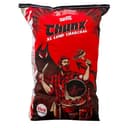
Jealous Devil Chunx XL Lump Charcoal (35 lb)
35 lb of extra-large quebracho blanco lump — a dense South American hardwood with a long burn and low ash. The biggest bag we track, and the one that stretches furthest per cook in a closed cooker or a kamado.
Price as of October 16, 2026. #ad How we’re funded
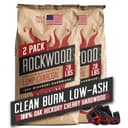
Rockwood All-Natural Lump Charcoal (20 lb, 2-pack)
Two 20 lb bags of US-made Missouri oak, hickory, maple and pecan, sorted for consistent lump size. Forty pounds works out to about eight full-chimney cooks, and consistent sizing is what makes your chimney weight repeatable.
Price as of October 16, 2026. #ad How we’re funded
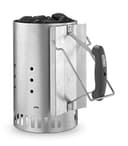
Weber Rapidfire Chimney Starter (Standard)
Aluminized steel, sized for a 22-inch kettle. It lights a full load in about fifteen minutes with no fluid, and it is the thing you weigh once to turn every bag of charcoal into a known number of cooks.
Price as of October 16, 2026. #ad How we’re funded
How long does an unopened bag keep?
Indefinitely, if it stays dry. Charcoal is carbon. It does not spoil, it has no shelf life and a bag found at the back of a garage three years later is as good as the day it was bought.
Moisture is the only thing that ruins it, and it is quietly common. Charcoal is porous and absorbs humidity from the air, and damp charcoal is harder to light, burns cooler and can produce a sour smell on food. A bag stored on a concrete garage floor wicks moisture up through the paper; a bag left outside under a tarp collects condensation. Store charcoal off the floor, in a sealed container or a lidded bin, and it will outlast the grill.
One exception worth naming: instant-light or pre-soaked briquettes do have a practical shelf life, because the accelerant they are soaked in evaporates. They also put accelerant in your food, which is the argument for a chimney starter in the first place — the picks are in best chimney starters.
Three ways to make a bag go further
1. Snuff the fire instead of letting it burn out. This is the big one and most people skip it. When you finish cooking, close every vent and the lid. Starved of air, the remaining coals go out within about twenty minutes, and partially burned charcoal relights perfectly well next time. Letting a fire burn itself to ash after dinner can throw away a third of a load.
2. Light only what the cook needs. A quarter chimney is the right amount for two pieces of food, and lighting a full one out of habit is the most common way charcoal gets wasted. Our how much charcoal to use table gives the amount per cook.
3. Keep the ash out.Ash blocks the bottom vent and smothers the fire from below, so you open the vents further and burn more fuel to compensate. Empty the catcher between cooks — it is the one minute of maintenance in cleaning a grill that pays for itself in fuel.
Where to go next
If you want the amount for a specific cook rather than the arithmetic for a bag, how much charcoal to use is the page. If you are deciding what to buy, lump vs briquettes settles the format and best lump charcoal ranks the bags on species, size and origin. And if you want to see what a single load can really do, the snake methodis five or six hours at 225°F on a kettle for roughly the fuel a cookout burns in an hour.
Frequently asked questions
How many cooks do you get from a bag of charcoal?
About four full-chimney cooks from a 20 lb bag and about seven from a 35 lb bag, working on a full standard chimney being roughly a five-pound measure of briquettes. The reliable way to know your own figure is to weigh your empty chimney, weigh it full, and subtract — then divide any bag weight by that number. Lump charcoal stretches further than the arithmetic suggests, because a chimney of lump weighs less than a chimney of briquettes.
How long does a chimney of charcoal burn?
Roughly an hour of genuine searing heat with the vents wide open, and usable heat for about two. Airflow decides it far more than quantity: the same fuel banked to one side for two-zone cooking comfortably lasts two hours, and set up for low and slow with the vents nearly shut it will hold 225°F for five hours or more. In a kamado, where thick ceramic walls waste very little heat, a single load can run overnight.
Does charcoal go bad or expire?
No. Charcoal is carbon — it has no shelf life and an unopened bag found in a garage years later lights and burns normally. The only thing that degrades it is moisture: charcoal is porous and absorbs humidity, and damp charcoal is harder to light, burns cooler and can taste sour. Store it off a concrete floor in a sealed container. The exception is instant-light briquettes, whose accelerant evaporates over time.
Does lump charcoal last longer than briquettes?
Per bag, usually yes; per load, it depends on the cook. Lump is bulkier for its weight, so a chimney of lump weighs less than a chimney of briquettes and a bag therefore covers more cooks. Lump also burns hotter and leaves far less ash, which matters on long cooks where ash chokes airflow. Briquettes win on predictability — they are uniform, so they burn at an even, plannable rate, which is what you want when a fire has to last a known number of hours.
How do you make a bag of charcoal last longer?
Snuff the fire rather than letting it burn out. Close every vent and the lid when you finish cooking and the coals go out in about twenty minutes, and partially burned charcoal relights perfectly well next time — letting a fire burn to ash after dinner can waste a third of the load. After that: light only what the cook needs rather than a full chimney out of habit, and empty the ash catcher, since ash blocks the bottom vent and makes you burn more fuel for the same heat.
Is it cheaper to grill with charcoal or gas?
Gas, on fuel cost per cook, and it is not close — a 20 lb propane tank holds about 430,000 BTU and costs less than the equivalent number of charcoal bags. Charcoal wins on up-front cost instead: a kettle costs a fraction of a comparable gas grill, which buys a lot of bags before the totals cross. People choose charcoal for flavor and searing heat, not economy. Our charcoal vs gas comparison works through both sides.
How much charcoal do I need for a low and slow cook?
Less than you would expect, because airflow rather than fuel load sets the burn rate. A quarter to a third of a chimney of lit coals poured over a bed of unlit charcoal will run a kettle at 225°F for hours, and the snake method — a line of unlit briquettes lit at one end — holds that temperature for six hours or more on roughly what an open grilling fire burns in one. The per-cook amounts are in our how much charcoal guide.
Can you reuse charcoal from a previous cook?
Yes, and you should. Charcoal that was extinguished by closing the vents rather than burned to ash is simply charcoal with some of its mass spent — it relights in a chimney alongside fresh coals and burns normally, if slightly less hot and less long. Shake the ash off it first so it does not block airflow in the new fire. This single habit is the biggest difference between a bag that lasts four cooks and one that lasts six.
Keep reading
How Much Charcoal to Use
The companion page: chimney loads per cook, by grill size — this page tells you how many cooks are in the bag.
Read the guide →Lump Charcoal vs Briquettes
Burn rate, heat, ash and consistency — the format decision behind every figure on this page.
Compare them →Best Lump Charcoal
The bags in the table above, ranked on species, lump size, origin and published bag weight.
See the picks →The Snake Method on a Weber Kettle
Six hours at 225°F on roughly one chimney of fuel — the clearest demonstration that airflow, not quantity, sets burn time.
Read the guide →