Blackstone 28 vs 36 Griddle
The size decision every Blackstone buyer makes. The 36 gives you four burners and 769 square inches for a crowd; the 28 gives you two burners and 524 square inches for a family, in a smaller footprint for less money. Here's how to pick.
Quick answer
Buy the 28 if you cook for a family and want a smaller footprint — 524 sq in and two heat zones handle four to six people, fit a normal patio, and cost less. Buy the 36 if you feed a crowd or want maximum flexibility— 769 sq in and four independent burners let you run a sear zone and a hold zone at once. Same cooking, same steel, same seasoning care; you’re choosing capacity and zones versus size and price.
How this is funded: we earn a commission if you buy through our links, at no extra cost to you. It never changes which product we recommend, and we’ll tell you when we’d skip one, or point you to a cheaper option when it’s the better buy. Full disclosure.
| Spec | 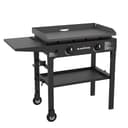 | 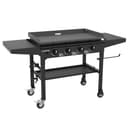 |
|---|---|---|
| Cooking area | 524 sq in | 769 sq in |
| Burners | 2 (independent zones) | 4 (independent zones) |
| Total BTU | 24,000 | 60,000 |
| Price | $249.99 · View on Amazon Price as of October 22, 2026. #ad How we’re funded | $399.00 · View on Amazon Price as of October 22, 2026. #ad How we’re funded |
The short version
The Blackstone 28 and 36 are the same griddle in two sizes. Both are bare cold-rolled steel over propane burners, both season and cook identically, and both plug into the same enormous accessory ecosystem. The only real differences are how much steel you get, how many independently controlled heat zones you have, how big a footprint it takes on the patio, and what it costs. Neither is “better” — the 36 is more griddle, the 28 is enough griddle for most people, and the right call is entirely about how many mouths you cook for and how much space you have.
Cooking area and capacity
The 36 gives you 769 square inches; the 28 gives you 524. That’s a big gap — the 36 has roughly 47% more steel. In practice, the 28 comfortably cooks breakfast or burgers for a family of four to six, while the 36 handles a party: think two dozen smash burgers in a batch, or eggs, bacon, pancakes and hash browns all going at once for a full table. If your normal cook is a weeknight family dinner, the 28 is plenty and the extra steel on the 36 just costs more propane to heat. If you routinely host, the 36’s capacity is the whole point. If both of these sound like more griddle than you need, Blackstone 17 vs 22 covers the tabletop pair one size class down.
Burners and heat zones
This is the difference people underrate. The 36 has four independently controlled burners; the 28 has two. Each burner is a separate temperature zone across its stretch of steel, so the 36 lets you run, say, a screaming-hot searing third, a medium cooking third, and a low warming third all at the same time. The 28’s two zones still give you a hot side and a cooler side — enough for most cooking — but there’s less room to stage a multi-part meal. If you cook complex spreads where timing everything to finish together matters, the four zones on the 36 are genuinely useful. Total BTU follows the burner count: 60,000 on the 36, 24,000 on the 28. That is not a straight scale — per square inch of steel the 36 carries noticeably more heat, so it comes back to temperature faster after you load it with cold food. The 28 gets hot enough for a smash burger; it just recovers more slowly through a big batch.
Footprint and storage
The 28 is meaningfully easier to live with. It takes less patio space, it’s lighter to move, and it stores more easily — real considerations if your outdoor space is a normal patio or a small yard rather than an outdoor kitchen. The 36 is a substantial station; make sure you have somewhere to put it and to cover it before you buy. Neither is portable in the tabletop sense — for that you want a 17 or 22-inch tabletop— but between these two, the 28 is the more apartment-and-small-patio-friendly of the pair.
Price
The 28 costs clearly less than the 36, which for a lot of buyers settles it. You’re paying the difference for more steel and two more burners, not for better cooking or build. If the budget is tight or you’re not sure you’ll use the extra capacity, the 28 is the safe, cheaper starting point — and you won’t feel short-changed on the food.
28 vs 36 at a glance
| Spec | Blackstone 28 | Blackstone 36 |
|---|---|---|
| Cooking area | 524 sq in | 769 sq in |
| Burners / zones | 2 | 4 |
| Total BTU | 24,000 | 60,000 |
| Feeds | A family (4–6) | A crowd / party |
| Footprint | Fits a normal patio | A substantial station |
| Best for | Most households; smaller spaces | Crowds and multi-zone cooking |
Which should you buy?
Buy the 28if you cook for a family, have a normal-sized patio, or want to spend less — it does everything the 36 does on a smaller scale, and it’s our best-for-most pick in the flat-top griddles roundup and is examined on its own in our 28-inch review. Buy the 36if you regularly feed a crowd or want the flexibility of four separate heat zones for staging a big multi-part cook — it’s the crowd-cooker, examined in full in our 36-inch review. Whichever you choose, the first thing to do when it arrives is season it — see how to season a griddle— and the first thing to cook is a batch of smash burgers.
Frequently asked questions
Is the Blackstone 28 or 36 better?
Neither is better — they're the same griddle in two sizes. The 36 gives you 769 sq in and four independent burners for feeding a crowd and running multiple heat zones; the 28 gives you 524 sq in and two burners for a family, in a smaller footprint and for less money. Choose the 28 if you cook for four to six and have a normal patio, the 36 if you host often or want four separate temperature zones.
Is the Blackstone 36 too big for a family?
It's more than most families need day to day, but it's not a mistake if you host. The 36's 769 sq in and four burners shine when you're feeding a crowd or want to run a sear zone and a hold zone at once; for a weeknight family dinner, most of that steel sits unused and costs extra propane to heat. If you rarely cook for more than six, the 28 is the smarter buy — but plenty of people happily size up to the 36 for the flexibility.
How many burgers can a Blackstone 28 vs 36 cook at once?
It depends on burger size, but as a rough guide the 28's 524 sq in handles roughly 8–10 smash burgers in a batch, while the 36's 769 sq in handles around 14–16, with room to toast buns and cook onions alongside. The 36's extra burners also let you keep a warming zone going while you sear the next batch, which matters a lot when you're cooking for a crowd.
Do the Blackstone 28 and 36 cook differently?
No. Both use the same bare cold-rolled steel, the same burner design and the same seasoning process, so they heat, sear and cook identically. The differences are all about scale: total cooking area, number of heat zones, footprint and price. Put the same food on each and the results are the same — you're only deciding how much griddle and how many zones you need.
Which Blackstone size is best for a small patio?
Between these two, the 28 — it takes less space, is lighter to move, and stores more easily than the substantial 36 station. If your space is really tight, or you want something that travels to a campsite or tailgate, step down to a 22-inch or 17-inch tabletop instead, which sit on a table or stand and pack away entirely. The 36 needs a dedicated spot and a cover.
Keep reading
Best Flat-Top Griddles
The full size ladder from portable to crowd-cooker, ranked on area, burners and price.
See the roundup →Blackstone 36-inch Review
The four-burner crowd-cooker examined on the numbers — and who it's really for.
Read the review →Best Griddle for Smash Burgers
The flat-top is the smash-burger tool — here are the griddles with the heat and steel to crush a proper crust.
See the picks →