Char-Griller Akorn Review
The steel kamado that lets you try the shape without ceramic money — triple-wall 22-gauge steel, light enough to move, and fast to heat. An honest look at what it does well and what it gives up.
Quick answer
The Char-Griller Akorn is the steel kamado — triple-wall 22-gauge steelinstead of ceramic, at a fraction of the price. It weighs about 100 lb so one person can move it, heats up faster than ceramic, runs a 200–700°F range, and won’t crackif you knock it. The trade is that it holds a low temperature slightly less steadily than thick ceramic, and its powder-coat and gaskets wear over the years. It’s the value pick for finding out if the kamado shape is for you.
How this is funded: we earn a commission if you buy through our links, at no extra cost to you. It never changes which product we recommend, and we’ll tell you when we’d skip one, or point you to a cheaper option when it’s the better buy. Full disclosure.
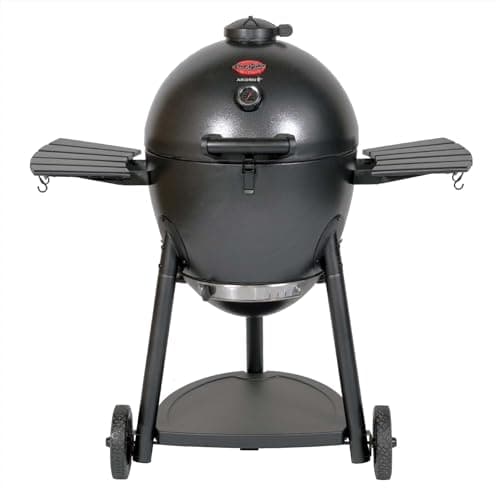
Char-Griller AKORN Kamado Charcoal Grill
Price as of October 21, 2026. #ad How we’re funded
What it is
The Char-Griller Akorn is a kamado grill built out of steel instead of ceramic. It has the same sealed, egg-shaped chamber that makes a kamado sip charcoal and hold a temperature, but where a Big Green Egg or a Kamado Joe uses a thick ceramic body, the Akorn uses insulated steel — which is what lets it cost a fraction as much and weigh a fraction as much. It gives you 447 sq in of total cooking area (314 sq in on the primary grate), enough for a family’s worth of ribs, chicken or steaks with a raised tier for the overflow. The pitch is straightforward: you get the sealed-chamber cooking that makes a kamado special — the fuel efficiency, the moist heat, the wide temperature swing — without the ceramic price tag or the ceramic weight. Think of it as the honest way to find out whether you love cooking on a kamado before you commit to one you’ll keep for decades, which is why we rank it as the steel value pick in the best kamado grills roundup.
Triple-wall 22-gauge steel: 100 lb and it won’t crack
The Akorn’s body is triple-wall 22-gauge steel— three metal layers with insulating air gaps between them, which is how a steel grill mimics the heat-holding behavior of ceramic without the mass. Two things fall out of that. First, it’s light: the whole grill is about 100 lb, roughly a third the weight of a comparable ceramic kamado, so one person can wheel it across a patio or load it into a vehicle. Second, and this is the underrated part, it won’t crack. Ceramic is superb but fragile against impact and freezing water; steel simply isn’t. You can knock the Akorn, move it, or leave it out in a hard freeze without the worry a ceramic body carries. For a first kamado that’s going to get handled and learned on, that durability against abuse is a real, practical advantage.
Faster heat-up and a 200–700°F range
Less mass means less to warm up, so the Akorn reaches temperature faster than a ceramic kamado — you’re cooking sooner, which matters more than it sounds on a weeknight. And it covers the range that makes a kamado worth owning: a published 200–700°Fspan means the same grill holds a low 200–225°F smoke for ribs and pork and then opens up to sear a steak hard at the top end. That’s the kamado promise — one sealed charcoal cooker that does low-and-slow and high-heat searing on a small amount of fuel — and the steel Akorn delivers it. The faster warm-up also changes how you use it: a ceramic body can take the better part of an hour to fully load with heat, so a quicker light makes the Akorn a more realistic weeknight grill and not just a weekend smoker. Because the sealed chamber chokes the fire with airflow, it’s frugal with charcoal at the low end too — you burn surprisingly little to hold a smoke. New to the format? Our how to use a kamado grill guide covers lighting, vent control and dialing in those temperatures.
Where steel trails ceramic
The honest limit is heat steadiness, not heat range. Thick ceramic acts like a thermal flywheel: once loaded, it holds a low temperature rock-steady for hours and shrugs off wind and cold. The Akorn’s lighter steel body holds heat well for a metal grill — far better than any bare-wall cooker — but it’s more responsive to the weather, so a cold, breezy day pulls heat out of it faster and you ride the vents a little more to keep a low temp pinned. On a mild day at a steady temperature you may never notice; on a long overnight smoke in bad weather, ceramic’s mass is the more forgiving tool. That single difference — steadiness versus responsiveness — is the whole story of ceramic vs steel kamados, and it’s the price you pay for the lower price and lighter weight.
Powder-coat and gaskets wear over time
Steel’s other trade shows up over the years. The Akorn’s exterior is powder-coated, and the seal that makes the chamber airtight is a gasket — both of which take more wear from repeated thermal cycling than a glazed ceramic body does. Expect the finish to weather and the gasket to eventually need replacing, which is a cheap, routine job rather than a failure. It’s the reason we call this the grill you replace a gasket on, not the grill your grandkids inherit: a ceramic kamado is built to outlast decades untouched, while the Akorn is built to be affordable and light, and asks for a little upkeep in return. Keep it covered and it holds up well for what it costs.
Who should buy it
Buy the Akorn if you want to test the kamado shape without spending ceramic money, if you need a grill you can actually move around or take places, or if your budgetsimply won’t stretch to ceramic yet. You get real kamado cooking — the fuel efficiency, the wide temperature range, the sear — on a light body that heats fast and can’t crack while you learn the vents. Step up to a ceramic Kamado Joeinstead if you already know you love the format and want one grill to keep for decades, with rock-steady heat and premium stock accessories. A common path is to buy the Akorn first, learn the fire on it, and let it settle whether the kamado shape earns a permanent spot in your setup — and plenty of owners are happy enough that the steel one simply stays. It’s the wrong buy only if you already know you want ceramic’s decades-long steadiness and you have a fixed, level spot to put it. We put the two side by side in Akorn vs Kamado Joe, and explain the material trade in full in ceramic vs steel. Either way, see the whole field first in the best kamado grills roundup.
Frequently asked questions
Is the Char-Griller Akorn a good kamado grill?
Yes, for what it is — the steel value pick. It delivers real kamado cooking: fuel efficiency, a 200-700°F range that covers smoking and searing, and a light 100 lb body that heats fast and won't crack. It holds a low temperature slightly less steadily than thick ceramic and its coating and gaskets wear over time, but as a first kamado or a mover it's genuinely good value.
Is a steel kamado worth it over ceramic?
It depends on your priorities. Steel like the Akorn wins on price, weight and crack-proof durability, and it heats up faster. Ceramic wins on rock-steady heat retention and lasting decades untouched. Buy steel to test the shape, move the grill or stay on budget; buy ceramic if you want one kamado to keep for the long haul. Our ceramic vs steel guide walks the full trade.
Does the Char-Griller Akorn hold heat well?
It holds heat well for a metal grill — the triple-wall 22-gauge steel with insulating air gaps is far better than a bare-wall cooker and stays efficient on little charcoal. It just isn't as steady as thick ceramic, which acts like a thermal flywheel. On a cold or windy day you'll ride the vents a bit more to keep a low temperature pinned than you would on a ceramic kamado.
How much does the Char-Griller Akorn weigh?
About 100 pounds — roughly a third the weight of a comparable ceramic kamado. That makes it one of the few kamados a single person can wheel around a patio or load into a vehicle, which is a big part of its appeal. Combined with a steel body that won't crack, the light weight makes it far more portable and forgiving to handle than ceramic.
How long will a Char-Griller Akorn last?
With care, years of good service — just expect some upkeep. The powder-coat finish weathers and the sealing gasket eventually needs replacing, both from repeated thermal cycling; the gasket swap is a cheap, routine job. Keep it covered and it holds up well for its price. It's built to be affordable and light rather than to outlast decades untouched the way a ceramic body does.
Keep reading
Akorn vs Kamado Joe
The steel kamado against the ceramic benchmark — what steel saves and what it gives up.
Read the comparison →Best Kamado Grills
Ceramic and steel kamados, ranked on build, cooking area and value.
See the roundup →Kamado Joe Classic III Review
The Classic II plus a Harvard-designed SloRoller and a third rack tier — the smoking-focused ceramic, and whether it's worth the jump.
Read the review →