Lump Charcoal vs Briquettes
One is carbonised hardwood in natural irregular lumps. The other is pressed into identical pillows. That single difference — irregular versus uniform — decides nearly everything about how each one behaves in your cooker, and which jobs each is better at.
Quick answer
Use lump when you want heat: it lights faster, burns hotter and leaves less ash, which makes it the right fuel for searing, for kamados, and for anyone who wants wood flavor rather than a neutral fire. Use briquettes when you want predictability: identical size and shape means an even bed, a consistent burn rate and a geometry you can stack deliberately — which is why the snake method for long smokes is built on briquettes and does not work properly with lump.
What each one actually is
Lump charcoal is wood that has been heated in a low-oxygen environment until the water and volatile compounds are driven off, leaving mostly carbon. It keeps the shape of the wood it came from, which is why a bag contains pieces the size of your fist alongside pieces the size of a coin, and sometimes a recognizable branch. The species is the species of the original tree, so a bag of oak lump is oak.
Briquettes are a manufactured product: carbonised material pressed into a uniform pillow shape so that every piece is the same size, the same density and burns at the same rate. Uniformity is the entire point of the format, and it is an engineering achievement rather than a compromise.
Everything below follows from that one difference. Irregular pieces behave one way; identical pieces behave another.
An honest note on what is not published
Before the comparison, a caveat this category deserves and rarely gets. We compare published manufacturer specifications — that is our whole method— and in charcoal the published specifications are thin.
Lump makers generally publish a species, a bag weight and sometimes a lump-size description. Briquette makers generally publish a bag weight. Beyond that, the figures a buyer would most want to compare are simply not published by anyone in a comparable form:
- Ash percentage by weight.No maker in this category publishes a measured figure. “Low ash” appears constantly on packaging as a marketing phrase with no number attached.
- Burn time and peak temperature. Not published in any comparable way, and both depend heavily on the cooker, the vents and the weather.
- Full composition of briquettes. We attempted to source a current ingredient statement from a major briquette maker for this page and could not retrieve one. Rather than describe briquette composition from memory, we are telling you that it is data unavailable in our sources. If you want to know exactly what is in a particular bag, the maker’s own packaging or site is the only place to get it.
So the comparison below is built on two things only: what the makers do publish, and the behavior that follows directly and unavoidably from the shape of the fuel. Where we are reasoning rather than quoting, we say so.
Where lump wins
It lights faster. Irregular pieces with lots of exposed surface and air gaps between them catch quickly. A chimney of lump is usually ready sooner than a chimney of briquettes.
It burns hotter.More surface area exposed to more air means a more vigorous fire, which is why lump is the standard fuel for high-heat work — searing steaks, high-temperature kamado cooking, pizza. Jealous Devil’s Chunx XL, for example, publishes South American quebracho blanco, an unusually dense hardwood, in extra-large chunks, and the maker positions it explicitly for high heat and long burn.
It leaves less ash. This is the one claim everybody makes and nobody quantifies, but the direction is not controversial: lump is closer to pure carbonised wood, and less non-combustible material in means less residue out. It matters most in a kamado, where ash accumulating under the firebox chokes the airflow the whole cooker depends on.
It responds faster to the vents. A lump fire reacts more quickly when you open or close an intake, which is useful if you cook actively and frustrating if you want to walk away.
It can be snuffed and reused. Close the vents on a kamado at the end of a cook and the remaining lump stops burning; next time you light what is left. This works noticeably better with lump than with briquettes.
Where briquettes win
Every piece is the same, so the bed is even. This is the whole case and it is a strong one. An even bed of identical pieces gives you an even cooking surface with no accidental hot spots where three big lumps happen to sit together.
The burn rate is predictable.If twelve briquettes held 250°F last weekend, twelve will hold roughly 250°F this weekend. Repeatability is worth a great deal on a long cook, and lump — where the next bag might be mostly fist-sized pieces or mostly gravel — cannot offer it.
You can build geometry with them. This is the decisive practical advantage and it is why most long kettle smokes use briquettes. The snake method— a line of briquettes two wide and two high laid around the inside edge of the bowl and lit at one end — works because the pieces are interlocking and uniform, so the fire creeps along the line at a steady rate for hours. Try to build a snake out of irregular lump and it either collapses or burns unevenly. If long low-and-slow cooking on a kettle is your main use, this paragraph is the answer to the question.
They are usually cheaper per pound, and far easier to find at short notice in a supermarket.
Side by side
| What you care about | Lump | Briquettes |
|---|---|---|
| Piece size | Irregular, varies within a bag | Uniform by design |
| Lighting speed | Faster | Slower |
| Peak heat | Higher | Lower |
| Burn predictability | Varies bag to bag | Highly repeatable |
| Ash left behind | Less (no published figures) | More (no published figures) |
| Vent response | Fast | Slower, steadier |
| Stackable geometry | Poor | Excellent — the snake method needs it |
| Species stated | Usually, on better bags | Rarely relevant |
| Reusable after snuffing | Works well | Works poorly |
What to look for when you buy lump
If you have decided on lump, four things on the bag are worth reading, and they are the four we rank on.
- A named species.A bag that says “oak” or “quebracho” tells you what kind of fire you are buying. A bag that says “hardwood” is telling you the maker either does not know or does not want to say.
- A lump-size description. Large pieces burn longer and suit low and slow; smaller pieces light faster and suit grilling. Bags that describe the sort you are getting are doing you a favour.
- A published weight.Some of this category is sold by volume with no weight on the bag at all, which makes price comparison impossible. Where a weight exists, divide the live price by the pounds and you have a real cost-per-pound figure — the arithmetic takes ten seconds and routinely reverses which bag looks cheapest.
- Whether starters are included. A bag bundled with fire starters is worth slightly more than its weight suggests.
One safety point that does have a real authority behind it. If you add wood to a charcoal fire for flavor, the US EPA’s own guidance is that wood burns best below 20% moisture, and that coated, painted or pressure-treated wood, plywood, particle board and driftwood must never be burned. That applies exactly as much to a kettle as to a wood stove. Which species to add, and in what format, is in best wood for smoking.
How this is funded: we earn a commission if you buy through our links, at no extra cost to you. It never changes which product we recommend, and we’ll tell you when we’d skip one, or point you to a cheaper option when it’s the better buy. Full disclosure.
Three bags of lump worth buying
Chosen on the four specs above — named species, stated lump size, published weight. Live prices from our daily refresh; divide by the published bag weight for a real cost per pound. We do not currently have a briquette pick: we have not sourced and verified one, so rather than name a bag we have not checked, we are telling you that.
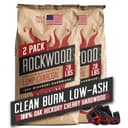
Rockwood All-Natural Lump Charcoal (20 lb, 2-pack)
Missouri oak, hickory, maple and pecan, sorted for consistency, 20 lb in a 2-pack. The default if you want one bag for kettle, kamado or smoker.
Price as of October 13, 2026. #ad How we’re funded
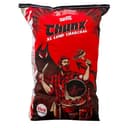
Jealous Devil Chunx XL Lump Charcoal (35 lb)
35 lb of extra-large South American quebracho blanco — a dense hardwood the maker positions for high heat and a long burn.
Price as of October 13, 2026. #ad How we’re funded
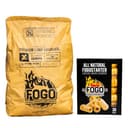
FOGO Premium Hardwood Lump Charcoal, Large (17.6 lb) + Fogostarters
17.6 lb of large hand-picked Inga hardwood, roughly 80% of pieces over 4 in, bundled with 30 fire starters.
Price as of October 13, 2026. #ad How we’re funded
So which should you buy?
Match the fuel to the job, not to a general theory about which is better.
- Long smokes on a kettle— briquettes. You need the stackable geometry. This is not a close call.
- Kamado cooking, long or hot— lump. Less ash to choke the airflow, and it snuffs and relights, which is half the point of a sealed ceramic.
- Searing and high-heat grilling— lump, for the heat.
- Everyday burgers and chicken on a kettle— either. Honestly. Buy on price and availability.
- Starting coals for an offset smoker— lump, to build a hot clean base before you start feeding splits. The reasoning is in what you need for an offset smoker.
The honest conclusion is that most serious charcoal cooks end up keeping both, and that this is not indecision — it is the correct response to two fuels that are genuinely good at different things. If you are going to keep one bag of each, keep briquettes for the long cooks and good lump for everything hot.
Frequently asked questions
Is lump charcoal better than briquettes?
Not better — better at different jobs. Lump lights faster, burns hotter, leaves less ash and can be snuffed and reused, which makes it the right fuel for searing, for kamados and for anyone who wants a wood-flavored fire. Briquettes are uniform by design, which makes the burn rate repeatable and lets you stack deliberate geometry — and that is why the snake method for long kettle smokes is built on briquettes and does not work properly with lump.
Can you use lump charcoal for the snake method?
Not well. The snake method works because briquettes are identical interlocking pillows, so a line laid two wide and two high around the bowl burns along itself at a steady, predictable rate for hours. Lump comes in irregular pieces, so a lump snake either collapses or burns unevenly, with the big pieces creating hot spots and the small ones burning through early. If long low-and-slow cooking on a kettle is your main use, buy briquettes.
Does lump charcoal really produce less ash?
The direction is not controversial — lump is closer to pure carbonised wood, and less non-combustible material going in means less residue coming out. But no maker in this category publishes a measured ash percentage by weight, so there is no honest number to quote. 'Low ash' is a marketing phrase on nearly every bag with no figure attached. Where it genuinely matters is in a kamado, because ash building up under the firebox chokes the airflow the cooker depends on.
Which charcoal burns hotter?
Lump, because irregular pieces expose more surface area to more air and burn more vigorously. That is why it is the standard fuel for searing and high-temperature kamado work. Dense species matter here too — a bag of quebracho behaves differently from a bag of soft hardwood. No maker publishes comparable peak-temperature figures, and real peak heat depends as much on your cooker and vents as on the fuel.
What should I look for on a bag of lump charcoal?
Four things. A named species, because 'hardwood' means the maker either does not know or will not say. A lump-size description, because large pieces suit low and slow and smaller ones suit grilling. A published weight, because some of this category is sold by volume with no weight at all, which makes price comparison impossible — where a weight exists, divide the price by the pounds for a real cost per pound. And whether fire starters are included.
Sources
- US EPA Burn Wise — Best Wood-Burning Practices — The EPA's own wood-burning guidance: "Wood burns best at a moisture content of less than 20 percent," season wood for at least six months, and never burn coated, painted or pressure-treated wood, plywood, particle board, ocean driftwood, or wet, rotted, diseased or moldy wood (accessed September 22, 2026)
Keep reading
Best Lump Charcoal
Species, lump size, ash and burn time — the four specs that decide whether a bag of charcoal helps or fights you.
See the picks →How Much Charcoal Do You Need?
How many briquettes for a given temperature and cook length, and how to stop guessing.
Read the guide →Best Wood for Smoking
Which species suits which meat, chunks against chips against splits, and the moisture figure that matters.
See the picks →