How to Grill Vegetables (and the Best Ones to Grill)
Vegetables are the thing most people cook badly on a grill, and the reasons are mechanical rather than culinary: cut too small, not oiled, and left over direct heat until the outside is black and the middle is raw. Fix those three and the grill becomes the best way to cook most of them.
Quick answer
The vegetables that grill best are the dense, low-water ones: onion, bell pepper, zucchini, asparagus, mushroom, corn, eggplant and romaine. Three rules make all of them work. Cut nothing narrower than the gap between your grate bars— half-inch planks and thick wedges, never dice. Oil the vegetable, not the grate, because vegetables have no fat of their own. And use two zones: char over the coals, then move across to finish. Soft, high-water vegetables like tomatoes and leafy greens want very hot and very fast; dense root vegetables want par-cooking first.
Why vegetables go wrong on a grill
Meat and vegetables fail on a grill for opposite reasons. Meat has internal fat and a lot of water, so it survives a hot grate while its interior comes up to temperature. Most vegetables have no fat at all and a very high water content held inside rigid cell walls, which means two things happen fast: the dry surface scorches because nothing is conducting heat away from it, and the inside steams rather than cooks until the cell walls collapse.
That is the whole problem, and every technique below is a response to it. Oil replaces the fat the vegetable does not have. Thickness buys time for the inside to soften before the outside burns. The cool zone lets you stop adding surface heat while the middle finishes. None of this is fussy cooking — it is three adjustments, and they take no longer than doing it wrong.
Rule one: cut for the grate, not for the plate
The single most common failure is cutting vegetables to the size you would want to eat them. A grate is a set of parallel bars with gaps between them, and anything narrower than a gap goes through it. So cut larger than you want to serve, and cut it down afterwards.
- Planks, not slices. Zucchini, eggplant and onion go on in half-inch-thick lengthwise planks or thick rounds. A quarter-inch slice becomes floppy and falls apart; a half-inch plank holds its shape and chars properly.
- Wedges, not pieces. Cabbage, romaine, fennel and onion all work as wedges cut through the root end, which holds the layers together. Cut them into pieces and you are chasing individual leaves around the grate.
- Whole, where you can. Peppers, small onions, corn in the husk, whole mushrooms and small eggplants go on whole and get broken up afterwards. Whole is always the easiest thing to grill.
- Skewers for anything stubbornly small. Cherry tomatoes, mushroom caps, shallots. Two parallel skewers rather than one stops everything spinning when you turn it.
Rule two: oil the vegetable, not the grate
This is the exact reverse of the advice for meat, and the reason is straightforward. With a steak you oil the grate because the meat already has fat that will render out, and oil on the meat drips into the fire and causes flare-ups. A vegetable has no fat to render, so the oil has a job to do on the vegetable: it conducts heat into the surface, it carries salt and seasoning, and it stops the cut face drying out and going leathery.
Toss the cut vegetables in a bowl with enough oil to coat them lightly and all over — a tablespoon or two for a tray of vegetables, not a puddle — and salt them at the same time. Salting before cooking draws a little moisture to the surface, which helps browning; salting afterwards just sits on top. Use an oil with a reasonably high smoke point; olive oil is fine for everything except the hottest direct searing.
Rule three: two zones, and which zone for which vegetable
Build the fire with the coals banked to one side, so you have a hot direct zone and a cooler indirect one. Then sort your vegetables into three groups.
Fast and hot, direct only. Asparagus, scallions, thin zucchini planks, romaine wedges, halved tomatoes, mushrooms. These are either thin enough to cook through in the time it takes to char, or high-water enough that they collapse if you cook them slowly. A couple of minutes a side over the coals and off.
Char then move, two-zone. Onion wedges and thick rounds, bell peppers, eggplant, cabbage wedges, corn out of the husk, fennel. Get color over the coals, then move to the cool side with the lid down to finish. This is the group most people get wrong by leaving them over direct heat the whole time.
Par-cook first. Potatoes, sweet potatoes, carrots, beets, winter squash, whole beetroot. These are too dense to soften before the outside burns, so boil or microwave them until a knife meets slight resistance, then finish on the grill for color and smoke. Trying to grill a raw potato from cold is the clearest example of the mechanical problem this page is about.
The prep and timing table
Times are for a hot charcoal fire and are a starting point, not a rule — the doneness cue in the last column is what you actually judge by.
| Vegetable | Prep | Zone | Rough time | Done when |
|---|---|---|---|---|
| Asparagus | Whole, woody ends snapped off | Direct | 4–6 min | Bright green, blistered, still has snap |
| Bell pepper | Whole, or halved and seeded | Direct then indirect | 10–15 min | Skin blackened and loose |
| Onion | ½ in rounds or root-end wedges | Direct then indirect | 10–14 min | Translucent and soft through |
| Zucchini / summer squash | ½ in lengthwise planks | Direct | 6–8 min | Grill marks, just yielding |
| Eggplant | ½ in rounds or planks, salted 20 min | Direct then indirect | 10–14 min | Creamy in the middle, not spongy |
| Mushrooms (whole) | Whole, stems trimmed | Direct | 8–10 min | Released their water, then browned |
| Portobello caps | Whole, gill side up first | Direct then indirect | 10–12 min | Soft, juice pooling in the cap |
| Corn (in husk) | Whole, soaked 15 min | Indirect, turning | 20–25 min | Husk charred, kernels plump |
| Corn (shucked) | Naked, oiled | Direct, turning | 8–12 min | Kernels browned in patches |
| Cabbage | Wedges through the core | Direct then indirect | 12–18 min | Charred edges, tender core |
| Romaine | Halved lengthwise, cut face oiled | Direct, very hot | 1–3 min | Cut face marked, leaves still crisp |
| Tomatoes | Halved, or whole on skewers | Direct, very hot | 3–5 min | Blistered before they collapse |
| Potatoes | Par-boiled, then halved | Direct, cut side down | 8–12 min | Crisp face, fluffy inside |
| Carrots | Par-cooked, left whole | Direct then indirect | 8–12 min | Caramelised outside, knife slides in |
| Broccoli / cauliflower | Thick steaks or par-cooked florets | Direct then indirect | 8–14 min | Browned, stem tender |
What to grill vegetables on
For planks, wedges and whole vegetables, the grate you already have is the right tool and nothing else is needed. The gear question only becomes real when you want to cook the smallthings — sliced peppers, mushroom pieces, florets, loose onion — because that is where a standard grate with three-quarter-inch gaps genuinely fights you. The answer is a flat surface over the fire rather than a basket you have to store, and the reversible panel below is the version of that we would actually buy.
How this is funded: we earn a commission if you buy through our links, at no extra cost to you. It never changes which product we recommend, and we’ll tell you when we’d skip one, or point you to a cheaper option when it’s the better buy. Full disclosure.
A flat surface and two tools, nothing else
Live prices, fetched and date-stamped. Vegetables need almost no equipment — these are the three items that address the specific problems above: things falling through, things needing to be lifted flat, and things needing to be turned individually.
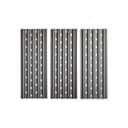
GrillGrate Sear Station Interlocking Panels (3-panel set)
Three interlocking hard-anodised panels, reversible: rails up for searing, flat side up for anything that would otherwise go through the grate. Fits grills 15 in deep and up, and comes with the lifting tool.
Price as of October 14, 2026. #ad How we’re funded
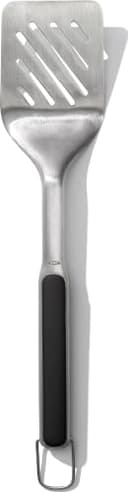
OXO Outdoor Grilling Turner
A wide, beveled stainless head gets under a half-inch zucchini plank or a cabbage wedge and lifts it flat instead of tearing it. Tongs cannot do this job.
Price as of October 14, 2026. #ad How we’re funded
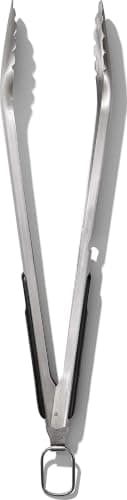
OXO Outdoor Grilling Tongs
Angled, scalloped and locking, with a long handle — for turning asparagus spears, corn and peppers individually without rolling them off the grate.
The mistakes worth naming
- Dicing everything. Half the batch ends up in the coals. Cut large, grill, then cut down on the board.
- Cooking a mixed tray all at once. Asparagus needs four minutes and an onion wedge needs fourteen. Group by cooking time, not by what goes together on the plate.
- Moving them constantly. Char needs contact time. Put them down, leave them until they release, then turn once.
- Using a marinade with sugar in it over direct heat. Sugar burns well below the temperature a grill runs at, so sweet glazes go on in the last two minutes or over the cool zone, never at the start.
- Grilling vegetables after the meat is off.The fire is dying by then. If you only have one grate, cook vegetables first — most of them are good warm or at room temperature, and meat needs to rest anyway.
- Putting cooked vegetables back on the board the raw meat was on. Basic, often forgotten, and the one actual food-safety point on this page. The USDA’s grilling guidance is linked in the sources below.
The order to cook in
With one grate and one fire, this order wastes nothing: par-cooked root vegetables first while the fire is at its hottest, then the char-then-move group, then the meat, then the fast direct vegetables and anything leafy in the last few minutes while the meat rests. Vegetables are far more forgiving about sitting for ten minutes than a steak is.
If you are cooking for a crowd, the two-zone fire does more work here than anywhere else — you can keep a whole tray of finished vegetables warm on the indirect side for twenty minutes without them deteriorating, which is not true of anything else you cook on a grill.
Where to go next
Corn is common enough to have its own method, including the husk-on and husk-off versions: grilling corn on the cob. The two-zone fire that all of this depends on is set up in how to use a charcoal grill, and how much charcoal to usecovers the fuel load for a short vegetable-heavy cook, which is less than you think. If you are cooking vegetables on propane instead, everything here applies — build the zones by turning off the burners on one side, as in how to use a gas grill. And if small vegetables are the main thing you cook, a flat-top may genuinely suit you better than a grate: griddle vs grill.
Frequently asked questions
What are the best vegetables to grill?
The dense, low-water ones: onion, bell pepper, zucchini, asparagus, mushroom, corn, eggplant, cabbage and romaine. They hold their structure long enough to take char without collapsing. Root vegetables like potatoes and carrots are excellent grilled but need par-cooking first, because they are too dense to soften before the outside burns. The ones to be careful with are tomatoes and leafy greens — they work, but only very hot and very fast.
How do you keep vegetables from falling through the grill?
Cut nothing narrower than the gap between your grate bars. That means half-inch planks rather than slices, wedges cut through the root end rather than loose pieces, and whole wherever possible — peppers, small onions, corn and mushrooms all grill well whole and can be cut down afterwards. For anything stubbornly small, use two parallel skewers so the pieces cannot spin, or put a reversible flat panel over the grate.
Should you oil vegetables or the grill grate?
The vegetables — which is the opposite of the advice for meat, and for a good reason. Meat has its own fat that renders out, so oil on the meat drips into the fire and causes flare-ups. Vegetables have no fat at all, so the oil has a job to do on the vegetable itself: conducting heat into the surface, carrying salt, and stopping the cut face drying into leather. Toss them in a bowl with a light coat of oil and salt them at the same time.
How long do vegetables take to grill?
From about two minutes to about twenty-five, which is why cooking a mixed tray all at once does not work. Romaine and tomatoes are one to five minutes over very hot coals. Asparagus and zucchini planks are four to eight. Onion, peppers, eggplant and cabbage are ten to eighteen with a move to the cool side partway. Corn in the husk is twenty to twenty-five. Group vegetables by cooking time rather than by what goes together on the plate.
Do you grill vegetables over direct or indirect heat?
Most want both. Get the color over direct heat, then move across to the indirect side with the lid down to finish cooking through — that applies to onion, peppers, eggplant, cabbage and fennel. Thin or high-water vegetables like asparagus, romaine and tomatoes are direct-only, because they collapse if cooked slowly. Dense root vegetables need par-cooking before they go anywhere near the grill.
Should you grill vegetables before or after the meat?
Before, if you only have one grate. The fire is at its hottest early and dying by the time the meat comes off, and vegetables are far happier sitting for ten minutes than a steak is — most are good warm or at room temperature. It also fits the rest naturally: the meat needs twenty minutes off the heat anyway, which is when you can put the fast, leafy things on.
Do you need a grill basket for vegetables?
Not for planks, wedges or whole vegetables, which are the majority of good grilled vegetables — your existing grate is the right tool. A basket or a flat panel only earns its place if you specifically want to cook small loose things like sliced peppers, florets or mushroom pieces. A reversible panel is the more useful version of the idea, because the rail side still works for searing meat, so it is not a single-purpose item to store.
Why do my grilled vegetables turn out burnt outside and raw inside?
Either they were cut too thick for direct-only cooking, or they were left over the coals the whole time, or they are a dense root vegetable that needed par-cooking. The mechanism is that most vegetables have no fat to conduct heat and a lot of water locked inside rigid cell walls, so the dry surface scorches long before the middle softens. The fix is the two-zone fire: char over the coals, then finish on the cool side with the lid down.
Sources
- USDA FSIS — Grilling Food Safely — USDA guidance on safe grilling, thermometer use and avoiding cross-contamination (accessed July 22, 2026)
Keep reading
Grilling Corn on the Cob
Husk-on and husk-off, the soaking question, and the timings for each — the most-grilled vegetable in its own right.
Read the guide →How to Use a Charcoal Grill
The two-zone fire that everything on this page depends on, plus vent control and lighting.
Read the guide →Best Grill Grates
Hinged grates, sear panels and replacements — including the reversible panels that stop small food falling through.
See the picks →Griddle vs Grill
If small, loose food is most of what you cook, a flat-top may suit you better than a grate. What each does best.
Compare them →