Char-Griller vs Oklahoma Joe's
A budget grill-and-smoker combo or heavier reverse-flow steel — the two offsets every value shopper cross-shops, on the numbers. Which one is the smarter buy, and who should pick which.
Quick answer
The Char-Griller Smokin’ Pro is the cheapest honest way into offset smoking, and it doubles as a full charcoal grill — but it’s thinner steel with a small firebox, and it wants a gasket kit and a baffle to cook evenly. The Oklahoma Joe’s Highland Reverse Flow costs more than twice as much for heavier steel, more cooking area and reverse-flow baffles that hold temperature better out of the box. Buy the Char-Griller to save and tinker, the Oklahoma Joe to cook evenly with less fuss.
How this is funded: we earn a commission if you buy through our links, at no extra cost to you. It never changes which product we recommend, and we’ll tell you when we’d skip one, or point you to a cheaper option when it’s the better buy. Full disclosure.
| Spec | 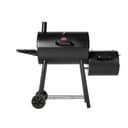 | 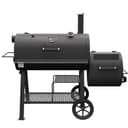 |
|---|---|---|
| Primary cooking area | 580 sq in | 619 sq in |
| Total cooking area | 830 sq in | 1,093 sq in |
| Configuration | Grill + offset firebox | Reverse-flow (convertible) |
| Warranty | Limited, parts | 2 years, parts |
| Price | $299.99 · View on Amazon Price as of October 21, 2026. #ad How we’re funded | $729.00 · View on Amazon Price as of October 21, 2026. #ad How we’re funded |
The short version
These are the two offsets nearly every value shopper cross-shops, and they’re a genuinely useful pair to compare because they optimize for opposite things. The Char-Griller Smokin’ Prois a charcoal barrel grill with a bolt-on side firebox — 580 square inches of cast-iron primary grate, 830 in total, for around a third of the Oklahoma Joe’s price. It grills as happily as it smokes, and it asks that you seal it and add a baffle to make it cook evenly. The Oklahoma Joe’s Highland Reverse Flowis the more finished cooker: heavier-gauge steel, more area on both grates, reverse-flow baffles that even out the heat from the factory, and a convertible layout, for a price that’s still comfortably under a grand. One rewards a tinkerer on a tight budget; the other rewards someone who’d rather just cook. Neither is a bad buy, and both live in our best offsets under $1,000 roundup.
Steel and heat retention
This is the real difference, and it’s the one that shapes every cook. The Highland carries more mass and a high-temp finish, while the Char-Griller runs thinner metal that radiates heat into the yard faster and a noticeably smaller firebox that needs feeding more often. More mass is more stability: a heavier chamber soaks up heat and rides out the dips every time you open the lid or feed the firebox, so it holds a steadier temperature with less fiddling. The Char-Griller’s thinner steel swings more, especially in wind and cold, and burns through fuel a little faster. That doesn’t make it a bad smoker — it makes it a smoker that asks more of the cook, and that responds well to the cheap fixes below. If you want the steadiest temperature in this pair straight out of the box, the Highland is it. If you’re happy to manage a livelier fire in exchange for saving money and gaining grate, the Char-Griller earns its place.
Cooking area and shape
The Highland wins this one, but by less than the price gap suggests. It has the larger primarygrate at 619 square inches to the Char-Griller’s 580, and a much larger totalat 1,093 to 830 once you count the upper racks. In real terms the Highland is a true mid-to-large offset that handles two full briskets, while the Smokin’ Pro is a barrel-sized chamber that handles one comfortably and a big load of ribs. Where the Char-Griller claws back ground is versatility: its firebox is a usable direct-grilling zone and the barrel is a proper charcoal grill, so a chunk of that 830 square inches earns its keep on weeknights rather than sitting idle between smokes. Judge these two on how much of their area you will actually light — on that measure the cheaper pit is closer than the raw numbers look.
Grates, grilling and everyday use
The Char-Griller runs cast-iron grates, which hold and radiate sear heat well and lay down proper grill marks that thin plated steel can’t — a real advantage given how much of its life this pit spends grilling. Cast iron does ask for a little upkeep: keep it oiled or it will surface-rust, especially on a thinner body that sheds heat and invites condensation. On everyday flexibility the two differ in capability, not just character. The Char-Griller is a charcoal grill first with a firebox bolted to the side, so it doubles as a big everyday grill in a way the Highland does not; the Highland’s reverse-flow plates are tuned for even low-and-slow smoking, though its convertible layout lets you pull the baffles and run it traditional when you want to grill. Fuel use tracks the steel: the Highland’s greater mass holds heat longer between splits, so over an all-day cook you feed it a touch less often than the lighter Char-Griller, which sheds heat faster and asks for wood on a shorter cadence — more so in wind and cold. Neither is a fuel hog once sealed, but the heavier pit is the more relaxed one to tend.
Reverse-flow versus traditional layout
This is the split that decides how forgiving each pit is. The Char-Griller is a traditional offset: heat drafts from the firebox straight across the food and out a chimney at the far end, which always runs hotter near the firebox until you learn to work the gradient — rotating meat, or adding a baffle to even it out. The Highland ships as a reverse-flowpit: baffle plates route the heat down the length of the chamber and back before it exits near the firebox end, which evens out that hot spot from the factory and forgives a newer offset cook. Better still, the Highland is convertible — pull the plates and move the stack and it runs traditional too, so you can learn on the forgiving setup and experiment later without buying a second smoker. The Char-Griller only runs traditional, which is simpler and great for grilling over the firebox, but you’re managing the hot end yourself. We break the whole trade down in reverse-flow versus traditional offsets.
The mods each one needs
Both benefit from the same first mod, and the Char-Griller needs it more. A gasket kit(about $20) seals the lid and firebox door, which on any budget offset leak a little out of the box — and those leaks, not the steel alone, cause most of the temperature swings people complain about. On the Char-Griller, plan for the gasket kit and a baffle or set of tuning platesto even out the traditional layout’s hot end; together they turn a lively, one-hot-spot pit into one you can confidently run two racks on. The Highland needs less: the reverse-flow baffles already even the heat, so most owners are happy with just the gasket kit. That’s the tinker-versus-turnkey trade in a nutshell — the Char-Griller has a huge aftermarket and rewards the work, while the Highland does more of that work for you at the factory. Either way, a good probe thermometer matters more than any mod, because the dome gauge on either lid reads the wrong place and is often off by a wide margin.
Price and value
On sticker price the Char-Griller is far and away the cheaper of the two — roughly a third of the Highland — and it’s the cheapest pit here that is a real charcoal grill as well as a real offset. That combination, not raw square inches, is its pitch. But value isn’t only the sticker. Budget in the gasket kit and baffle it wants, and the gap to the Highland narrows; the Highland arrives closer to ready, so you spend less on parts and less of your first few cooks fighting the pit. Think of it as paying either in dollars or in tinkering. If your budget is tight and you enjoy modifying gear, the Char-Griller stretches your money furthest. If you’d rather put the difference toward a thermometer and start cooking evenly on day one, the Highland is the better value even though it costs more up front. Both sit well under a grand, so this isn’t a stretch-versus-save decision so much as a how-do-you-want-to-spend decision.
There’s a longevity angle too. Thinner steel doesn’t just swing temperature; over years it’s more prone to warping and rust-through if the pit lives uncovered, so the Char-Griller rewards a cover and a little maintenance more than the heavier Highland does. Neither is a lifetime custom pit, but the Highland’s extra mass and high-temp finish give it a bit more margin against hard weather and neglect. Factor that in if the smoker will sit outside year-round: the cheaper sticker can cost a little back in upkeep and an earlier replacement, while the pricier pit holds its own longer. It’s the same buy-cheap-or-buy-once calculus that runs through the whole category, and it’s worth weighing against how long you actually plan to keep the smoker.
Which should you buy?
Buy the Char-Griller Smokin’ Proif you want the least expensive honest way into offset cooking, you want a full charcoal grill in the same machine, you don’t mind sealing and baffling it, and you like the idea of a mod aftermarket to make the pit your own. Buy the Oklahoma Joe’s Highland Reverse Flowif you want the more forgiving, more finished cooker — heavier steel, reverse-flow heat, and a convertible layout — and you’d rather cook evenly with less fuss. For most upgraders we lean Highland, because evenness is forgiveness and the thermometer-and-gasket money is better spent than fighting a hot end; that’s why it’s our overall pick in the offset smokers roundup. If you’re drawn to the Highland but want to know whether to size up to heavier steel still, read Highland vs Longhorn next, and see where both of these land against the rest of the field under a grand in our best offsets under $1,000 guide.
Frequently asked questions
Is Char-Griller or Oklahoma Joe's better?
It depends on how you like to spend. The Char-Griller Smokin' Pro costs roughly a third as much and doubles as a full charcoal grill, but it runs thinner steel with a smaller firebox and needs a gasket kit and baffle to cook evenly. The Oklahoma Joe's Highland Reverse Flow costs more for heavier steel, more cooking area and reverse-flow baffles that even the heat from the factory. Choose Char-Griller to save and tinker, Oklahoma Joe to cook evenly with less fuss.
Does the Char-Griller Smokin' Pro have more cooking area than the Highland?
No — the Highland is larger on both measures. Its primary grate is 619 square inches to the Smokin' Pro's 580, and on total area it's 1,093 to 830 once you count the upper racks. What the Char-Griller offers instead is versatility: it's a proper charcoal barrel grill with an offset firebox bolted to the side, so more of its area gets used on ordinary weeknights rather than only on smoking days.
Which one holds temperature better?
The Oklahoma Joe's Highland, for two reasons. It carries more thermal mass, so it rides out lid-opens and fuel feeds with less swing, and its reverse-flow baffles even the heat across the chamber from the factory. The Char-Griller's thinner steel swings more, especially in wind, and its traditional layout runs hot near the firebox until you add a baffle. Sealing either with a $20 gasket kit removes most of the remaining swing.
What mods does the Char-Griller Smokin' Pro need?
Two, mainly. A gasket kit (about $20) to seal the lid and firebox door, which stops the air leaks that cause most temperature swings, and a baffle or a set of tuning plates to even out the traditional layout's hot end near the firebox. The Char-Griller has a large aftermarket that makes both easy. A good probe thermometer isn't a mod but is the other must-buy, since the dome gauge reads the wrong place. Plan on feeding the small side firebox more often than you would a larger pit.
Are these offsets good for beginners?
Both can be, but the Highland is the more forgiving start because its reverse-flow baffles even out the hot spot that trips up new offset cooks. The Char-Griller rewards someone willing to seal it, add a baffle, and learn to work a traditional layout's hot end. Either way, buy a probe thermometer, add a gasket kit, and read our how-to-use guide before your first cook — fire management matters more than which pit you pick.
Keep reading
Highland vs Longhorn
The two Oklahoma Joe offsets compared on steel, area and airflow — how much steel you actually need.
Read the comparison →Best Offsets Under $1,000
Where both of these land against the rest of the field, ranked on steel, area and value.
See the picks →How to Smoke Ribs on an Offset
Trim, rub, and run 250°F to clean-biting ribs — the 3-2-1 method and the doneness cues that actually matter.
Read the guide →