Blackstone 36-inch Griddle Review
The four-burner flat-top that turned griddling into a backyard staple. 769 square inches of steel, four independent heat zones and 60,000 BTU make it the crowd-cooker of choice. Here's an honest, spec-driven look at what it does, what it demands, and who should buy it.
Quick answer
The Blackstone 36-inch four-burner is the flat-top to buy if you cook for a crowd. 769 square inches over four independently controlled burners let you sear, cook and hold all at once, 60,000 BTU keeps the surface hot even loaded with cold food, and the accessory ecosystem is unmatched. The catch is bare-steel maintenance — you must season it and keep it oiled and covered. For volume outdoor cooking, nothing gives you more for the money.
How this is funded: we earn a commission if you buy through our links, at no extra cost to you. It never changes which product we recommend, and we’ll tell you when we’d skip one, or point you to a cheaper option when it’s the better buy. Full disclosure.
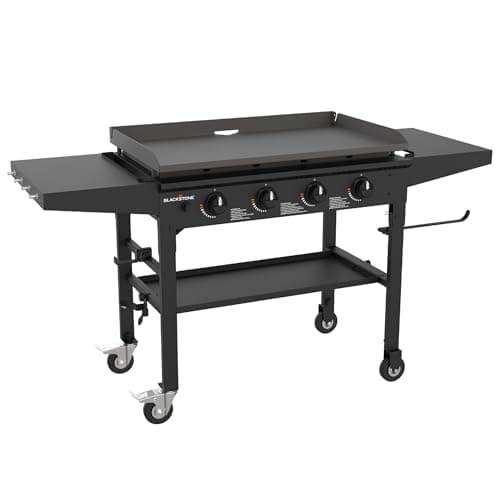
Blackstone 36-inch 4-Burner Griddle Cooking Station
Price as of October 22, 2026. #ad How we’re funded
What it is
The Blackstone 36 is the full-size backyard flat-top — a 769-square-inch cold-rolled steel griddle top over four propane burners, mounted on a rolling cart with side shelves and a rear grease-management system that funnels drippings into a cup. It is the griddle most people picture when they think “Blackstone,” and it’s the one that made outdoor griddling mainstream. It doesn’t grill, smoke or leave grill marks; what it does is cook a lot of food fast on an even, screaming-hot surface, which is exactly what breakfasts for a crowd, batches of smash burgers, and big skillet-style meals need.
Cooking area and heat
This is the reason to buy the 36 over a smaller griddle. 769 square inches is a genuinely large surface — enough for a dozen-plus smash burgers with buns toasting alongside, or a full breakfast of eggs, bacon, pancakes and hash browns going at once. The four independently controlled burnersare the real feature: each is its own heat zone, so you can run a hard-searing section, a medium cooking section, and a low warming section simultaneously, which is what makes timing a big multi-part meal manageable. At 60,000 BTU total, the plate gets hot fast and — importantly — recovers heat quickly after you load it with cold food, so a batch of cold patties doesn’t tank the surface temperature the way it would on a weaker griddle.
Build and everyday use
The 36 is unpretentious, functional hardware. The steel top is thick enough to hold heat evenly across most of the surface (the outer edges run a touch cooler, which is useful for holding), the burners are simple and reliable, and the cart, shelves and grease cup are all practical rather than premium. Assembly is straightforward. The rear grease system is a real upgrade over older front-drain designs — it keeps drippings away from you and makes cleanup a matter of scraping the surface into the trough. None of it feels luxurious, but all of it works, and when something eventually wears, the parts are cheap and everywhere.
The catch: seasoning and rust
The honest downside of every bare-steel griddle, the 36 included, is maintenance. It ships as raw cold-rolled steel, so before you cook you must seasonit — bake thin layers of high-smoke-point oil onto the surface until it turns black, slick and rust-resistant — and after each cook you wipe it with a light coat of oil. Leave it bare or wet and it will rust, and a big 769-square-inch top is a big surface to re-season if you neglect it. This isn’t difficult (our how to season a griddleguide covers it in full) and a well-kept top lasts for years, but it’s real, ongoing care that a stainless gas grill doesn’t ask for. Budget for a fitted cover and a bottle of oil with the griddle, and store it out of the weather.
Where it falls short
Two things. First, it’s big— the 36 is a substantial station that needs real patio space and somewhere to be covered; if your space is tight, the 28or a tabletop is the better fit. Second, it’s a griddle, not a grill: no grill marks, no live-fire char, no smoke, and it won’t cook low-and-slow barbecue. If you want those, a griddle complements rather than replaces a grill — see griddle vs grill. The base model also ships without a hood, which you’ll want for melting cheese and steaming; it’s an add-on, and a cheap stainless dome does most of the same job — both are covered in best griddle accessories, along with the fitment traps that catch people buying a cover or hood for this size.
Who should buy it
Buy the Blackstone 36 if you cook for a crowd, love breakfast-for-a-dozen or big batches of smash burgers, and want the flexibility of four heat zones — and you have the space for a full station and don’t mind the seasoning routine. It’s our best-for-a-crowd pick in the flat-top griddles roundup. If you cook for a normal-sized family or have a smaller patio, the 28 gives you the same cooking for less money and less footprint — weigh them in Blackstone 28 vs 36, or read the 28-inch review for the smaller griddle on its own terms. And whatever size you land on, the first thing to make on it is a batch of smash burgers, the dish the flat-top does better than anything else.
Frequently asked questions
Is the Blackstone 36-inch griddle worth it?
For volume outdoor cooking, yes. The 36's 769 sq in and four independent heat zones let you feed a crowd and run multiple temperatures at once, 60,000 BTU keeps the surface hot even loaded with cold food, and the accessory and parts ecosystem is the deepest in flat-top cooking. The trade is bare-steel maintenance — seasoning and keeping it oiled and covered. If you cook breakfasts and smash burgers for a crowd, it earns its space; for a small family, the 28 is a better fit.
How big is the Blackstone 36 griddle?
The cooking surface is 769 square inches across four independently controlled burners, with a total output of 60,000 BTU. That's enough to cook a dozen-plus smash burgers in a batch, or a full breakfast of eggs, bacon, pancakes and hash browns all at once. The four burners each act as a separate heat zone, so you can sear, cook and hold food simultaneously — the main advantage over smaller two-burner griddles.
Does the Blackstone 36 come with a hood?
The base four-burner model typically ships without a hood, though hooded versions and add-on hoods are available. A hood is useful for melting cheese, steaming and trapping heat, and it keeps dust and weather off the surface between cooks. It's not essential — plenty of people cook happily without one — but it's a worthwhile add if you melt cheese on smash burgers or cook in cooler weather.
How do you keep a Blackstone 36 from rusting?
Season it before first use and maintain it after. Seasoning bakes thin layers of oil onto the bare steel to create a rust-resistant, nonstick surface; after each cook, scrape it clean, wipe it down, and apply a light coat of high-smoke-point oil. Store it covered and out of the weather. The big 769-square-inch top is a large surface to neglect, so a fitted cover and a quick oil wipe after cooking are the habits that keep it from rusting.
Blackstone 36 or 28 — which should I buy?
Buy the 36 if you regularly feed a crowd or want four heat zones for staging big multi-part meals, and you have space for a full station. Buy the 28 if you cook for a family of four to six, have a normal-sized patio, or want to spend less — it does the same cooking on a smaller scale. The two cook identically; you're choosing capacity and zones versus footprint and price. Our Blackstone 28 vs 36 comparison lays it out.
Keep reading
Blackstone 28 vs 36
The size decision every griddle buyer makes — two burners or four, on the numbers.
Read the comparison →Best Flat-Top Griddles
All four Blackstone sizes we rank, on cooking area, burners and price.
See the roundup →Best Griddle for Smash Burgers
The flat-top is the smash-burger tool — here are the griddles with the heat and steel to crush a proper crust.
See the picks →