Grate & Grill
Segment roundup

Best Grills for Beginners

Five first grills, one per fuel type, ranked on how little can go wrong rather than on features. The fuel you pick matters more than the brand you pick, so this page answers the fuel question first and then names the one grill worth buying in each lane.

By Stephen V.Last updated Our methodology

If you have never owned a grill and you want one answer, buy the Weber Spirit E-325. Three burners, a published 31,000 BTU across them, 450 square inches of total cooking space, porcelain-enameled cast-iron grates and a ten-year cookbox warranty. It is not the cheapest grill on this page and it is not the biggest. It is the one where the fewest things can go wrong on your first ten cooks, and that is the only criterion that matters when you are starting.

But “best grill for beginners” is really two questions stacked on top of each other, and almost every page that answers it skips the first one. Which fuel you buy decides more about your first year of grilling than which brand you buy. A gas grill and a charcoal kettle at the same price are not two versions of the same appliance; they are two different hobbies with different failure modes. So this page is organized by fuel, one pick per lane, and the ranking is about how forgiving each option is rather than how impressive its spec sheet looks.

The five criteria we ranked on

This is the part worth arguing with. Everything below follows from it.

1. How many ways the first cook can fail.A gas grill has roughly two: you did not preheat long enough, or you cooked everything over direct heat. A charcoal grill has six or seven, most of them about fire management — too few coals, coals not fully lit, no second zone, vents shut, lid off. Neither is hard once you know. One of them is much easier to get right while you are still learning.

2. Time from “I want to grill” to food on the grate. Ten to fifteen minutes on gas or a griddle. Twenty-five to thirty-five on charcoal, counting the chimney. On a pellet grill, fifteen minutes to temperature but potentially twelve hours of cook after that. This single number decides how often a grill actually gets used, and a grill that gets used twice a summer is a bad purchase at any price.

3. What happens in year five.Beginners replace their first grill far more often than they expect to, usually because a cheap one rusted through or because the burners went and no parts exist. Weber’s parts network and ten-year cookbox warranty are not a brand flourish — they are the difference between a grill you repair and a grill you put on the curb. Where a pick here is a short-service-life grill, its own row says so plainly.

4. Cooking area against the number of people you feed.The useful rule of thumb is roughly 70–100 square inches of grate per person you cook for at once, which makes anything around 350–450 square inches a genuine four-to-six-person grill. Bigger is not better on a first grill: a large cold surface takes longer to heat, costs more fuel, and gives you more room to make the classic beginner mistake of filling the whole grate with food and leaving nowhere to move it.

5. Whether it teaches you anything. This one is last on purpose, because it is the criterion people over-weight. A charcoal kettle genuinely teaches fire, airflow and two-zone cooking in a way a gas grill never will, and a lot of serious cooks are glad they started there. It is still the wrong recommendation for someone whose honest goal is burgers on a Tuesday.

Pick your fuel first — the short version

  • Gas if you want to grill on weeknights and you value turning a knob. Fastest to start, easiest to control, most expensive per square inch of grate. This is the right default for most first-time buyers.
  • Charcoal if you want the flavor and you are willing to spend twenty-five minutes before dinner. Cheapest real grill you can buy, steepest learning curve, and the fuel most likely to turn into a hobby.
  • Pelletif what you actually want is to smoke — brisket, ribs, pulled pork. Set a dial, it holds the temperature. Weakest at high-heat searing, highest entry price, and the only one of the four that needs an electrical outlet.
  • Flat-top griddle if the food you picture is breakfast, smash burgers, fajitas and fried rice rather than steaks with grill marks. Enormous usable surface, no flare-ups, and bare steel you have to season and keep from rusting.

One honest note before the picks: if you rent, check your lease and your local rules before you buy anything that burns charcoal or wood. Plenty of apartment buildings and condo associations ban open-flame and charcoal cooking on balconies outright while permitting propane or electric, and that rule, not this page, decides what you are allowed to own. Our grills for small patios and balconies page goes into that in more detail.

We own none of this gear and have tested none of it. Every number quoted on this page comes from the manufacturer page named inside each product card, the reasoning is ours and explained so you can disagree with it, and prices are pulled live rather than typed in — our methodology sets out exactly what that means.

How this is funded: we earn a commission if you buy through our links, at no extra cost to you. It never changes which product we recommend, and we’ll tell you when we’d skip one, or point you to a cheaper option when it’s the better buy. Full disclosure.

The picks, side by side

Ranked, with the published specs and a live price on every pick. Select a row to jump to the full write-up. We haven’t tested these ourselves — here’s exactly what we do instead.

#ProductCooking areaPrice
1
Weber Spirit E-325 3-Burner Gas Grill

Weber Spirit E-325 3-Burner Gas Grill

Best overall
450 sq in
$549.00 · View on Amazon

Price as of October 27, 2026. #ad How we’re funded

2
Weber Original Kettle 22-inch Charcoal Grill

Weber Original Kettle 22-inch Charcoal Grill

Best for the least money
363 sq in
$149.00 · View on Amazon

$159.006% off

Price as of October 27, 2026. #ad How we’re funded

3
Char-Broil Performance Series 4-Burner Gas Grill

Char-Broil Performance Series 4-Burner Gas Grill

Most grill per dollar
565 sq in
$303.09 · View on Amazon

$399.9924% off

Price as of October 27, 2026. #ad How we’re funded

4
Blackstone Original 28-inch Omnivore Griddle (2-Burner)

Blackstone Original 28-inch Omnivore Griddle (2-Burner)

Best for feeding a family
524 sq in
$249.99 · View on Amazon

Price as of October 27, 2026. #ad How we’re funded

5
Z Grills 700D4E Wood Pellet Grill

Z Grills 700D4E Wood Pellet Grill

Best for learning to smoke
697 sq in
$579.00 · View on Amazon

Price as of October 27, 2026. #ad How we’re funded

The picks in full

#1Best overall

Weber Spirit E-325 3-Burner Gas Grill

The gas grill most people should buy. Three burners plus a dedicated Sear Zone give you a real sear and room to cook indirect at once, the porcelain-enameled cast-iron grates and stainless burner tubes are built to last, and Weber's parts network keeps it serviceable for years. You pay a Weber premium over a big-box 4-burner, but you get a grill that still lights and cooks the same a decade on.

What the numbers say
  • Sear Zone Boost Burners add genuine high-heat searing
  • Porcelain-enameled cast-iron grates and stainless burner tubes
  • Weber's deep parts ecosystem and a 10-year cookbox warranty
Worth knowing
  • Costs more than an equivalent-size big-box 4-burner
  • 450 sq in total is mid-size, not huge

Best for: The 3-burner most gas shoppers should buy

Specs read from Weber.com Spirit E-325 product page (#1500789), last checked July 22, 2026. Prices change; the number in the card is fetched live.

#2Best for the least money

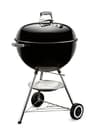
Weber Original Kettle 22-inch Charcoal Grill

The honest value pick. This is the plain 22-inch Weber kettle — the same 363 sq in porcelain bowl and 10-year warranty as the Premium, without the hinged grate, the enclosed ash sweeper or the lid thermometer. You give up conveniences, not cooking: it grills and smokes identically. Buy it if you want the Weber kettle for the least money and don't mind lifting the grate to add coals.

What the numbers say
  • Same 363 sq in porcelain bowl and 10-yr warranty as the Premium
  • The cheapest way into the Weber kettle ecosystem
  • Simple, near-indestructible, endlessly repairable
Worth knowing
  • Flat (non-hinged) grate — lift the food to add coals
  • No built-in thermometer and a basic aluminum ash pan

Best for: The Weber kettle for the least money

Specs read from Weber 22-inch Original Kettle product page, last checked July 22, 2026. Prices change; the number in the card is fetched live.

#3Most grill per dollar

Char-Broil Performance Series 4-Burner Gas Grill

The most burners for the least money here. Four main burners plus an 11,000 BTU side burner and the FlavorMax cooking system give you a lot of grill for a big-box price, with porcelain-coated grates built for heat retention and easy cleanup. The trade for the low price is a lighter build than a Weber and a shorter service life — it's the pick for a big cooking surface on a budget, not a buy-it-for-life grill.

What the numbers say
  • Four burners plus an 11,000 BTU side burner for a low price
  • Porcelain-coated grates and a swing-away warming rack
  • 565 sq in total — room for a crowd's worth of food
Worth knowing
  • Lighter build and shorter service life than a premium grill
  • Manufacturer main-burner BTU isn't published, so we don't quote one

Best for: The most cooking surface on a budget

Specs read from Char-Broil brand listing for the Performance Series 4-Burner Gas Grill Cabinet with Side Burner, model 463253925, last checked July 22, 2026. Prices change; the number in the card is fetched live.

#4Best for feeding a family

Blackstone Original 28-inch Omnivore Griddle (2-Burner)

The right size for most households. Two independently controlled H-style burners and 524 sq in cook for a family of four to six with room to spare, and the smaller footprint fits a normal patio far better than the 36. The Omnivore plate's built-in wind guards are the quiet upgrade — they hold heat in on a breezy evening, which is exactly where a flat-top usually struggles. You give up two burners and a lot of holding space versus the big one, but if you are not routinely feeding a crowd, the 28 is the smarter, cheaper buy.

What the numbers say
  • 524 sq in and two heat zones — plenty for a family, easy to store
  • Built-in wind guards on the Omnivore plate steady the heat outdoors
  • Costs well under the 36 and fits a normal patio
Worth knowing
  • 24,000 BTU across 524 sq in is less heat per square inch than the 36
  • Two zones limit how many temperatures you can run at once
  • Same bare-steel seasoning and rust care as every Blackstone

Best for: The best size for most families

Specs read from Blackstone 28-inch Omnivore Griddle Cooking Station product page (blackstoneproducts.com) + Amazon listing (model 1517), last checked August 24, 2026. Prices change; the number in the card is fetched live.

#5Best for learning to smoke

Z Grills 700D4E Wood Pellet Grill

The price-per-square-inch champion. A PID controller keeps temperature within a tight band, the 20 lb hopper runs long cooks, and it does the pellet-grill job — steady low-and-slow — for hundreds less than the name brands. You give up app control and a national dealer network; the cooking is honest.

What the numbers say
  • PID controller holds temperature tightly for the price
  • 697 sq in and a 20 lb hopper — real capacity, low cost
  • Simple, repairable, and widely owned
Worth knowing
  • No app control at this trim
  • Support and parts network is smaller than Traeger's

Best for: Maximum cooking area for the least money

Specs read from Z Grills product page + Amazon listing, last checked July 22, 2026. Prices change; the number in the card is fetched live.

The five, at a glance

Read the “hardest part” column first. That is the thing you will be learning for the first month, and it is a better predictor of whether you enjoy the grill than any spec.

GrillFuelReady inHardest part
Weber Spirit E-325Propane~10–15 min preheatRemembering to set up a cool zone
Weber Original Kettle 22Charcoal~25–30 min with a chimneyLighting and banking the fire
Char-Broil Performance 4-BurnerPropane~10–15 min preheatKeeping a lighter build from rusting
Blackstone 28 OmnivorePropane~10 min preheatSeasoning the steel and preventing rust
Z Grills 700D4EWood pellets + power~15 min to temperaturePatience — and finding an outlet

What a beginner should budget for beyond the grill

Prices move, so the live number in each row above is the one to trust. What is stable is the shape of the spend, and the accessory side of it is the part first-time buyers consistently forget:

  • A digital instant-read thermometer. Non-negotiable, and cheap. It is a budget-tier purchase that removes the single biggest cause of ruined food on a new grill, which is guessing. The USDA is explicit that color is not a reliable doneness test and a thermometer is — cited at the foot of this page. Buy one before you buy anything else on the list below.
  • Charcoal only: a chimney starter. Also budget-tier, also transformative. It lights a full load of charcoal evenly in about fifteen minutes with no lighter fluid and no chemical taste. If you buy a kettle and skip the chimney, you have bought a harder version of the same grill.
  • Propane only: a second tank. Running out mid-cook is the classic first-summer indignity, and a spare costs a fraction of the grill.
  • Everyone: a cover. Mid-tier at most, and it is the cheapest thing you can do to make a grill last. A grill that lives outside uncovered in rain and UV ages several times faster than one that does not.
  • Pellet only: pellets, forever. Pellets are a running cost in a way charcoal mostly is not, because a pellet grill burns fuel continuously to hold temperature. Budget for a bag every few long cooks.

Our best grilling accessories page puts all of that in buying order, and best grilling tools covers the three things you hold while cooking. Both are deliberately short lists; the twenty-piece gift case is four usable items and sixteen skewers.

What each pick does not do

Every product card above carries the full limitations from our registry. Three are worth pulling out, because they are the ones beginners are surprised by.

The Spirit will not give you smoke flavor.Propane makes heat, not smoke. A foil packet of wood chips on the grates gives you a mild hint and that is the honest ceiling. If barbecue — low, slow, smoky — is what you are actually picturing, a gas grill is the wrong purchase and the pellet pick at the bottom of this list is the right one.

The kettle will not hold a temperature for you. You hold it, by how much charcoal you light and how far open the vents are. That is the skill, it takes a handful of cooks to learn, and the people who bounce off charcoal almost always bounce off it in the first three. If you buy this one, read charcoal grilling for beginners and the beginner mistakes page before the first bag, not after.

The Blackstone will rust if you ignore it.A flat-top is bare rolled steel, and bare steel left wet oxidizes. The routine is not difficult — season it, wipe a thin film of oil on after each cook, keep it covered — but it is a routine, and it is the single most common reason a griddle ends up abandoned. How to season a griddle is the page to read on day one.

Three grills we would not buy first

An offset smoker. They are wonderful and they are the reason this site exists, but a stick-burner is a fire-management instrument that wants babysitting every forty-five minutes for twelve hours. It is a second or third cooker, not a first one. If you are determined, best offset smokers for beginners ranks them on forgiveness rather than price, and says plainly what you are signing up for.

A ceramic kamado.Superb at nearly everything and genuinely efficient, but it is the most expensive entry on any fuel, it is heavy enough that moving it is a two-person job, and ceramic punishes the beginner error of overshooting your target temperature — once a kamado is 150 degrees too hot, bringing it down takes a long time. A better second grill than first.

The cheapest grill in the big-box aisle.Not because cheap is bad — two picks on this page are inexpensive on purpose — but because the bottom of the market is where you find painted-steel bodies, no replacement parts and burners that fail in year two. A $149 Weber kettle and a $99 no-name barrel are not the same gamble. Spend the least you like on a design that is simple and supported; do not spend it on a complicated grill built as thin as possible.

Where to go next, by fuel

Each lane on this page has a full roundup behind it with more picks, more price tiers and the cross-shopping comparisons:

And once the grill arrives, the two pages that matter most on week one are the best foods to grill and how to use a gas grill— between them they cover the two-zone setup that nearly every beginner mistake comes back to.

Frequently asked questions

What is the best grill for a beginner?

A three-burner propane gas grill, and the Weber Spirit E-325 is the one we would buy. Gas gives a beginner the fewest ways to fail: you turn a knob, you get a predictable temperature, and you are cooking ten to fifteen minutes after you decide to. Charcoal cooks better food and teaches you more, but it adds twenty-five minutes and about six new ways to get dinner wrong, and most people who abandon a first grill abandon a charcoal one.

Should a beginner buy a gas or charcoal grill?

Gas if you want to cook on weeknights; charcoal if you want the flavor and the hobby. The honest test is a question about your calendar rather than your taste: if dinner starts at 6:30, gas is lit at 6:15 and charcoal is lit at 5:50. Charcoal is also the cheapest way to own a genuinely good grill, so if money is the constraint and time is not, a 22-inch kettle is the better buy of the two.

How much should I spend on my first grill?

Enough to get a simple, well-supported design, which in practice means somewhere between a 22-inch charcoal kettle and a three-burner gas grill from a brand that sells parts. Below that, you are buying painted steel, unavailable replacement burners and a two-year service life. Spending more than that on a first grill mostly buys capacity and features you cannot yet use. Whatever you spend, keep a small amount back for a thermometer and a cover.

What size grill do I need?

Roughly 70 to 100 square inches of cooking grate per person you cook for at the same time, which makes 350 to 450 square inches a real four-to-six-person grill. Resist going much larger on a first grill: a big cold surface takes longer to heat, burns more fuel, and encourages the most common beginner mistake, which is covering the entire grate with food so there is nowhere cooler to move anything.

Is a pellet grill good for beginners?

It is the easiest way to produce good barbecue and one of the weaker ways to grill a steak. A pellet grill holds a set temperature on its own, which makes a twelve-hour pork shoulder genuinely beginner-friendly, but most models top out well below the heat a proper sear wants and they all need mains power. Buy one if the food you picture is ribs and brisket. If it is burgers and chicken on a weeknight, buy gas.

What do I need to buy with my first grill?

A digital instant-read thermometer, always, because guessing is the main reason first cooks fail and the USDA is explicit that color is not a reliable doneness test. Then a cover, which is the cheapest way to add years to the grill. If you bought charcoal, add a chimney starter; if you bought propane, add a spare tank; if you bought a griddle, add oil and a scraper for seasoning. That is the whole list.

Is a Weber worth the extra money for a first grill?

For the gas grill, usually yes, and the reason is parts rather than cooking. A Weber Spirit costs more than a similarly sized big-box four-burner, and the big-box grill will cook a decent burger on day one. The difference shows up in years three to six, when the Weber has a ten-year cookbox warranty and a burner tube you can order, and the cheaper grill has neither. If your budget will not stretch, a cheaper four-burner is a reasonable buy as long as you expect to replace it.

Can I use a charcoal grill on an apartment balcony?

Often not, and that is a rule to check before you spend anything. Many leases and condo associations ban charcoal and open-flame cooking on balconies while allowing propane or electric, and some municipalities set a minimum distance from a building. The restriction is about the fuel rather than the grill, so a compact kettle is no more permitted than a big one. Read your lease, then pick the fuel it allows.

Sources

Keep reading