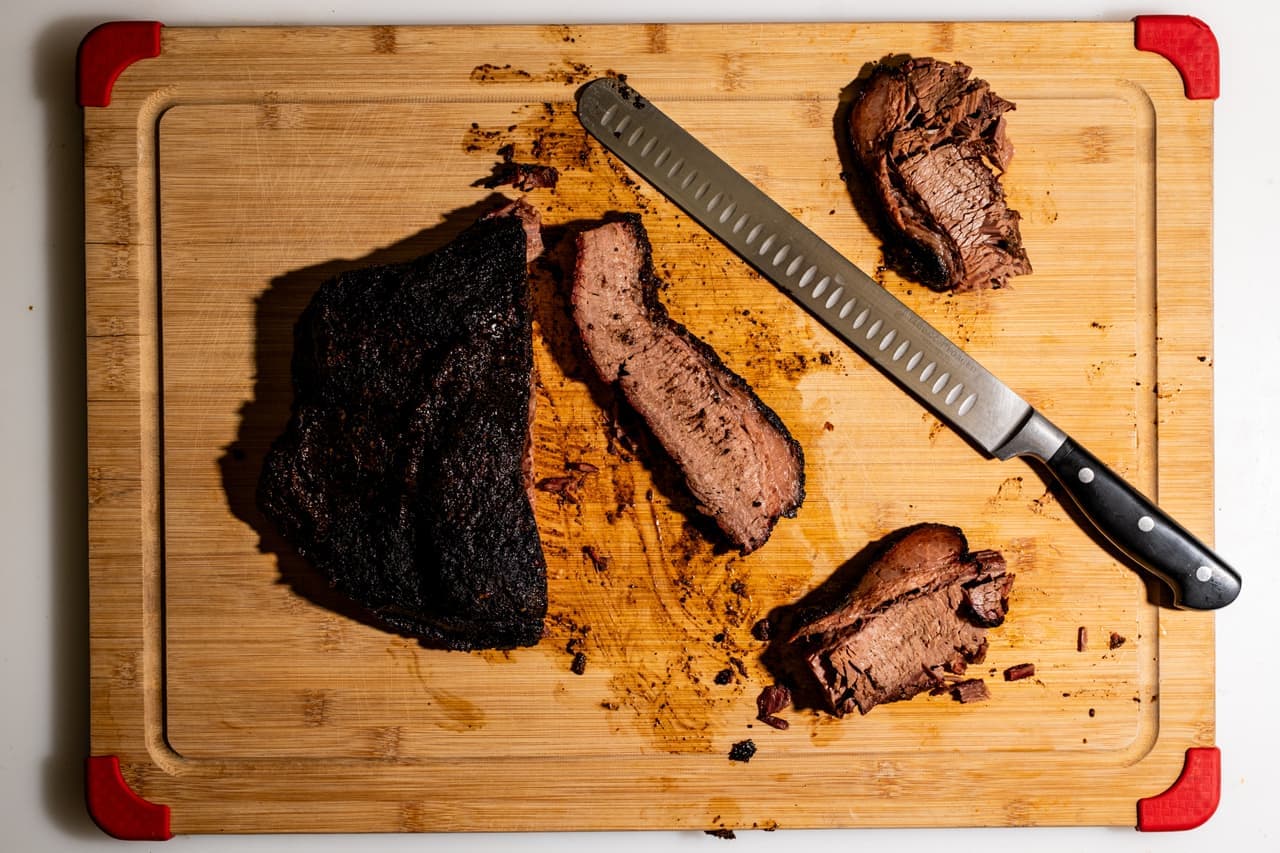
An offset smoker is the most rewarding and the most demanding way to cook barbecue. The firebox sits to the side, the fire burns wood or charcoal, and heat and smoke draft across the meat and out a chimney. Done right, it gives you the deep smoke and bark that a pellet grill can only approximate. Done on the wrong smoker, it gives you a hot spot next to the firebox, a cold end by the stack, and an afternoon of fighting the fire.
The difference between those two outcomes is mostly metal. Thick steel — the 2.5 mm cold-rolled chamber on an Oklahoma Joe’s Longhorn, say — stores heat and rides out the temperature dips that come every time you open the lid or the fire settles. Thin steel, the kind on a $150 barrel, radiates that heat straight into the yard, so the temperature swings and you burn through fuel chasing it. You can smoke great food on thin steel; you just have to work harder and, usually, add a gasket kit and a baffle to do it.
The other lever is airflow geometry. A traditional offset pulls heat from the firebox straight across and out the far-side chimney, so the firebox end always runs hotter. A reverse-flowoffset adds baffle plates that force the heat down the length of the chamber and back before it exits, which evens out that hot spot at the cost of a little more cleanup. For a first serious offset, reverse-flow buys you forgiveness — which is why our top pick is one, and why we wrote a whole reverse-flow vs traditional guide to help you decide.
This roundup is built for the upgrader— someone moving up from a kettle or a cheap barrel who already knows what a stall is and wants to buy the right amount of smoker. We ranked seven models that are genuinely on sale right now, from a $150 learn-on-it starter to heavy-steel Oklahoma Joes, on the specs that actually predict how they cook: total cooking area, steel and chamber build, firebox size, and airflow configuration. We did not test these in a lab — nobody handing you a listicle tested twenty smokers either. What we did is compile every published spec, do the heat-and-fuel arithmetic, and read the consensus of real owners. Exactly how is on our methodology page.
One honest note before the picks: every offset here needs a good meat thermometer more than it needs any accessory. The dome gauge on the lid reads the air at the top of the chamber, not the temperature at the grate or inside the meat. If you buy one thing alongside the smoker, buy a probe.