recteq Patio Legend 600 Review
The pellet grill that answers the two standing complaints about pellet grills: it runs to 700°F, and it is backed for four years. 304 stainless grates, dual-band WiFi and a PID controller — against 665 square inches, which is less grate than a Traeger at the same money. Examined on the published numbers.
Quick answer
The recteq Patio Legend 600 is the pellet grill to buy if you care more about what it is made of and how hot it gets than about how much grate you get for the money. A 180–700°F range means it genuinely sears rather than roasts, 304 stainless grates and a stainless barrel are a material spec you normally pay far more for, and the four-year warranty is longer than the mainstream pellet standard. The honest catch is 665 square inches— roughly 200 fewer than a Traeger Woodridge at similar money.
How this is funded: we earn a commission if you buy through our links, at no extra cost to you. It never changes which product we recommend, and we’ll tell you when we’d skip one, or point you to a cheaper option when it’s the better buy. Full disclosure.
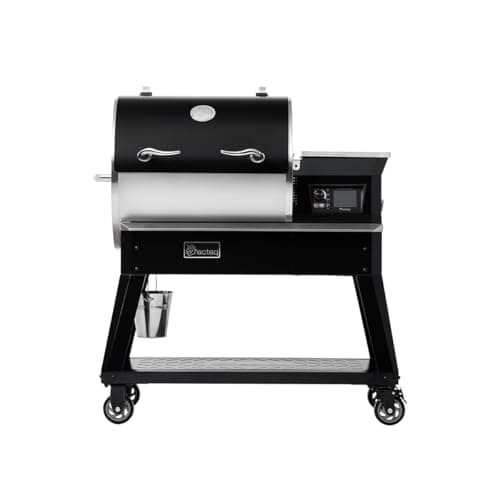
recteq Patio Legend 600 Pellet Grill
Price as of October 13, 2026. #ad How we’re funded
What it is
The Patio Legend 600 is recteq’s entry into the mainstream pellet price band — the model that puts the brand’s stainless-steel, high-top-end philosophy into a cart-sized grill rather than a big pavilion cooker. The published specification is 665 square inches of cooking area, an 18 lb hopper, a 180–700°F temperature range, dual-band WiFi with PID control, 304 stainless cooking grates and a four-year warranty.
That list is worth reading twice, because three of those numbers are unusual for the price. Most pellet grills in this band stop near 500°F, use porcelain-coated steel grates, and carry a warranty measured in single-digit years only on the cookbox. recteq has spent its budget in a different place from almost everyone else, and the whole review is really an argument about whether that is the right place for you.
700°F: the specification that changes what it can do
A pellet grill is a convection oven that burns wood. That is its great strength — a PID controller plus a fan equals a genuinely steady 225°F for twelve hours — and it is also the source of its single most common complaint: a 500°F ceiling will roast chicken skin crisp, but it will not put a hard crust on a steak. Most manufacturers answer this by cutting a hatch in the heat diffuser so food can sit over naked flame. recteq answers it by simply running the whole chamber hotter.
180–700°Fis the widest published range on our pellet shortlist, and 700°F across the whole grate behaves differently from a direct-flame slot: you get an oven that is hot everywhere rather than a small scorching window, which suits several steaks or a tray of vegetables better than it suits one ribeye. If your objection to pellet grills has always been that they cannot sear, this is the specification that answers it — and it does so without a lever to remember or a diffuser to move. The alternative approaches, including the Flame Broiler and Slide and Grill mechanisms, are compared in best pellet grills for searing.
Materials: 304 stainless, and why it matters outdoors
Grate material is one of the few specs on a grill that is not marketing. A pellet grill lives outside and runs hot, wet and greasy; its cooking surface is scrubbed, heated to a few hundred degrees, cooled, rained on and left. Porcelain coating over steel is perfectly fine until the coating chips — and once it chips, the steel underneath rusts from that point outward. 304 stainless has no coating to lose, which is why it is the standard material for commercial kitchen surfaces.
recteq also publishes a stainless barrel rather than a painted one. Paint on a firebox is the other thing that ages a cheap pellet grill visibly: it chalks, then flakes, then the lid looks ten years old in year three. None of this makes the food taste better next weekend. It makes the grill the same grill in year six, which is a different kind of value and the main reason recteq owners tend to be unusually loyal.
The four-year warranty is a signal, not a perk
Warranty length is one of the very few honest proxies a buyer has for what a manufacturer privately expects its own product to survive. A company that backs a grill for four years has priced four years of claims into the sticker. recteq publishes four years here; the Traeger Woodridge publishes a 10-year limited term on its cookbox, which sounds longer and is — but read what each term actually covers before treating the bigger number as the better deal, because “limited” is doing real work in both sentences. What is not in dispute is that four years from a smaller company is a genuine commitment rather than a token one.
Where it falls short: 665 square inches
Here is the trade, stated plainly. 665 square inches is the smallest cooking area of any full-size pellet grill we rank. A Traeger Woodridge gives you 860 for similar money; a Pit Boss Navigator 850 gives you 932; a Z Grills 700D gives you 697 for substantially less. In practical terms 665 square inches is two racks of ribs with nothing to spare, or a brisket with room for little else. If you regularly cook for a crowd, or you want to run a brisket and a pork shoulder at the same time, this is the wrong grill and no amount of stainless steel fixes it.
The second honest point is the network. Traeger is stocked everywhere, every accessory maker fits it, and every problem you can have with one has already been solved publicly by somebody. recteq’s dealer and accessory network is smaller. That matters less than it used to — parts ship — but it is a real difference, and it is the reason a first-time pellet buyer who wants the safest possible choice usually ends up with a Traeger.
The 18 lb hopperis the third modest number: smaller than the Traeger’s 20 lb and well under the Navigator’s 30. Hopper size is really unattended runtime, and 18 lb covers an all-day cook comfortably — only a genuinely long overnight brisket is likely to want a top-up.
Who should buy it
Buy the Patio Legend 600 if you cook for a household rather than a crowd, you want one cooker that both holds 225°F and sears properly, and you would rather own a smaller grill made of better material than a bigger grill made of cheaper material. It is the pick for the upgrader who has already learned that square inches are the easiest spec to sell and the first one you stop caring about.
Do not buy it if capacity is the point. If you want the most grate for the money, the Z Grills 700D undercuts it heavily; if you want the largest support ecosystem in pellet, the Traeger Woodridge is the safer default; and if you want searing anda 30 lb hopper for less, weigh the Pit Boss Navigator 850. The head-to-head against Traeger specifically, on every shared spec, is in recteq vs Traeger.
How this is funded: we earn a commission if you buy through our links, at no extra cost to you. It never changes which product we recommend, and we’ll tell you when we’d skip one, or point you to a cheaper option when it’s the better buy. Full disclosure.
If the Patio Legend 600 is not the one
Both of these give up stainless grates and the 700°F ceiling, and both give you substantially more cooking area in return. Live prices, updated daily.
Traeger Woodridge Wood Pellet Grill
860 sq in and the biggest parts, accessory and support network in pellet — but a 500°F ceiling that roasts rather than sears.
Price as of October 13, 2026. #ad How we’re funded
Pit Boss Navigator 850 Wood Pellet Grill
932 sq in, a 30 lb hopper and a Flame Broiler lever for direct-flame heat — a less polished controller and app than either rival.
Price as of October 13, 2026. #ad How we’re funded
The specification, in one place
Every figure below is read from recteq’s own product page, an authorized dealer spec sheet and the current Amazon listing. We have not cooked on this grill — we own no units, and our methodology explains exactly what we do instead.
| Spec | Patio Legend 600 | What it means |
|---|---|---|
| Cooking area | 665 sq in | Two racks of ribs, or one brisket. The weakest number here. |
| Temp range | 180–700°F | The widest on our shortlist. Sears without a direct-flame hatch. |
| Hopper capacity | 18 lb | An all-day cook. A long overnight may want a top-up. |
| Control | Dual-band WiFi + PID | Dual-band matters when the grill is far from the router. |
| Grates | 304 stainless steel | No coating to chip, so no rust starting from a chip. |
| Warranty | 4 years | Longer than the mainstream pellet standard. |
Frequently asked questions
Is the recteq Patio Legend 600 worth it?
It is worth it if build quality and sear heat matter more to you than cooking area. You get 304 stainless grates, a stainless barrel, a 180-700°F range that genuinely sears and a four-year warranty — specs you normally pay considerably more for. What you give up is grate space: 665 sq in is roughly 200 fewer than a Traeger Woodridge at similar money, and nearly 270 fewer than a Pit Boss Navigator 850. If you cook for a household it is plenty; if you cook for a crowd, buy capacity instead.
Does the recteq Patio Legend 600 sear?
Yes, and it does it differently from most pellet grills. Rather than cutting a hatch in the heat diffuser to expose food to naked flame, recteq runs the entire chamber up to 700°F. That gives you an oven that is hot everywhere instead of one small scorching window, which suits several steaks or a tray of vegetables better than it suits a single ribeye. There is no lever to pull and no diffuser to move.
How big is the recteq Patio Legend 600?
665 square inches of cooking area and an 18 lb hopper. That is the smallest cooking area of any full-size pellet grill we rank — a Z Grills 700D is 697 sq in for less money, a Traeger Woodridge is 860 and a Pit Boss Navigator 850 is 932. Practically, 665 sq in holds two racks of ribs with nothing to spare, or a brisket with little room beside it.
What warranty does recteq offer on the Patio Legend 600?
Four years, per recteq's published specification. That is longer than the mainstream pellet standard at this price, and warranty length is one of the few honest proxies a buyer has for what a manufacturer expects its own product to survive. Traeger publishes a longer 10-year limited term on the Woodridge cookbox, so compare what each term actually covers rather than only the headline number.
recteq or Traeger — which should I buy?
Traeger if you want the most grate for the money and the largest accessory, parts and support network in pellet grilling, and you can live with a 500°F ceiling. recteq if you want 304 stainless rather than porcelain-coated steel, a 700°F top end that will actually build a crust, and a four-year warranty, and you can live with 665 square inches. We compare them spec by spec in recteq vs Traeger.
Keep reading
Camp Chef vs recteq
A wood-burning smoke box and the best ash cleanout in the category against 700°F, stainless grates and four years of warranty.
Compare them →recteq vs Traeger
Stainless build, 700°F and a four-year warranty against the biggest ecosystem in pellet — on the numbers.
Compare them →Best Pellet Grills for Searing
Most pellet grills stop near 500°F. These are the ones that get hot enough to build a crust, and how each one does it.
See the picks →Best Pellet Grills Under $1,000
Every pellet grill here costs less than a grand, from a portable PID box to a searing-capable 900-square-inch cabinet.
See the picks →