How to Clean a Grill (and Grill Grates)
The grate takes two minutes if you do it at the right moment, and the right moment is not when you think. Here is the routine that works on charcoal, gas and pellet grills, the once-a-year deep clean the rest of the cooker needs, and the honest reason we will not tell you to buy a wire brush.
Quick answer
Clean the grate hot, right after you preheat and before the food goes on— not at the end of the cook when it has cooled and the residue has set. Run the grill at full heat for 10–15 minutes so the debris carbonises, then scrape it off. Use a bristle-free scraper or a nylon brushrather than wire: documented US wire-bristle injuries ran to an estimated 3,739 across 2015–2023, a 229% rise on the previous nine years. Then oil the grate, not the food. Everything else on the grill — grease tray, burner tubes, ash, barrel — is a separate job you do two or three times a year.
The timing is the whole technique
Almost everyone cleans a grill at the wrong moment. The instinct is to clean up after dinner, when the grill has cooled off and the plates are being cleared. By then the grease and sugar on the grate have cooled into a varnish that is bonded to the metal, and getting it off takes force, which is where wire brushes and frustration come from.
Clean at the start of the next cook instead. Light the grill, close the lid, let it run flat out for ten to fifteen minutes, and the same residue turns into dry carbon that flakes off under light pressure. This is not a shortcut; it is the easier version of the same job, and it is why professional kitchens scrape a flat-top hot rather than cold.
That timing also solves the food-safety question, which is worth being clear about. The USDA’s own grilling guidance is about keeping raw and cooked food apart and cooking to temperature rather than about scrubbing grates — but a grate that has just run at 500°F for a quarter of an hour has had any surface bacteria dealt with by heat. Preheating isthe sanitising step. What the scraping does is remove carbon and grease so food does not stick and so old burnt residue does not end up in tonight’s dinner.
Why we do not recommend a wire brush
This is the one strong opinion on this page and it is not an aesthetic preference. Wire-bristle brushes shed. The bristles work loose with use and heat, land on the grate, and transfer to food, where they are small enough to be swallowed without noticing and stiff enough to perforate tissue. A 2026 study in the International Journal of Pediatric Otorhinolaryngology estimated 3,739 US wire-bristle injuries between 2015 and 2023 — a 229% increaseon the 2006–2014 period. The full citation is in the sources at the bottom of this page.
That is a small absolute number across nine years and a clear direction of travel, and the relevant point for a buying decision is that the alternatives are not worse at the job. A bristle-free scraper works by steam: you dunk the head in water and press it on the hot grate, and the steam lifts residue without anything that can come loose. A nylon brush works perfectly on a cool grate. Neither asks you to accept a risk in exchange for performance, which is why there is no wire brush anywhere in our registry.
If you own one, the thing to do is not to throw it away in a panic — it is to inspect it. Run your hand along it, bend the bristles, and look at the grate after you brush. Loose, splayed or missing bristles mean it is shedding and it is finished.
What to use instead, by cooker
The right tool follows from when you intend to clean. Scrape hot, or brush cold — those are the two working routines, and the tool has to match the one you will actually follow.
How this is funded: we earn a commission if you buy through our links, at no extra cost to you. It never changes which product we recommend, and we’ll tell you when we’d skip one, or point you to a cheaper option when it’s the better buy. Full disclosure.
Two brushes and the grate to replace when it is past saving
Live prices, fetched and date-stamped. Pick the brush that matches your habit: the steam scraper if you clean hot, the nylon brush if you clean cold. Neither has a wire bristle to lose.
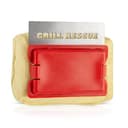
Grill Rescue BBQ Replaceable Scraper Cleaning Head (Bristle Free)
Aramid fiber over foam, rated to 600°F. Dunk it in water and press it on a hot grate — the steam does the work, and the head is replaceable and dishwasher safe. The pick for anyone who cleans at preheat.
Price as of October 14, 2026. #ad How we’re funded
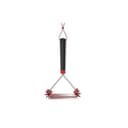
Weber Cold Clean Grill Brush, 12 in
A 12-inch three-sided nylon brush, explicitly for fully cool grates only. The cheap, safe answer for anyone who tidies up after dinner rather than before it — nylon melts on hot metal, so the restriction is real.
Price as of October 14, 2026. #ad How we’re funded
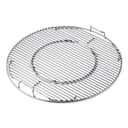
Weber Gourmet BBQ System Hinged Cooking Grate (22 in)
Plated steel, hinged both sides, for 22-inch Weber charcoal grills. A grate that has rusted through or lost its plating cannot be cleaned back to health — at that point scrubbing harder is the wrong answer and a new grate is the right one.
Price as of October 14, 2026. #ad How we’re funded
Charcoal grills: ash is the real maintenance
On a kettle or a kamado the grate is the easy part. The job that actually decides how long the cooker lasts is getting the ash out, and the reason is moisture: ash is hygroscopic, so a bowl left full of it through a wet month holds damp against the steel continuously. That is how kettle bowls rust through from the inside, and it is almost entirely preventable.
Empty the ash catcher when the grill is completely cold — which, on a kamado, can be the next day rather than later the same evening. A mass of ceramic holds usable heat for a remarkably long time, and ash on top of embers can stay live for hours. If you are reaching in with a vacuum, the grill needs to have been out overnight.
Once or twice a year, take the grates out and wipe the inside of the lid. You are not trying to get back to bare metal: the dark, hard, dry coating on the inside of a well-used lid is carbonised smoke and it is harmless. What you are removing is anything flaking or sticky, because that is the stuff that drops onto food.
Gas grills: the burner tubes matter more than the grate
A gas grill that lights unevenly, has cold spots or will not reach temperature usually has blocked burner ports, not a worn-out burner. Food debris and corrosion close the small holes along the tube, so gas comes out of some and not others. In the deep clean, run a thin wire or a pin into each port and then light the grill and watch: you want an even line of blue flame along the whole tube.
The grease tray is the other gas-specific job and it is the one that causes fires. A tray with a pool of liquid fat in it is a flare-up waiting for a drip of hot grease, and it is also the reason grills attract rodents in autumn. Empty it on a schedule rather than when you remember — and empty it before you put a cover over the grill, because a sealed cover over a tray of fat traps the smell and the moisture together. Our grill covers roundup goes into the clean-then-cool-then-cover order in more detail.
Pellet grills: ash, grease and the auger
A pellet grill has a third job the others do not: the burn pot fills with ash from the pellets themselves, and a full burn pot causes temperature swings, failed ignitions and, in the worst case, a fire in the hopper. Vacuum the pot and the barrel floor every few cooks, more often if you burn a lot of pellets.
The grease management on a pellet grill runs down the barrel to a bucket, and the barrel floor is where it mixes with ash into a paste that is genuinely unpleasant if left for a season. Scrape it out while it is warm and soft rather than cold and set. And never leave pellets in the hopper over a wet winter: they absorb moisture, swell, and jam the auger — which is the one pellet-grill failure that turns into a real repair.
Things not to do
- Do not use oven cleaner on grates. It strips the porcelain enamel on coated grates and leaves bare cast iron to rust. Hot scraping plus a wipe does the same job without destroying the finish.
- Do not put cast-iron grates in the dishwasher. Detergent strips the seasoning and they come out dry and ready to rust. Scrape, wipe, oil.
- Do not clean with an onion or a ball of foil instead of a tool. Both are popular and both are worse than a scraper: foil shreds and leaves aluminum on the grate, and an onion is a wipe, not a scrape.
- Do not pressure-wash the inside of a gas grill. Water in the burner tubes and the igniter is how a working grill becomes a non-starting one.
Where to go next
The full set of tools worth owning — and the two we would actually buy first — is in best grilling tools. If your grate is beyond cleaning rather than dirty, best grill grates covers replacements and sear inserts. And for the routine that stops this job getting hard in the first place, our how to use a charcoal grill and how to use a gas grill guides both build the preheat-and-scrape habit into the cook itself.
Frequently asked questions
How do you clean a grill grate?
Preheat the grill at full heat for 10 to 15 minutes with the lid closed so last cook's residue carbonises, then scrape along the bars with a bristle-free scraper. Wipe the loosened carbon off with a damp or oiled cloth held in tongs, then wipe a thin film of oil along the bars so food releases. The key is the timing: clean at the start of the next cook, not at the end of the last one, because cooled grease sets into a varnish that takes real force to remove.
How do you clean a grill without a wire brush?
Two methods work. A bristle-free scraper with an aramid-fiber head is dunked in water and pressed onto a hot grate, and the steam lifts residue — nothing can come loose because there are no bristles. Or use a nylon brush on a fully cool grate, which is cheap and safe but will melt if you try it hot. A wad of paper towel or cloth held in tongs, dipped in water or oil, does the final wipe in both cases.
Are wire grill brushes dangerous?
The bristles shed with use and heat, land on the grate and can transfer to food, where they are easy to swallow and stiff enough to cause injury. A 2026 study in the International Journal of Pediatric Otorhinolaryngology estimated 3,739 US wire-bristle injuries between 2015 and 2023, a 229% increase on the previous nine years. The practical argument is that bristle-free scrapers and nylon brushes do the job just as well, so there is no performance trade to accept.
Should you clean a grill when it is hot or cold?
Hot, if you are scraping — and the ideal moment is during the preheat of your next cook rather than after the last one. Fifteen minutes at full heat turns sticky residue into dry carbon that flakes off easily. Clean cold only if you are using a nylon brush, which melts on hot metal. The one job that must be done cold is emptying ash on a charcoal grill or kamado, because ash sits on embers that stay live for hours.
How often should you deep clean a grill?
Two or three times a year for most people, with the grate cleaned at every cook and the grease tray or ash catcher emptied every few. The deep clean means taking the grates and heat deflectors out, scraping the lid and barrel, washing the grease tray, and — on a gas grill — clearing the burner tube ports so each lights evenly. On a pellet grill, add vacuuming the burn pot every few cooks, because a full pot causes temperature swings and failed ignitions.
Can you use oven cleaner on grill grates?
No. Oven cleaner strips porcelain enamel from coated grates and removes the seasoning from cast iron, leaving bare metal that rusts. The same goes for putting cast-iron grates in the dishwasher. Hot scraping followed by a wipe and a thin coat of oil achieves the same cleanliness without destroying the finish, and a grate whose coating has been stripped will degrade faster than one that was simply dirty.
Why does my gas grill have cold spots?
Usually blocked burner ports rather than a failed burner. Food debris and corrosion close the small holes along the burner tube, so gas comes out of some and not others. Clear each port with a thin wire or pin during a deep clean, then light the grill and look for an even line of blue flame along the whole tube. If one section stays dark after cleaning, that is when the burner itself is the problem.
Do I need to oil grill grates after cleaning?
Yes, and oil the grate rather than the food. A thin film of high-smoke-point oil wiped along the bars with tongs and a cloth is what makes food release, and it also slows corrosion on bare cast iron. Oiling the food instead puts the oil where it will drip into the fire and cause flare-ups. Do it as the last step of the preheat, immediately before food goes on.
Sources
- Coppola et al. — The increasing incidence and features of grill brush wire bristle injuries in the United States: 2015-2023 — International Journal of Pediatric Otorhinolaryngology (2026): an estimated 3,739 US wire-bristle injuries from 2015-2023, a 229% increase on 2006-2014 (accessed August 28, 2026)
- USDA FSIS — Grilling Food Safely — USDA guidance on safe grilling, thermometer use and avoiding cross-contamination (accessed July 22, 2026)
Keep reading
Best Grilling Tools
Tongs, a turner and a brush do almost everything — the ones worth buying, and why the wire brush has to go.
See the picks →Best Grill Grates
Replacement grates and sear inserts for kettles and universal rails — what to buy when the original is finished.
See the picks →Best Grill Covers
Ranked by what they fit, with the three measurements to take first and the clean-cool-cover order that prevents rust.
See the picks →Charcoal Grilling Mistakes
The errors that make charcoal cooking harder than it needs to be, and the fixes that take minutes.
Read the guide →