Best Foods to Grill
Some foods are almost impossible to ruin on a grill and some punish every mistake you make. Here is the difference, as four mechanical properties rather than a list of recipes — plus a 20-food table with the heat zone, rough timing and doneness cue for each.
Quick answer
The best foods to grill are the ones with enough fat to survive a mistake and enough thickness to brown before they overcook. If you are new to it, start with bone-in chicken thighs, burgers, sausages, asparagus and halloumi— all five are forgiving, all five taste better off a grill than out of a pan, and none needs a thermometer reading to the degree. Leave chicken breast, white fish, shrimp and anything in a sugary sauce until you can run two heat zones, because those four fail in under a minute. The single best cut for a grill is a thick, well-marbled ribeye; the single most forgiving is a pork shoulder, which wants hours of indirect heat rather than a hot grate.
The four things that make a food grill well
Almost every “best foods to grill” list is a list of recipes. That is not useful when you are standing in a shop deciding what to buy, so here are the properties underneath instead. A food that scores well on three of these four is hard to ruin. A food that fails two of them is a project.
1. Fat content.Fat is a buffer. It renders into the heat, bastes the surface as it goes, and keeps the inside moist for the extra minute or two you were late by. This is the single biggest predictor of whether a food forgives you, and it is why chicken thighs are easy and chicken breast is not, and why a marbled ribeye is easy and a lean filet is not. It is also why vegetables need oil added before they go anywhere near a grate — they have no fat of their own, which our vegetable guide covers in detail.
2. Thickness against cook time.A grill browns the outside far faster than heat travels to the middle. Something thick enough to still be cooking when the crust is built — roughly an inch and up — gives you a window. Something thin cooks through before it browns, so you get gray meat or you burn it waiting. This is why a 1.5-inch steak is easier than a half-inch one, and it is the real reason thin supermarket pork chops disappoint.
3. Structural integrity. A grate is a set of bars with gaps between them, and the food has to survive being lifted off. Firm proteins, sturdy vegetables and anything with skin are fine. Delicate white fish, small shrimp and soft sliced vegetables fall through, stick, or tear in half when you turn them. That is a hardware problem as much as a food problem, and there is a product fix for it below.
4. Sugar content.Sugar burns at a much lower temperature than meat needs. Anything with a sweet marinade, a barbecue sauce, honey or a teriyaki glaze will go black and bitter over direct heat long before the food is done. Sugary things are not bad grilling foods — they just have to be sauced in the last few minutes, over indirect heat, which is a technique rather than a rule.
The three heat zones, and what belongs in each
Every food on this page sorts into one of three setups. Getting this right matters more than anything else you do, and all three are available on any grill with a lid — see how to use a charcoal grill or how to use a gas grill for the mechanics.
| Setup | What it is | What belongs there |
|---|---|---|
| Direct, hot | Food straight over the fire, lid open or briefly closed | Steaks under 1.5 in, burgers, sausages, shrimp, asparagus, halloumi, flatbread, sliced zucchini |
| Two-zone | Fire banked to one half; sear on the hot side, finish on the cool side with the lid down | Thick steaks, bone-in chicken pieces, pork chops, whole fish, corn, peppers, onions, anything sauced |
| Indirect, low | No fire under the food at all, lid down, 225–325°F for hours | Pork shoulder, brisket, ribs, whole chicken, whole turkey, beef short ribs |
If you only ever learn one thing from this page, learn the middle row. Two-zone cooking is what separates people who think they cannot grill from people who can: it gives you somewhere to put food that is browning too fast, which is the failure mode behind almost every burnt-outside-raw-inside story.
The 20-food table
Rough timings, because thickness and fire vary far too much for a precise number to be honest. The doneness cuecolumn is the one to trust. Temperatures shown are the published USDA safe minimums where one applies, or our own finish temperature where the cut is about texture rather than safety — the full reference is in our meat smoking temperature chart.
| Food | Zone | Rough time | Doneness cue |
|---|---|---|---|
| Bone-in chicken thighs | Two-zone | 30–40 min | 175°F, skin crisp (safe at 165°F) |
| Burgers | Direct | 6–10 min | 160°F for ground beef |
| Sausages | Two-zone | 12–18 min | 160°F, skin blistered not split |
| Ribeye or strip, 1.5 in | Two-zone | 10–16 min | 130–135°F for medium-rare |
| Flank or skirt steak | Direct, hot | 6–10 min | 130°F, then slice across the grain |
| Pork chops, 1.25 in | Two-zone | 12–18 min | 145°F plus a 3-minute rest |
| Pork shoulder | Indirect, low | 8–12 hrs | Probe slides in like soft butter, ~203°F |
| Pork ribs | Indirect, low | 5–6 hrs | Bends and cracks when lifted |
| Whole chicken, spatchcocked | Indirect, 325°F | 75–105 min | 175°F in the thigh |
| Chicken breast, boneless | Two-zone | 10–16 min | 165°F — and not a degree more |
| Salmon, skin on | Direct, oiled grate | 8–12 min | 145°F, or flakes at the thickest point |
| Shrimp, skewered | Direct, hot | 3–5 min | Opaque and curled into a C, not an O |
| Whole fish | Two-zone | 15–25 min | 145°F at the spine |
| Corn on the cob | Two-zone | 15–20 min | Kernels brightened with char spots |
| Asparagus | Direct | 5–8 min | Bends but does not flop |
| Peppers and onions | Two-zone | 10–20 min | Blistered skin, soft centers |
| Potatoes, par-cooked | Two-zone | 15–25 min | Fork goes through with no resistance |
| Halloumi | Direct | 4–6 min | Grill marks and a soft middle |
| Pizza or flatbread | Direct, then indirect | 4–8 min | Base firm and spotted |
| Peaches or pineapple | Direct, clean grate | 4–8 min | Caramelized, still holding shape |
What this actually needs you to own
Almost nothing, and that is the honest answer. A grill, something to turn food with, and a way to know when it is done. The three picks below map onto the four properties at the top of this page: the thermometer is how you stop guessing on the forgiving foods and how you survive the unforgiving ones, the chimney is how you build the two-zone fire the table keeps asking for, and the sear panels are the fix for the structural-integrity problem — the reason people say they “cannot grill fish.”
How this is funded: we earn a commission if you buy through our links, at no extra cost to you. It never changes which product we recommend, and we’ll tell you when we’d skip one, or point you to a cheaper option when it’s the better buy. Full disclosure.
Doneness, two zones, and the fix for small food
Live prices, fetched and date-stamped. Nothing here is a set, a case or a gadget. Each one solves a specific failure mode named in the four properties above.
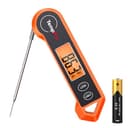
ThermoPro Digital Instant-Read Meat Thermometer
Reads in three to four seconds through a foldaway probe, which is what the doneness column of the table above assumes you have. The one purchase with no exceptions, and it costs less than the steak it saves.
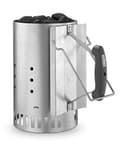
Weber Rapidfire Chimney Starter (Standard)
Aluminized steel, sized for a 22-inch kettle. Lights a full load in about fifteen minutes with no fluid and no chemical taste — and a chimney is also the measuring cup that lets you light a half load and bank it to one side.
Price as of October 20, 2026. #ad How we’re funded
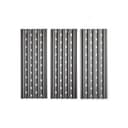
GrillGrate Sear Station Interlocking Panels (3-panel set)
Three interlocking hard-anodized panels, reversible: rails up for searing, flat side up for shrimp, fish, halloumi and sliced vegetables. Needs a cooking surface at least 15 in deep. This is the single product that widens the list of foods you can grill.
Price as of October 20, 2026. #ad How we’re funded
The five foods to start with
In this order, if the grill is new to you. Each one teaches something the next one needs.
- Sausages. Fatty, forgiving, and they teach you that direct heat alone causes flare-ups. Bank the fire to one side and finish them there.
- Burgers. Fast feedback and a real doneness number to hit. Our burger guide covers why you should not press them.
- Bone-in chicken thighs. The most forgiving protein on the grill, and the one that proves two-zone cooking works. Skin renders on the hot side, the meat finishes on the cool side.
- Asparagus or peppers. Teaches you that vegetables want oil on the food, not the grate, and that char is flavor rather than failure.
- A thick steak. Now you have the fire control to deserve it. Start with which steak to buy and then how to grill it.
Four foods people grill anyway, and what goes wrong
None of these is impossible. They are just the four where the failure is fast and the fix is specific.
Boneless chicken breast.Lean, uneven in thickness, and there is no safe window above 165°F — it just dries. Pound it to an even thickness, brine it if you have time, and use two zones. Full method in how to grill chicken breast.
Delicate white fish. Cod, tilapia and sole have no fat, no skin strong enough to hold them and nothing to stop them tearing. Grill salmon instead, skin on, or use the flat side of a sear panel. How to grill salmon covers the oiled grate.
Anything heavily sauced from the start. The sugar burns. Cook it bare, then brush sauce on in the last few minutes over the cool side.
Thin pork chops.A half-inch chop is done before it browns. Buy them 1.25 inches thick and the problem disappears — see grilling pork chops.
Does the cooker change the list?
The list barely moves; the timings do. Charcoal gets hotter and tastes stronger, which suits steaks, burgers and vegetables. Gasis faster to light and easier to run at a precise moderate temperature, which suits chicken and fish on a weeknight — the full trade-off is in charcoal vs gas. A pellet grill moves the whole bottom third of the table into its comfort zone, because it holds a low indirect temperature unattended for hours. And a flat-top griddle changes the list completely: it cooks everything that falls through a grate and nothing that needs open flame, which is the subject of griddle vs grill, what to cook on a griddle and our Blackstone 28 review.
The one genuine constraint is the bottom three rows of the table. Pork shoulder, ribs and brisket need a cooker that will hold a low temperature for hours, which a kettle will do with the snake methodand a gas grill will do poorly. If those are what you want to cook, the honest answer is a different cooker — start at best offset smokers or best pellet grills for beginners.
Where to go next
Every row in the table that has its own page is linked from it. If you are choosing between cooking methods rather than foods, grilling vs broiling covers the indoor alternative and what it genuinely does better. And if the answer to “what should I grill” is really “something for a crowd on Saturday,” the two pages that solve that are how much charcoal to use and best grilling accessories.
Frequently asked questions
What are the best foods to grill for beginners?
Sausages, burgers, bone-in chicken thighs, asparagus and halloumi. All five are forgiving: the first four have enough fat to survive being left on a minute too long, and none of them needs a precise internal temperature to be good. Start with sausages to learn that direct heat causes flare-ups, then burgers for a real doneness number, then chicken thighs to prove two-zone cooking works. Leave chicken breast, white fish and shrimp until you can bank a fire to one side.
What is the easiest meat to grill?
Bone-in, skin-on chicken thighs. They carry enough fat and connective tissue that the window between done and overdone is measured in minutes rather than seconds, the skin protects the meat while it renders, and dark meat actually improves if you carry it past the USDA's 165°F safe minimum up to about 175°F. Sausages come a close second for the same reason. The hardest common choice is boneless chicken breast, which is lean, uneven in thickness and has no margin above 165°F.
What foods should you not grill?
Nothing is forbidden, but four categories fail fast. Delicate white fish such as cod or tilapia tears and falls through the grate — grill skin-on salmon instead. Thin cuts under about half an inch cook through before they brown. Anything sauced with sugar from the start burns bitter, so sauce it in the last few minutes over indirect heat. And small loose items like diced vegetables need a flat insert or a basket, or they end up in the coals.
What vegetables grill the best?
Asparagus, peppers, onions, corn, zucchini and romaine, roughly in that order of forgiveness. The rule that matters is mechanical rather than botanical: vegetables have no fat of their own and their water is locked in rigid cell walls, so oil the vegetable rather than the grate, and cut nothing narrower than the gap between your grate bars. Firm vegetables take direct heat; dense root vegetables need par-cooking first or they char outside while staying raw inside.
How do you know when grilled food is done?
With a thermometer for anything with a safe minimum, and with a physical cue for everything else. Use the published USDA numbers for ground beef (160°F), poultry (165°F), whole pork and beef cuts (145°F plus a three-minute rest) and fish (145°F). For the slow cuts, temperature alone is not the test — a pork shoulder is ready when a probe slides in with no resistance at around 203°F, and ribs are ready when the rack bends and the surface cracks. Color is not a doneness test on a grill, because smoke and char both mislead.
What is the best thing to grill for a crowd?
Sausages and bone-in chicken thighs, because both are forgiving, both reheat on the cool side of the grill without suffering, and neither needs you to time anything to the minute while people are talking to you. If you want one impressive centerpiece instead, a pork shoulder cooked indirect is the right answer — it feeds a lot of people, it is almost impossible to ruin, and it is finished hours before anyone arrives, which no steak can offer.
Can you grill fruit?
Yes, and it is the most underrated row in the table. Peaches, pineapple, watermelon and halved figs all work, because their sugar caramelizes against hot metal and their structure holds up long enough to get marks. Two rules: use a genuinely clean grate, since fruit picks up whatever was there before it, and keep the time short — four to eight minutes over direct heat, pulled while the fruit still holds its shape rather than collapsing.
Do you need a thermometer to grill?
For the forgiving foods, no. For chicken breast, pork, fish and any large cut, yes — and it is the cheapest piece of equipment on this page. The honest reason is that the two things people use instead are both unreliable: time varies with thickness, fire and weather, and color is actively misleading on a grill because char and smoke both change how cooked food looks. An instant-read probe removes the only genuinely risky guess in grilling.
Sources
- USDA FSIS — Safe Minimum Internal Temperature Chart — The USDA's official safe minimum internal cooking temperatures for beef, poultry, pork and more (accessed July 22, 2026)
- USDA FSIS — Grilling Food Safely — USDA guidance on safe grilling, thermometer use and avoiding cross-contamination (accessed July 22, 2026)
- USDA FSIS — Doneness Versus Safety — USDA on why color is not a reliable doneness test and a thermometer is (accessed July 22, 2026)
Keep reading
Best Steaks to Grill
The same question narrowed to beef — ribeye, strip, flank and tri-tip on marbling, thickness and the fire each wants.
Read the guide →How to Grill Vegetables
Why you oil the vegetable instead of the grate, and a prep-and-timing table for fifteen vegetables.
Read the guide →Grilling vs Broiling
The indoor alternative: heat from above instead of below, and the three things a broiler genuinely does better.
Compare them →Meat Smoking Temperature Chart
Every doneness number in the table above, in context — the USDA safe minimum against the texture temperature.
Read the guide →