How Long Does a Bag of Pellets Last?
The useful answer is a range, and the range is wide: the same 20 lb bag that runs twenty hours of brisket will be gone in seven hours of hot grilling. Here is the arithmetic, the five things that move it, and what an hour of cooking actually costs at today's prices.
Quick answer
A 20 lb bag of pellets runs roughly 20 hoursof low-and-slow smoking at around 225°F, or about 7–8 hoursof high-heat grilling at 400°F and above. The working figures are about 1 lb per hour low and 2–3 lb per hour hot. That makes a single bag enough for one full brisket cook with very little to spare — which is why the honest advice is to start a long cook with a full hopper and a second bag in the garage.
The arithmetic, and the two numbers it rests on
Pellet consumption is the one running cost a pellet grill has, and it is remarkably predictable once you accept that it has two modes rather than one average. A pellet grill holds temperature by feeding pellets into a burn pot at whatever rate maintains the set point, so consumption is almost a direct function of how hard the fire is working. Makers’ published figures generally land between about 1 lb per hour at smoking temperatures and 3 lb per hour at high heat.
Divide the bag by the rate and you have your answer:
| Bag size | At ~1 lb/hr (225°F) | At ~2.5 lb/hr (400°F+) |
|---|---|---|
| 18 lb | ~18 hours | ~7 hours |
| 20 lb | ~20 hours | ~8 hours |
| 40 lb | ~40 hours | ~16 hours |
The practical consequence is the thing worth remembering: one 20 lb bag is one brisket.A 12 lb packer at 250°F is a 15 to 18 hour cook, and at a pound an hour that is the whole bag with a couple of hours of margin. If you start a brisket on half a bag, you will be driving somewhere at 3am.
What actually moves the number
Five things, in rough order of how much they matter:
- Set temperature.By far the biggest factor, and it is not linear — the jump from 225°F to 350°F costs much more than the jump from 180°F to 225°F, because the grill is fighting a bigger temperature difference against the outside air.
- Ambient temperature.A 20°F winter day can push consumption up substantially for the same set point. This is the factor people are most surprised by, and it is why a bag that lasted two cooks in July lasts one in January.
- Wind. Moving air strips heat off the barrel continuously, so the controller compensates by feeding more pellets. An exposed patio is measurably more expensive to cook on than a sheltered one.
- How well the cooker is sealed. Lid gaskets, a tight-fitting barrel and insulated construction all cut consumption. This is one of the quiet reasons a better-built pellet grill costs less to run.
- How often you open the lid. Every lid lift dumps the chamber heat and the controller has to rebuild it. On a long cook this is also the thing most under your control.
Note what is not on that list: how much food is in the grill. A loaded grate does extend the cook slightly because the food absorbs heat, but the effect is small next to temperature and weather. Cooking four racks of ribs instead of one costs you very little extra fuel, which is the strongest argument there is for filling the cooker.
What an hour of cooking costs, at today’s prices
Pellets are sold by the bag, which makes comparing them hard — an 18 lb bag and a 40 lb bag are not comparable products at face value. The table below divides the live price of every pellet we track by its published bag weight to get a price per pound, then multiplies by the two burn rates above.
These figures are computed at the moment you load this page from the same live price feed that powers every buy button on this site, so they are current rather than something we typed in once. Prices as of October 14, 2026.
| Pellets | Bag | Price | Per lb | Per hr at 225°F | Per hr hot |
|---|---|---|---|---|---|
| Pit Boss Competition Blend Hardwood Pellets | 40 lb | $25.50 | $0.64 | $0.64 | $1.59 |
| Lumber Jack 100% Hickory BBQ Pellets | 20 lb | $27.35 | $1.37 | $1.37 | $3.42 |
| Bear Mountain Gourmet Blend Wood Pellets | 20 lb | $22.99 | $1.15 | $1.15 | $2.87 |
| Traeger Signature Blend Hardwood Pellets | 18 lb | $19.99 | $1.11 | $1.11 | $2.78 |
The headline conclusion survives whatever the numbers do on any given day: a pellet grill costs cents per hour to run at smoking temperatures, and the big bag is almost always the cheaper way to buy the same wood. A 40 lb bag is not twice the price of a 20 lb bag, which is the whole reason to buy it — provided you can store it dry.
Buy the big bag, with one condition
The per-pound arithmetic above almost always favours the 40 lb bag, and the condition attached to it is storage. Pellets are compressed sawdust held together by the wood’s own lignin, and they are destroyed by moisture.A pellet that has absorbed humidity swells, crumbles back to sawdust, and then either fails to feed or jams the auger — which is the one pellet grill failure that becomes a real repair rather than an inconvenience.
So: a sealed bucket or a lidded bin, indoors or in a garage, not the original bag folded over in a damp shed. If you cannot store 40 lb dry, buying 20 is the cheaper decision even though it is the higher price per pound. And never leave pellets in the hopper over a wet winter— empty it at the end of the season, which takes five minutes and saves the auger.
How this is funded: we earn a commission if you buy through our links, at no extra cost to you. It never changes which product we recommend, and we’ll tell you when we’d skip one, or point you to a cheaper option when it’s the better buy. Full disclosure.
Four bags, three different reasons to buy
Live prices, fetched and date-stamped. The per-pound columns in the table above are computed from these same numbers — so the cheapest row there is the cheapest bag here, today.
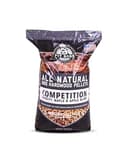
Pit Boss Competition Blend Hardwood Pellets (40 lb)
A 40 lb bag of maple, hickory and cherry blend — twice the fuel of a standard bag and not twice the price. The pick if you cook often and have somewhere dry to keep it.
Price as of October 14, 2026. #ad How we’re funded
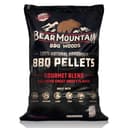
Bear Mountain Gourmet Blend Wood Pellets (20 lb)
20 lb of all-natural hardwood blend with no binders. Mild enough for poultry and fish, which the heavy single-species woods are not.
Price as of October 14, 2026. #ad How we’re funded
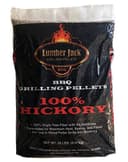
Lumber Jack 100% Hickory BBQ Pellets (20 lb)
100% hickory with no filler wood — most 'hickory' pellets are a hickory flavor over an oak or alder base. The pick for pork and beef when you want the smoke to be obvious.
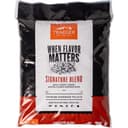
Traeger Signature Blend Hardwood Pellets (18 lb)
18 lb of hickory, maple and cherry. The most widely stocked bag in the category, which matters when you run out mid-cook on a Sunday.
Price as of October 14, 2026. #ad How we’re funded
How to work out your own number
Published figures are a starting point; your grill, your patio and your weather are the real variables. The measurement takes one cook and no equipment:
- Weigh the bag, or just start a cook with a brand-new full bag.
- Fill the hopper completely and note the time.
- Cook as you normally would at your usual temperature.
- At the end, top the hopper back up from the same bag and weigh what is left. Pellets used, divided by hours cooked, is your actual rate.
Do it once in summer and once in winter and you will have the two numbers that matter. Most people find their real figure is a little above the published one, because published figures tend to assume calm, mild conditions.
Does pellet brand change consumption?
Slightly, and less than people expect. Denser, drier pellets with low ash content burn more completely, so you get more usable heat per pound — and a cheap pellet with high ash and filler wood leaves more residue in the burn pot, which is its own problem. But the differences between reputable brands are small compared with a 20°F swing in outdoor temperature. Choose pellets for the wood species and the price per pound, not for a claimed efficiency advantage.
One genuine difference worth knowing: “hickory” pellets from most brands are a hickory flavor applied over an oak or alder base wood.That is normal and legal and it is not a scandal, but it does mean a 100% single-species bag behaves differently in the fire and smells noticeably stronger. If you have ever wondered why one brand’s hickory tastes milder than another’s, that is why.
Where to go next
Which wood for which food is best pellets for smoking, and the broader question of chunks against chips against pellets is in best smoking wood. If you came here because you feel you are burning a lot of fuel for not much flavor, that is a different and very common problem: how to get more smoke flavor from a pellet grill. And for the longer-term running costs — the parts that wear out and roughly when — see how long a pellet grill lasts.
Frequently asked questions
How long does a 20 lb bag of pellets last?
Roughly 20 hours of low-and-slow smoking at around 225°F, or about 8 hours of high-heat grilling at 400°F and above. The working rates are about 1 lb per hour low and 2 to 3 lb per hour hot. In practical terms that makes one 20 lb bag about one full brisket cook with a couple of hours of margin, which is why it is worth starting a long cook with a full hopper and a spare bag on hand.
How many pounds of pellets per hour does a pellet grill use?
About 1 lb per hour at smoking temperatures and 2 to 3 lb per hour at high heat, with makers' published figures generally falling in that band. Consumption tracks how hard the fire is working, so set temperature is by far the biggest factor — and it is not linear, because the grill is fighting a larger temperature difference against the outside air as you climb. Cold weather, wind and a poorly sealed cooker all push the figure up.
How much does it cost to run a pellet grill per hour?
Cents per hour at smoking temperatures, and still modest at high heat. The way to work it out is price per pound — divide a bag's price by its published weight — then multiply by about 1 lb per hour for low and slow or 2.5 lb per hour for hot grilling. The table on this page does that arithmetic live from the current price of every pellet we track, so it reflects today's prices rather than a figure typed in once.
Is a 40 lb bag of pellets cheaper than two 20 lb bags?
Almost always, on price per pound, which is the whole reason to buy it — a 40 lb bag is typically not twice the price of a 20 lb one. The condition is storage. Pellets are compressed sawdust held together by the wood's own lignin and they are destroyed by moisture, swelling and crumbling back to sawdust, which then jams the auger. If you cannot keep 40 lb dry in a sealed bucket or bin, buying 20 lb at a time is the cheaper decision despite the higher unit price.
Do pellet grills use more pellets in cold weather?
Yes, and it is the factor people are most surprised by. The controller holds your set temperature by feeding more fuel, so a 20°F day costs substantially more pellets than a 75°F day for exactly the same cook. Wind compounds it, because moving air strips heat off the barrel continuously. A bag that got you through two cooks in July may only manage one in January, and an exposed patio is measurably more expensive to cook on than a sheltered one.
Does the amount of food in the grill change pellet use?
Barely. Food absorbs heat, so a full grate does lengthen a cook slightly, but the effect is small compared with set temperature or outdoor weather. This is the strongest practical argument for filling the cooker: smoking four racks of ribs instead of one costs you very little extra fuel and roughly the same amount of your time. If you are going to run a pellet grill for six hours, run it full.
How should I store pellets?
In a sealed bucket or a lidded bin, kept indoors or in a garage — not in the original bag folded over in a damp shed. Humidity alone is enough to ruin them over a season. The related habit is emptying the hopper at the end of the cooking season rather than leaving pellets in it over a wet winter: swollen pellets jamming the auger is the one pellet grill failure that turns into a real repair rather than an inconvenience.
Do different pellet brands burn at different rates?
Slightly, and less than marketing suggests. Denser, drier, low-ash pellets burn more completely so you get more usable heat per pound, and a cheap high-ash pellet leaves more residue in the burn pot. But the differences between reputable brands are small next to a 20°F swing in air temperature. Choose on wood species and price per pound. One real distinction: most brands' 'hickory' pellets are a hickory flavor over an oak or alder base, so a 100% single-species bag smells noticeably stronger.
Keep reading
Best Pellets for Smoking
Single species against blends, and which wood suits poultry, pork and beef — with the price-per-pound comparison.
See the picks →How Long Does a Pellet Grill Last?
Which parts wear out, roughly when, what they cost to replace, and the maintenance that decides it.
Read the guide →How a Pellet Grill Works
The auger, the burn pot, the fan and the PID controller — why consumption tracks temperature so closely.
Read the guide →Best Smoking Wood
Chunks, chips and splits by species and strength — the format decision that decides which cooker they suit.
See the picks →